

The ASX-listed parent company of the beleaguered InterPrac financial advice licensee, Sequoia Financial Group, has posted an after-tax loss of $8.6 million for the 12 months ended June 30, and the company’s independent auditor has identified that a material uncertainty exists that “may cast significant doubt on the group’s ability to continue as a going concern”.
Sequoia posted a 15 per cent drop in revenue for the year and a 366 per cent fall in after-tax profit from $3.2 million the year before. InterPrac is at the centre of regulatory action over the collapse of the Shield and First Guardian managed investment schemes and the role that a number of InterPrac-authorised advisers played in directing clients’ money into the failed schemes.
The loss of more than $1 billion by an estimated 12,000 investors in Shield and First Guardian has kicked off a flurry of regulatory actions against the licensee and advisers it authorised, and a flood of claims to the Australian Financial Complaints Authority (AFCA).
Court documents allege 6843 InterPrac-authorised clients invested around $677 million in the funds. The Australian Securities and Investments Commission (ASIC) alleges one InterPrac-authorised adviser, Ferras Merhi, signed 6,000 Statements of Advice in three years while collecting close to $18 million in upfront fees and $19 million more from fund-linked entities for marketing.
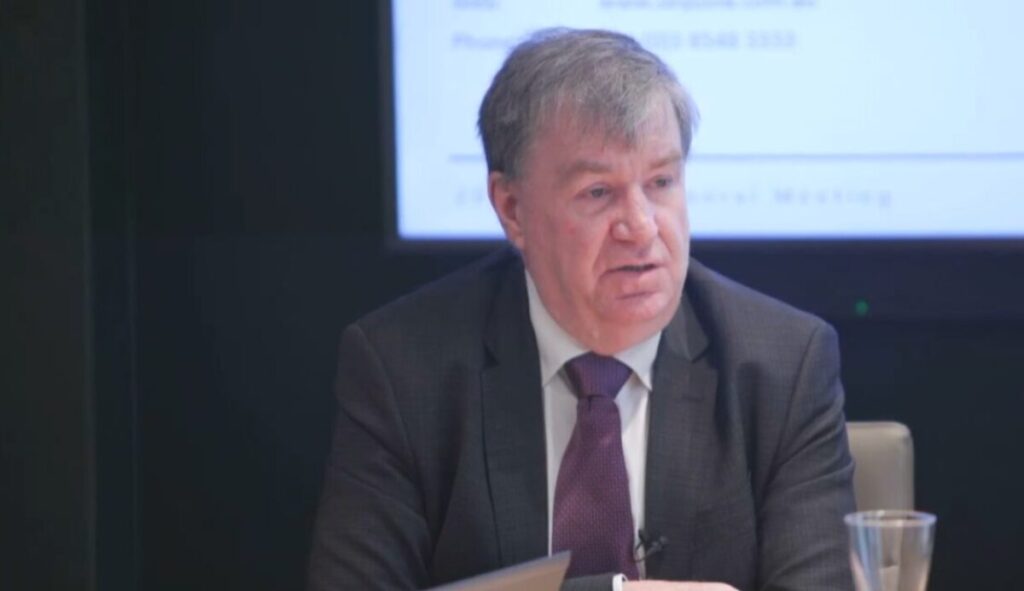
The group chief executive of Sequoia during the period in question, Garry Crole, resigned on 21 July this year and was replaced by Alex Fabbri as interim chief executive officer the next day. Chair Mike Ryan resigned on 27 May and David Hentschke was appointed interim chair on 22 July.
Note 2 to the 2026 Sequoia accounts released to the ASX on Friday afternoon says the company is “subject to certain legal claims and regulatory matters involving the Australian Securities and Investments Commission (ASIC), together with compliance matters arising in connection with the Group’s obligations to the Australian Financial Complaints Authority”.
It says the outcome of those claims is uncertain, and the group may incur “additional legal costs, penalties, compensation or other amounts and may be subject to other regulatory or operational consequences”.
Sequoia has also launched legal action against AFCA challenging its jurisdiction in making determinations against the licensee.
“The extent and timing of any further remediation, customer compensation, compliance costs or other consequences arising from these matters remain uncertain,” the note says.
These matters may have a significant impact on the group’s future cash flows, financial position and ability to conduct its operations. In particular, an adverse outcome in relation to the ASIC matters, together with the potential financial and operational consequences associated with the AFCA compliance matters, could adversely affect the group’s ability to meet its obligations as and when they fall due and/or continue its operations.”
The note also says that the company’s directors believe the company’s current financial position, cash resources, forecast cashflow, expected operating performance and the estimated financial impact of the ASIC and AFCA matters, along with management’s plan to continue to engage with ASIC and relevant legal advisers, managing operating costs and realising liquid assets “provide a reasonable basis for the group to continue as a going concern”.
But it adds that the outcome of the ASIC and AFCA legal claim matters are “subject to significant uncertainty”.
“There can be no assurance that these matters will be resolved on terms favourable to the group or that the financial and operational consequences will not be material.
“Should the group be unable to successfully resolve the ASIC legal claims and AFCA legal matters, or should the financial and operational consequences of these matters be materially greater than currently anticipated, the group may be unable to realise its assets and discharge its liabilities in the normal course of business and continue its operations.
“The directors consider that, notwithstanding the matters described above, the going concern basis of preparation remains appropriate.”
The independent auditor’s report prepared by William Buck says the note to the accounts “indicates that the group incurred a net loss of $8,576,002 during the year ended 30 June 2026 and is subject to ongoing legal and regulatory noncompliance matters” and that “a material uncertainty exists that may cast significant doubt on the group’s ability to continue as a going concern. Our opinion is not modified in respect of this matter.”
Earlier this week Sequoia notified the ASX that it had appointed an independent adviser to undertake a sale process for the shares held by its subsidiary, Sequoia
Wealth Group, in InterPrac as a precursor to unwinding a deed of cross guarantee that it had previously tried but failed to unwind.
“If the sale process is successful, Sequoia intends to take steps to revoke the operation of the deed of cross guarantee lodged with the Australian Securities and Investments Commission on 2 June 2022 insofar as it concerns InterPrac,” a statement to the ASX dated 26 August says
The deed dates from 25 May 2022, when Sequoia Financial Group, Sequoia Wealth Group, InterPrac and a group of other subsidiaries agreed to guarantee each other’s debts.
Sequoia tried to release InterPrac, Sequoia Asset Management and Sequoia Wealth Management from it via a revocation deed executed 12 September 2025, disclosed in the half-year report, then withdrew that revocation following ASIC’s intervention.






Leave a Comment
You must be logged in to post a comment.