


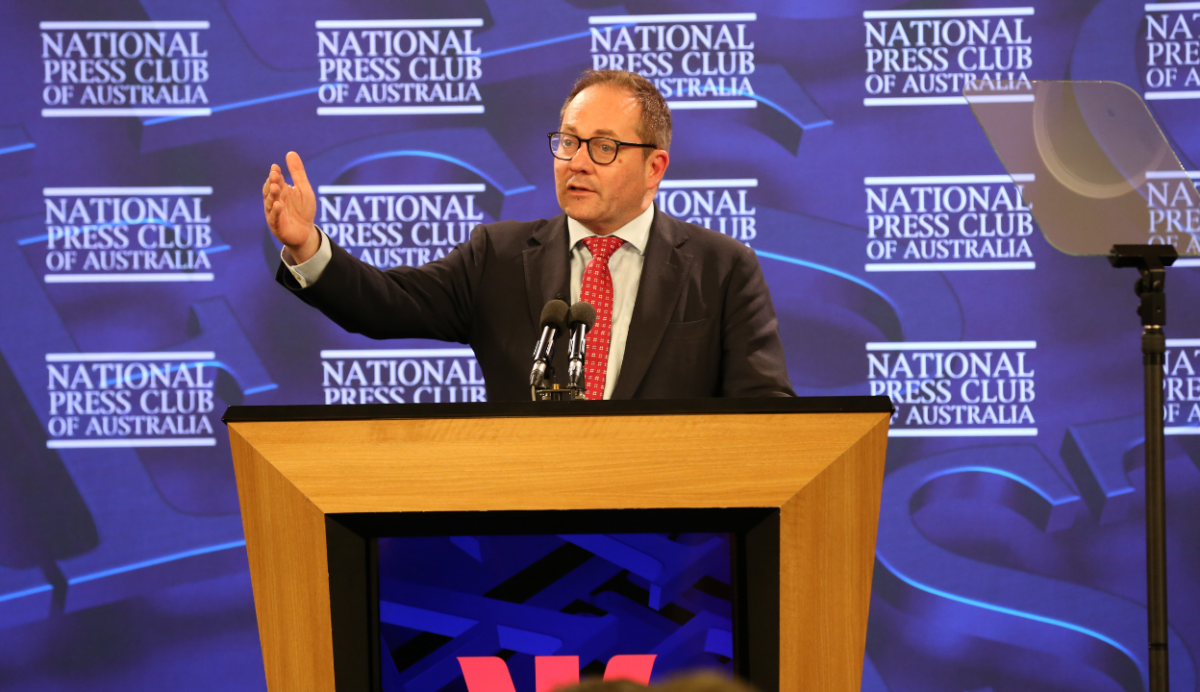
ASIC will become “easier to deal with and harder to avoid” under the leadership of chair Sarah Court, who will on Wednesday tell the Centre for Economic Development of Australia that the regulator will act “at the right time” and address “the right risks” to build a more productive economy in an uncertain world.
“Becoming easier to deal with and harder to avoid comes down to three pillars: being more responsive, investing in earlier detection and prevention, and setting clear expectations, with targeted interventions and stronger consequences,” Court will say, according to extracts of her speech seen by Professional Planner.
To do that, ASIC has set five new strategic priorities for the year as part of its 2026-27 Corporate Plan.
The corporate regulator is “looking for risks to retirement savings earlier and supporting better retirement outcomes and superannuation member services”, the plan says, alongside setting clear expectations to improve outcomes for consumers and small business and delivering “stronger consequences for breaches of professional conduct and better access to reliable financial and business information”.
The remaining priorities cover effective, resilient and innovative operations across financial services and markets, and “strengthening integrity, transparency, and confidence across Australia’s public and private markets to ensure Australia remains an attractive place to invest and do business”.
“We are in one of the most disrupted decades our country and the world has experienced,” Court will say.
“In uncertain times like these – and when the economy is under pressure – the debate inevitably turns to the role of regulation.
Court will say that while she has “some sympathy” for observations that regulation prevents business from innovating and improving productivity, and that it is difficult to conclude that some regulations have a “material public benefit sufficient to outweigh their regulatory cost”, increased pressures “only serve to highlight the importance of ASIC’s role in regulation and enforcement”.
“A regulator that can provide confidence to those who are doing, or trying to do, the right thing, while providing consequences to those who are not,” Court will say. ”A regulator in other words who is easier to deal with, and harder to avoid.
“That’s the kind of regulator that ASIC needs to be to help build a more productive economy in a more uncertain world.”
Advice and licensees
Under the new corporate plan, ASIC will identify AFS licensees using high-risk lead generation services and “take appropriate action to disrupt these models”, continuing the review of advice licensees announced in February, which has produced a list of lead generators, referral partners and the licensees that have acquired leads. ASIC added 19 entities to that list in June.
In her message accompanying the plan, Court said ASIC remains “determined to shut down unchecked avenues of misconduct outside the existing regulatory perimeter, including unlicensed lead generation in superannuation”.
The plan states digital marketing and lead generation channels “have the potential to allow coordinated misconduct across advisers and platforms with devastating results for retirement savings”.
ASIC will progress the next phase of its financial adviser qualifications compliance program, taking a risk-based approach to identify advisers who remain authorised to provide personal advice but have not met the qualifications standard. Innovation in advice is listed as a focus area under the retirement outcomes priority.
The regulator will also undertake a targeted review of superannuation trustees’ oversight of advice fee deductions, testing whether practices have lifted since Report 833, which reviewed six platform trustees holding more than $300 billion and found gaps in the monitoring of harmful advice fee deductions, unusual fee and investment patterns and high-risk switching. Where poor conduct is identified, the plan states, ASIC will take enforcement or other regulatory action.
Surveillance of licensees that recommend and offer separately managed accounts to retail clients will continue, in response to what the plan describes as rapid growth in advice to shift retail clients to SMAs, with a focus on governance frameworks, conflicts of interest and consumer outcomes. Surveillance of private credit fund distribution to retail clients through direct and advised channels will also continue.




















Leave a Comment
You must be logged in to post a comment.