

In recent years, innovation in wealth management can be seen in the rise of managed accounts, democratisation of private markets, and proliferation of exchange traded funds (ETFs), including the latest generation of active ETFs. It can be seen in the evolution of retirement income solutions, creation of digital assets and infrastructure, and expanding range of niche funds that target themes such as space, artificial intelligence and the energy transition.
These developments have implications for advice businesses which must keep on top of the latest investment products and services, and the potential role they play in delivering strong client outcomes. Advisers must also ensure that they can cater to the needs and preferences of different client cohorts, including Millennials and Gen Xers, as Australia’s population ages and baby boomers pass on their wealth. This not only relates to investment solutions but different advice models.
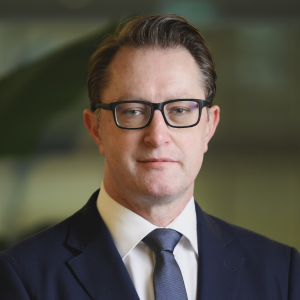
Scott Fletcher, chief investment officer at private wealth firm Woodbury Financial Services, says investment innovation was being driven by increasing market complexity, accelerating technological change, and more demanding wholesale and retail investors.
“Not only are investment strategies that were once the exclusive domain of large institutions and family offices now available to everyday investors but the pace of that roll down from institutional to retail has picked up due to technology and higher client expectations,” he said.
“But while the mass market has increasing access to products and strategies previously unavailable to them, it can be a double-edged sword, especially if they’re used inappropriately.”
Fletcher cited the increasing democratisation of private markets and the development of open-ended, evergreen structures that provided some liquidity as notable innovations but voiced concerns that many investors did not fully understand the associated risks.
“In my view, the term ‘semi-liquid’ used by many providers misrepresents the true nature of the liquidity of the underlying assets and creates something of a false promise, noting redemption windows are on a ‘best endeavours’ basis and not guaranteed. Advisers need to take care educating clients to understand the true nature and liquidity of these assets, assuming they first understand it themselves,” he said.

According to Rekab Advice principal Amie Baker, innovation is fostered by knowledge, understanding and courage, which empowers people to challenge how things have always been done.
“Investment innovation comes from truly understanding market conditions and how portfolios are positioned in order to effectively respond,” she says. “Advisers need to be part of that conversation, even if they’re not on the investment committee or they use external managers in order to clearly articulate the value being delivered to clients.”
When it comes to advice innovation, activity has noticeably increased in the past five-to-10 years, due to a “mindset shift,” says Nigel Baker (no relation), principal of Arch Capital and founder of digital advice platform Scientiam.
“The lack of innovation inside many advice businesses is understandable because they are constrained by compliance and regulation, but it is picking up because people are actively looking for better ways to do things,” he says.
“In the past, it seemed too hard but we’re seeing an openness to doing things differently and a much bigger take up of digital solutions.”
The evolution of managed accounts
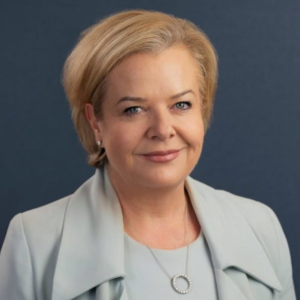
Jacqueline Fernley, CEO and chief investment officer of asset consultant Arcpoint OCIO, describes managed accounts as a “decades-old innovation” that remains relevant and continues to evolve, evidenced by the next iteration of managed accounts coming through.
“The first iteration was relatively vanilla, not in a negative way, but in the sense that it provided a vanilla set of risk-profiled solutions, however, people’s circumstances and needs are often a little more complex and therefore don’t necessarily fit perfectly into these risk profile solutions,” she says.
“When your toolkit is a single risk-profiled, multi-asset solution in a managed account format, you’ve got very little wriggle room, which is leading advisers to mix and match off-the-shelf solutions to deliver a solution that is appropriate for a client, based on their individual needs.”
“Unfortunately, some firms are putting solutions together that were never designed to be put together and, as a result, we often spend time undoing that and working through exactly what they’re trying to achieve and why.”
The work that Arcpoint OCIO is doing is increasing understanding among advisers that there are more efficient ways to build and implement portfolios.
“It’s not that the way they have been doing things is wrong but there are potentially better ways and that’s driving the next iteration of managed accounts,” Fernley says. “If you understand the problem that you’re trying to solve, examine how you’re going about it and are open to doing things differently, you can start to be a little more innovative. The answer is often not a new investment vehicle or structure but rather using existing solutions more effectively to implement advice.”

According to Ironbark Advice CIO Chris Ogilvie, managed accounts are more than just an investment solution, they are a core strategic tool for advice businesses, helping them to improve governance consistency, behavioural discipline and operational efficiency.
“Advisory firms are increasingly using managed accounts to embed their own investment philosophy and beliefs directly into client portfolios, enabling them to deliver customised wealth solutions at scale,” he says.
Having previously used separately managed accounts (SMAs), Rekab Advice has reverted to a more traditional approach to portfolio management, enabling the business to adjust portfolios tactically, access private markets, and actively invest cash and contributions.
“Our approach to tactical asset allocation means we’re making deliberate adjustments within portfolios to respond to changing market conditions,” Amie Baker says. “It’s less about rebuilding portfolios and more about fine tuning exposures, and leaning into strategies or funds that are working well in certain environments while maintaining a disciplined and diversified structure to manage risk and deliver outcomes for clients.”
Ironically, it is the enormous take up of SMAs, which are used by over 60 per cent of advisers, based on the 2026 State Street/Investment Trends Managed Accounts Report, that may see more advisers shift to managed discretionary accounts (MDAs) as they seek to address the limitations of SMAs, according to managed account expert, David Heather.
“SMAs offer many benefits but they require the underlying investments to have daily or sometimes weekly liquidity so investors looking to invest in private markets and other semi-liquid investments may see benefit in using different approaches such as an MDA structure, unless they are prepared to run SMAs on platform and also hold investments off platform or in bespoke solutions, which isn’t necessarily efficient,” he says.
But it’s not just the democratisation of private markets that is driving managed account innovation, it’s also platform administration limitations and commercial requirements that drive groups to find alternative solutions. For example, managers of SMA portfolios must comply with the arbitrary operating rules set by different platforms, such as daily rebalancing of portfolios at a certain time of the day to enable bulk trades to be placed by the platform through a prescribed broker.
Such requirements may be okay for clients with simple needs or in “normal market conditions” but they can be sub-optimal when a manager wants to control the execution outcome to achieve a better outcome for the clients, Heather says, citing examples such as when trading assets with lower liquidity such as small cap holdings or in times of market stress.
“Those times are when significant client benefit can be derived,” he says. “So being able to support all assets in your portfolio and the various operating rules that platforms require can render SMAs to be less suitable for certain clients, particularly high net worth clients.”
“Some groups don’t understand the nuances when they first venture into SMAs but as they gain more experience using SMAs and start asking the right questions, they’ll begin to realise the limitations and that creates the impetus to search for more innovative solutions.”
Millennials and Gen Xers
According to independent asset consultant, Rob da Silva, younger investors are more curious and adventurous. They generally have a higher interest in alternative investments, such as cryptocurrency and non-fungible tokens, and a higher tolerance for growth assets, which makes professional advice crucial.
“Younger people tend to have a higher risk appetite which is understandable because time is on their side and they’re able to recover any potential losses, but they need to be informed about the risks that they’re exposed to and the potential impact of certain decisions,” da Silva says.
“There is a growing recognition that some of these alternative asset classes are legitimate and increasingly mainstream, but more work still needs to be done on educating investors about how they work, when and why they may not work, and the risks to consider.”
In Amie Baker’s experience, younger people want to “understand everything” and be involved in how their money is managed.
“They really want to know why you’ve built this kind of portfolio versus something different,” she says. “They’re also very different in terms of how they communicate and how they want you to communicate with them. When they read an interesting article, they’ll send it to you and ask, am I invested in this?”
“You need a strong understanding of what’s under the hood of the various funds and ETFs in their portfolio so you can confidently respond.”
Ironbark’s Ogilvie observes the popularity of ETFs particularly among younger investors who are often more interested in themes such as AI, digital assets, energy transition and other innovation-led sectors than traditional blue-chip investing. ETFs have also significantly lowered barriers to entry for investors.
“Clients can now gain exposure to targeted investment themes with relatively small amounts of capital, creating greater accessibility and choice,” he says.
In Ironbark’s experience, younger investors expect advice to be digital, accessible and available on demand but still supported by a personal relationship.
“They want advice to be delivered in a way that feels consistent with other modern digital experiences, whether that is through mobile access, interactive tools, video content or more intuitive interfaces,” he says. “Importantly, younger clients are looking for coaching and collaboration rather than being told what to do.”
The missing piece in the advice puzzle
Innovative advice models that bring together traditional methods of delivering advice and digital advice will play a major role in closing the advice gap, according to Nigel Baker.
“Very soon we’ll have this missing piece because technology is moving so fast and there will be the ability to use AI to generate SOAs and ROAs for a fraction of the cost,” he says. “Many people want and need advice, but they don’t get it because they don’t want it and can’t afford it in its current form, however, technology is making it possible to deliver advice differently. It is making it economically feasible to deliver advice at scale.”
Baker established Scientiam in 2017 to help advisers reach and engage with different client cohorts in a meaningful way. The digital advice platform provides financial education and access to “smarter, simpler” investment portfolios.
“As a profession, we need to bridge the gap between comprehensive, face-to-face personal advice and nothing at all,” he says. “We need to innovate to solve this massive problem to help more people.”
According to Fernley, technological advancements will enable advice businesses to deliver sophisticated wholesale investment solutions to a mass affluent audience at scale in the near future.
“Current advice models are based on deep, personal client relationships and bespoke portfolios, which is expensive and time consuming, but imagine breaking the advice proposition up into components and using AI tools to accelerate and automate the delivery of some components, such as managed account solutions,” she says.
Ogilvie cites the emergence of a “more integrated” approach with platforms, product providers and advisers working together to deliver improved client outcomes.
“Alignment between strategic advice, technology and product design is creating a better and more tailored client experience over the full financial journey,” he says.
Roadblocks
Investment innovation and platform innovation go hand in hand, according to Heather, and all platforms are not the same.
“Ultimately, if you use a platform, investors and advisers are constrained by platform capability and the willingness of platforms to enable functionality that allows portfolios to be managed in the way that an adviser and their selected manager wish,” he said. “That may lead to options being considered off platform.”
“Implementing the option to manage investments off platform requires the right technology and administration solution to facilitate the management and custody of more sophisticated investments, and that can come with additional cost, compliance considerations and risk in the whole of portfolio investment implementation.”
Heather, who works with wealth management firms to review existing arrangements and advise on managed account capability, is currently supporting two separate firms in their implementation of a managed account that can efficiently run portfolios of listed assets because “existing platforms have not been able to deliver a viable solution to them”.
“In the managed accounts ecosystem, innovation is tough,” he says. “It’s not enough to have the best investment ideas in the world, you need the technology and the administration capability to work seamlessly,” Heather said. “You also need experienced people to assist you in the journey.”
The collapse of Shield and First Guardian, and the heightened regulatory and media scrutiny on the financial services industry, may curb the appetite of platforms, trustees, research houses and licensees to be innovative.
“Trustees and platforms have been put on notice so the investment ecosystem has already been tightened and that will continue. SMAs have not been immune from this and the impacts on innovation remain to be seen,” Heather said.
Innovation wish list
Fletcher said in the wholesale space, advisers look for institutional-grade tools, broader investment access, and operational efficiency – needs that platform, product and research providers are increasingly prioritising.
“At the end of the day innovation, first and foremost, needs to help clients meet their objectives, and help advisers do so in a way that reflects client preferences and circumstances, investing in a way that reflects who they are and what they’re about,” he said. “When serving clients with larger balances, more complex circumstances and structures, and higher expectations for service and results, needs such as tailored solutions, broader access to new diversifying assets, advanced data and research tools, and integrated operational systems, are all heavily reliant on continuing innovation further up the chain.”
Real innovation improves people’s lives and, when it comes to investment innovation, it should improve the lives of investors, according to Nigel Baker. On that basis, he questions if recent investment solutions, including managed accounts, are truly innovative.
“I want to see innovation that makes things easier and better for my clients and from the small sample of SMAs that I’ve seen, they are not delivering better client outcomes,” Nigel Baker says. “I get the argument that SMAs are more efficient for advisers, but the returns are not necessarily better, costs may be higher, and the tax outcomes are not as clear as purported. Additionally, clients don’t really understand them, so I’m not convinced they are a key innovation that’s improving their lives.”
Ogilvie believes advice businesses need better data connectivity and integration across advice tech ecosystems, as many are still operating fragmented systems that do not communicate with one another.
“Advisers are seeking a true single source of truth across their tech stack to reduce duplication, improve efficiency and enhance client outcomes,” he says. “While product innovation has accelerated significantly, mainstream advice software has struggled to keep pace. As a result, advisers are often forced to bridge the gap manually between provider tools, client-facing materials and compliance systems.”
Ogilvie says the question facing advisers is not whether innovation exists but which technologies to back and how to successfully integrate them into already complex operating environments.
This article is featured in the Professional Planner Investment Innovation Guide. Click here to download the guide.


















Leave a Comment
You must be logged in to post a comment.