
An AFCA determination has revealed that an investment manager for the Shield Master Fund also referred clients to financial advisers who recommended those clients invest in the fund.
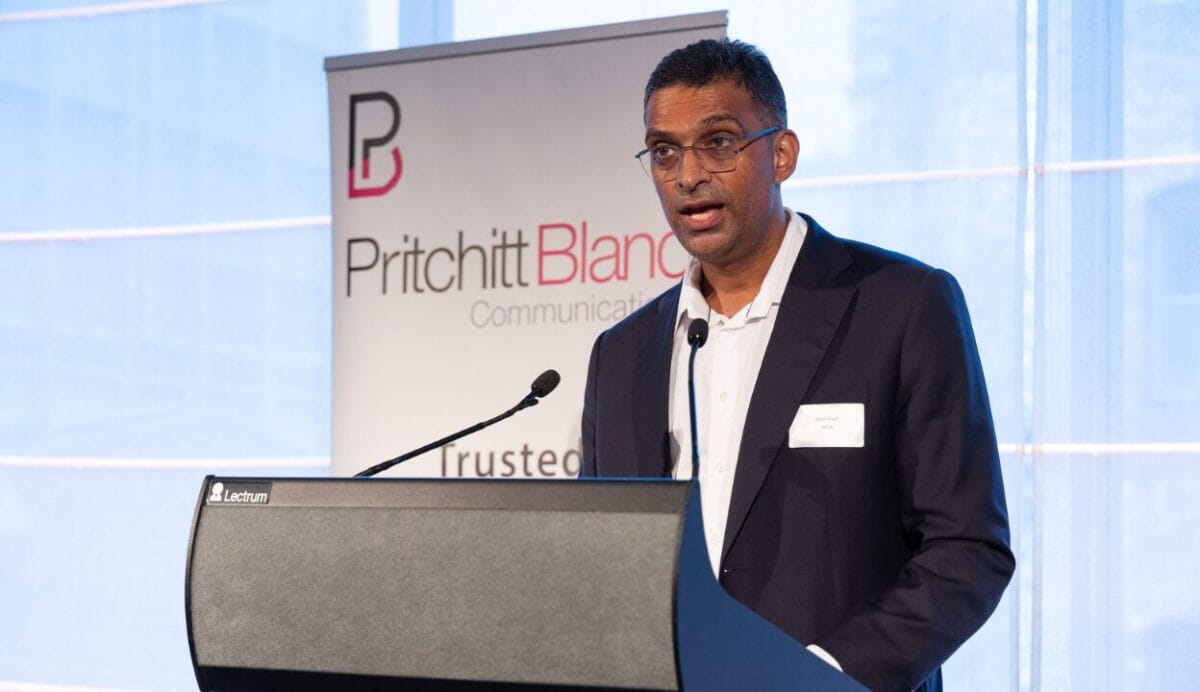
AFCA lead ombudsman for advice Shail Singh told an industry event on Thursday night that one of the lead determinations relating to the $1 billion collapse of Shield and First Guardian found that an investment manager for Shield also acted as a lead generator.
Singh was referring to the lead determination for MWL Financial Services which found CF Capital – run by Paul Chiodo, the director of Shield responsible entity Keystone Asset Management – was the source of the client referral.
The determination said the complainants were cold called in “August or September” 2021 and were invited for a superannuation review by a member of the client services team at CF Capital.
The correspondence used a CF Capital email address and presentation letterhead to set up a Zoom meeting to discuss superannuation options with the complainants before referring them to MWL for personal advice.
“There is no indication the financial firm disclosed this relationship and conflict to the complainants or made any attempt to manage that conflict in the provision of its advice,” the determination, which found in favour of client, said.
“It is unclear how CF Capital was remunerated for generating the client lead and introducing those clients to the financial firm. The panel is not satisfied the financial firm has given priority to the complainants’ interests over its own in this instance.”
Other determinations have found that lead generators were receiving part of the advice fees clients paid to advisers.
The Statement of Advice featured in the MWL determination recommended the client establish an SMSF and invest the majority of their funds into the Shield high-growth option.
Singh, who will also be speaking at the Professional Planner Advice Policy Summit on 23-24 February, said at the industry event on Thursday night that independence from lead generators matters.
“Where a lead source frames the conversations or funnels clients toward a particular outcome, there’s a heightened responsibility on the adviser and licensees to counter that influence, not reinforce it,” Singh said.
“The strongest firms treat leads for what they are – potential risk channels – and they apply additional scrutiny or decline to use them all together.”
AFCA has released four lead determinations for different licensees involved in the collapse and a lead determination for InterPrac is due to be published in the coming week.
“The findings by our ombudsman and panels consistently conclude advisers failed to conduct appropriate risk assessments,” Singh said.
“Recommendations were not in the clients’ best interests. High risk investments were inappropriately recommended to people with conservative or balanced risk profiles. Advisers failed to act independently of lead generators. Licensees did not adequately supervise their representatives.”
Singh said AFCA has received more than 2000 complaints in relation to Shield and First Guardian.
AFCA has received 854 complaints for Shield master fund and 1266 complaints for First Guardian, but this is still a fraction of the 12,000 people affected.
“The complaints we receive span a range of parties,” Singh said.
“The largest group relates to financial advice firms, but we also have complaints against superannuation trustees and a smaller number regarding the insolvent responsible entities.”
Singh said investors were exposed to both Shield and First Guardian, so a number of complaints appear in both sets of figures.
“We’re dealing with multiple entities across advice, funds management, [platform] trustees, and product operation – some solvent, some insolvent – and a very large number of people who followed similar pathways into them,” Singh said.
“That complexity is exactly why AFCA has built dedicated teams and increased capacity to work through these matters as efficiently and fairly as possible.”
Singh warned that licensees need to conduct more due diligence of the advisers in their network and that oversight “has to be active and has to be early”.
“This goes far beyond periodic file checks – it means spotting patterns, repeated use of the same platform, the same high-risk product, a number of people getting into a product at the same time, the same cut-and-paste reasoning,” Singh said.
“They’re all red flags. Strong licensees will intervene early, run thematic reviews, coach when needed and escalate when required.”
AFCA lead ombudsman for advice Shail Singh will be speaking at the Professional Planner Advice Policy Summit next month. Advisers, practice principals and licensee executives are eligible to attend and can register here.