
Financial advisers and APRA-regulated super funds will be part of a larger cohort to be billed to fund a shortfall in the FY26 Compensation Scheme of Last Resort levy.
The CSLR has perviously confirmed the FY26 levy for financial advice will be $47.3 million over the $20 million subsector cap, and legislation governing the scheme requires a special levy to cover the additional funding.
There will be 23 “retail-facing” subsectors contributing to the special levy. Licensees that provide personal advice on relevant financial products to retail clients will pay the most (22 per cent of the total levy), followed by credit providers (15.3 per cent), responsible entities (13.7 per cent), superannuation trustees (12.9 per cent) and all other sub-sectors (under 10 per cent each).
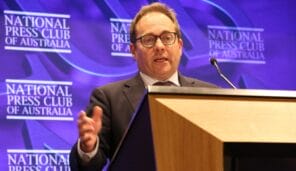
But Minister for Financial Services Daniel Mulino said the decision on the FY26 levy is not a “determinative precedent” for future years.
Mulino told a media briefing on Wednesday that there will be a discussion paper released in February that will look at other possible sources of funding for the CSLR, including the parent companies of financial advisers, as well as individual SMSFs, the latter currently not possible under law.
On 12 December, Treasury will release a consultation paper to explore options to improve how professional indemnity insurance is applied to compensation claims, including AFCA determinations, to ease pressure on the CSLR.
Mulino will work with Assistant Minister for Productivity, Competition, Charities and Treasury Andrew Leigh on the impact of the misuse of insolvency processes that help firms evade AFCA determinations.
In February 2026, there will be a further policy options paper released detailing proposed reforms to the CSLR to help the scheme become sustainable, which will informed by the outcomes of an industry roundtable that was held on Wednesday morning.
Changes to the “but for” provision in AFCA determinations and excluding them for the scheme – a change flagged by Mulino’s predecessor Stephen Jones – is still on the table.
“I will include consideration of the ‘but for’ test in the discussion paper in February,” Mulino told the media briefing. “We will be looking at whether that’s appropriate for a scheme of last resort.”
‘Threatens the very viability of our profession’
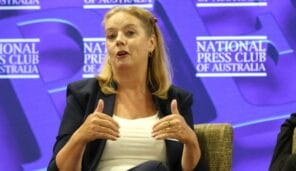
Financial Advice Association Australia chief executive Sarah Abood said the impact of a special levy adds an extra $700 per adviser, which is “unfair and unsustainable”.
“We call on the Minister to reconsider this unjust additional levy that threatens the very viability of our profession,” Abood said.
“Nothing is achieved for Australians, particularly for those seeking retirement advice, if we drive out compliant financial advisers who are doing the right thing, by forcing them to pay for the misbehaviour of a small number of bad actors.”
Shadow Minister for Financial Services Pat Conaghan called the levy a new tax on everyday Australians with a super or bank account, and said it doesn’t address “deep problems” within ASIC.
“I am glad that financial advisers aren’t the only ones being asked to pay into this scheme, of course,” Conaghan said.
“Financial advisers that have done nothing wrong shouldn’t be left to carry the full load when things go wrong. Our hope is that at the end of all of this we will have a more sustainable and fairer scheme.”
The Association of Superannuation Funds of Australia fired a warning shot to the government, arguing that including APRA-regulated funds in the scheme risks undermining trust in Australia’s compulsory retirement savings system.
Despite the government saying yesterday’s decision doesn’t set a model going forward, ASFA chief executive Mary Delahunty said the announcement would set a “dangerous precedent”.
“It risks treating retirement savings as a convenient pot of money for solving problems, rather than keeping super focused on providing a dignified post-working life for Australia’s retirees,” Delahunty said.
“In a compulsory system, people must be able to trust that the government takes the legislated objective of super seriously. The objective of super is to preserve Australians’ savings so they can provide income in retirement. If the government sets the precedent of using people’s retirement savings for other reasons, that will undermine trust in the system.”
However, Super Consumers Australia CEO Xavier O’Halloran said the reforms are vital to restoring people’s trust in the financial services sector, particularly for those who left out of pocket through no fault of their own.
“We strongly support the Government’s commitment to protecting Australians from being misled or ripped off by financial operators,” O’Halloran said.