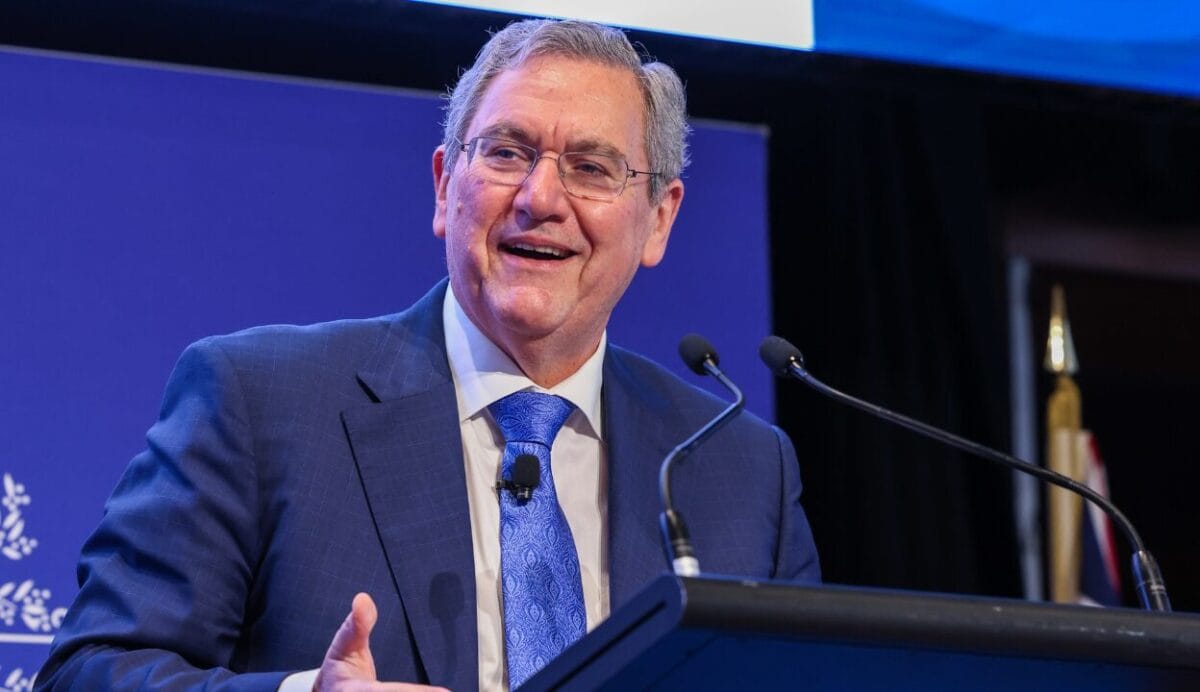

ASIC chair Joe Longo says he doesn’t believe the Shield and First Guardian collapse will spell the end of the outsourced trustee model, rejecting suggestions that it is necessary for platforms to be their own trustee.
During an appearance at the National Press Club of Australia on Wednesday, Longo was asked if there was a future for the outsourced trustee model in superannuation given the finger pointing over responsibility in the failed Shield and First Guardian funds.
“It’s up to the superannuation funds and trustees to make their own decisions about whether to insource or outsource critical infrastructure or capability, the responsibility there never leaves them,” Longo said.
Macquarie’s agreement with ASIC to pay $321 million in remediation to investors who lost retirement savings in the Shield master fund means about a quarter of those caught up in the $1.2 billion collapse will be restored to their financial position before they switched into the fund.
Equity Trustees is currently in court defending accusations it failed in its due diligence role when it allowed the fund onto its platform.
Netwealth has asked for government assistance to remediate clients, while Equity Trustees and Diversa Trustees are expected to seek the same assistance.
“In connection with superannuation trustees who run a platform, there’s existing law and that’s been tested in some court cases at the moment,” Longo said.
“What we’re looking for there is a higher level or certainly a more serious level of diligence from superannuation trustees as to what platforms or what products they’ll permit on their platform because they’re basically saying to people they’re safe to invest in.”
Whether switching between super funds needs to be slowed down, Longo said it’s an option that must be “thought through”.
“Introducing frictions into the super switching process is something that I’m sure the superannuation sector is open to dealing with,” Longo said.
“No one wants to preside over a problem like this if there are some potential solutions so it’s going to require some engagement with the sector as to what the practical solutions might be.”
However, he said there may not need to be frictions for every switch in the system.
“If you’re transferring your money from one safe place to another, then that’s fine,” Longo said.
“The remedy we’re looking for or the issue we’re trying to deal with is people sending their money to odd places – still within the regulated super space, ironically. That often involves lead generators and financial advisers. There’s no silver bullet here. I like the idea of slowing things down at the beginning, like a cooling off [period].”
More powers
Longo reiterated the view that there should be stricter oversight of managed investment schemes (MISs) and improved data reporting, as well as changes to the wholesale/retail investor thresholds, which the regulator recommended in its submission to the Albanese government’s shelved MIS review.
Longo said much of this is needed to help combat schemes such as Shield and First Guardian.
“Other ideas should be considered including disrupting the lead generation businesses that trick consumers into moving their super [and] slowing down the superannuation switching processes,” Longo said.
“One of the key themes of ASIC’s work in recent years has been to highlight superannuation trustees’ critical responsibilities to members. That’s why we keep asking whether trustees are doing enough to meet their obligations, including when things go wrong. This isn’t a question for ASIC alone, it’s a challenge for all of us. Getting it right will mean greater investor confidence and a more resilient, diversified market.”
Public spotlight on private credit
Longo’s appearance at the National Press Club came as the regulator publicly released its response to its February discussion paper on public and private markets, and a surveillance report on private credit.
The surveillance report covered 20 retail and eight wholesale funds and included the likes of Metrics and La Trobe revealing poor practices in the industry.
Longo reiterated ASIC will conduct additional surveillance work but stopped short of revealing any specific action that would taken after the release of the report.
“Some of the activity of practices we’re seeing are rather unattractive or close to being illegal – if we’re satisfied of that you can expect us to take action,” Longo said.
“The question of illegality and whether the conduct rises to a point where we’re prepared to formally investigate it and use our formal powers and take a case to the Federal Court or Supreme Court is another matter.
“For serious misconduct you can expect us to be there, otherwise you can expect us to have intense surveillance, more stop orders. We have an extensive tool kit and we’ll use it.”