
One of the directors of the First Guardian Master Fund is at risk of losing his legal representation due to his inability to pay legal fees, and is seeking to sell assets, the Federal Court has heard.
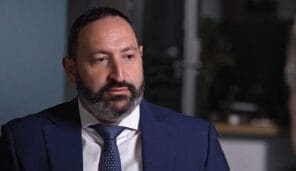
Court proceedings commenced on late Thursday afternoon but were adjourned until Friday morning after Selimaj’s lawyer told the court he had been unable to receive instructions from his client.
“We can’t wait six months to receive fees in relation his matter,” Selimaj’s lawyer said on Friday. “We are unfunded and if a litigation guardian is appointed to Mr Selimaj I don’t know which law firm will represent him because we will unlikely be acting in this matter.”
Selimaj is one of the directors of Falcon Capital, the responsible entity of First Guardian, along with David Anderson, who was responsible for running the fund.
The court has already placed travel restraints on Selimaj and Anderson until 27 February 2026 as well as freezing their assets. ASIC had sought the appointment of a receiver and manager to the personal property of Selimaj to preserve assets during its investigation.
Lawyers for ASIC told the court that the receivers of Falcon Capital want further information and documents from Selimaj, including his passport, in order to determine the countries he has visited, which may help identify foreign banks and accounts where funds may be held.
The hearing discussed the sale of shares and paintings to cover legal fees. Selimaj is looking to sell two paintings estimated to be worth between $50,000 and $70,000, according to art dealers they had canvassed for a deal. However, this would be before a nearly 14 per cent seller’s commission.
The court heard Selimaj also had $18,000 worth of ASX-listed shares, which it was accepted would be simpler to liquidate than the paintings.
Selimaj’s lawyer told the court that the fees that had been accrued are larger than the value of the shares, but that they still want to sell shares to apply them to outstanding fees.
ASIC and the receivers told the court they had concerns about the sales process and wanted to make sure that the value of the paintings is maximised. Furthermore, there were concerns that the priority of the receiver, which is to maximise the value of the sale, isn’t the same as the defendant, which is a quicker sale.
Selimaj gained notoriety as the listed owner of a $548,000 Lamborghini Urus featured in the liquidator’s report.
Selimaj’s lawyer told the court he was concerned about receiving the most value for the sale of assets, particularly art, noting a $400,000 vehicle was sold by the liquidator for less than market value.
The regulator argued against allowing Selimaj to directly sell the paintings with the receivers given veto powers on the deal, adding that process would be too time consuming.
ASIC told the court it was concerned that a sale would not be concluded by the end of the year, anticipating a February sale at the earliest.
The hearing was adjourned on Friday with a decision on the asset sales process expected to be handed down next week.
The collapse of the Shield and First Guardian funds has become one of ASIC’s highest priorities, with $1.2 billion of retirement savings across 11,000 investors at risk, and it is anticipated that reclaiming assets from First Guardian will be significantly more difficult than from Shield.
ASIC won stop orders against the Shield and First Guardian funds due to concerns of mismanagement of investor money, including the funding of pet investment projects of the directors or personal expenses including luxury cars and mansions.
Both funds are alleged to have paid advice firms who in turn used that money to pay for lead generation services to funnel customers into the funds without considering their best interests.
ASIC alleged financial adviser Ferras Merhi signed 6000 Statements of Advice that directed clients into the Shield or First Guardian products, failed to act in the best interests of clients, gave conflicted advice, and provided defective Statements of Advice.
Merhi, who ran the Venture Egg advice business, also separately ran his own licensee Financial Services Group Australia. He’s also accused of receiving loans from the First Guardian fund to purchase one his advice businesses that far exceeded the purchase price.
The regulator is also reviewing other parts of the advice chain including the role played by trustees and ratings houses.
Macquarie, which acted as a trustee for its wrap platform that hosted Shield, has agreed to remediate Shield investors directly, purchasing $321 million worth of member holdings in the fund. The wealth giant is expected to recoup some of the lost millions via the liquidation process, with the rest absorbed on the ASX-listed company’s balance sheet.
Netwealth has applied for government assistance to remediate members, with Equity Trustees and Diversa Trustees expected to pursue the same move.