
The Compensation Scheme of Last Resort is calculating the remediation costs for claims related to the Shield and First Guardian master funds, which it expects will come through in the FY27 levy.
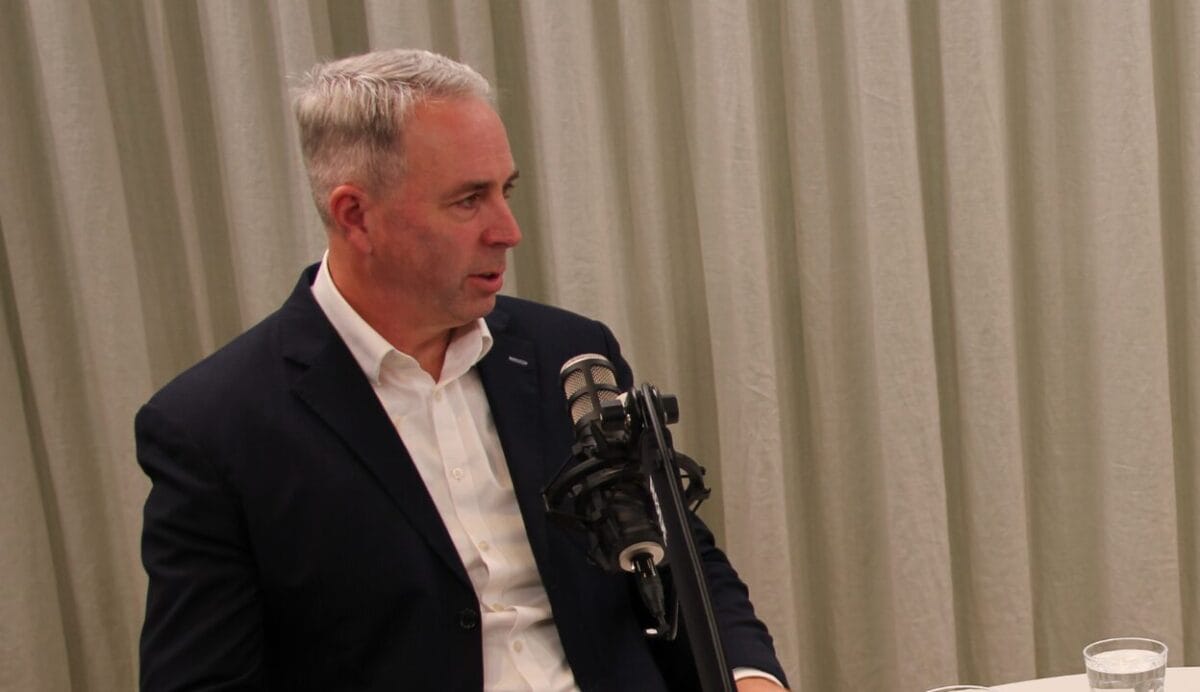
The Australian Financial Complaints Authority has begun filtering through complaints regarding advice firms and licensees involved in the Shield and First Guardian collapses, and CSLR chief executive David Berry told the Professional Planner Shape of Advice Podcast.
“We see some of the complaints that come through more in number by organisation and their links to certain products,” Berry said.
“AFCA will deal with some of these in 2027. In our discussions with AFCA, they see the urgency with regards to understanding the Shield and First Guardian product issues and the related financial firms that were attached to giving advice. They will ramp up, they will put more staff on, and we will need to make some sort of estimate as to what we think we may pay out in compensation in FY27.”
The FY27 levy is estimated to already be over $123 million and Berry wasn’t sure how much higher the levy would jump as the scheme works on an updated levy estimate.
“The biggest limitation that we have is the speed with which AFCA can work through all of the complaints,” Berry said.
He added it’s unknown how many of those people will lodge successful complaints with AFCA that will come through to the CSLR.
“Whilst there’s a potential for 12,000 [claims], we don’t know what that end number is going to be,” Berry said.
The collapse of the Shield and First Guardian master funds has left $1.2 billion of retirement savings of over 11,000 Australians at risk.
ASIC commenced investigations over concerns of an “industrial scale” practice whereby the funds paid tens of millions to advice firms who in turn paid lead generators to funnel clients into the funds via the advisers.
The regulator alleged none of this was done with client’s best interest in mind and is also investigating the funds for misuse of investor money including personal expenses like luxury cars and houses, as well as financing pet projects of the directors.
ASIC said 140 advisers are being investigated for their role in the collapse along with those connected to running the funds. Additionally, the role of “gatekeepers” in the advice process – licensees, researchers and platform trustees – is also under their scrutiny.
Equity Trustees is in court fighting allegations it failed its due diligence role, while Macquarie settled with regulator to remediate all Shield clients on its platform.
‘But for’ impact on Shield, First Guardian
The implications that the ‘but for’ determinations might have on Shield and First Guardian related claims is yet to be known, but with instances like Macquarie’s arrangement with ASIC, clients would still be entitled to an AFCA claim due to poor advice.
“There’s certainly a lot of noise around ‘but for’, I think that noise has slowed down, but I don’t know if but for is necessarily solved with Shield and First Guardian,” Berry said.
The CSLR has made a submission to the post-implementation consultation which called for the exclusion of ‘but for’ determinations going to the scheme and instead only compensating clients who have suffered capital loss.
“[‘But for’] does contribute to the compensation now, particularly with Dixon and I totally understand AFCA’s position is built on legal precedent,” Berry said.
AFCA’s ‘but for’ determinations mean clients can be compensated for lost gains from inappropriate advice.
This has received industry criticism for covering “hypothetical” gains and making the CSLR unsustainable.
The consultation was launched by former Minister for Financial Services Stephen Jones upon news that the CSLR levy for the upcoming financial year was estimated to be more than triple the subsector cap.
The legislation that governs the scheme only allows each of the four subsectors to be collectively levied $20 million each financial year and the minister would be required to create a special levy, which incumbent Minister for Financial Services Daniel Mulino is currently consulting on.
“We’ve advocated that we shouldn’t really be covering the ‘but for’, but AFCA should still continue to make that in their determination,” Berry said.
‘95 per cent of my focus’
Berry had previously said ‘but for’ determinations made up about 80 per cent of the CSLR, but this was mostly due to Dixon Advisory claims where clients were in the fund for 10 to 15 years. In the case of United Global Capital, that timeframe has been much shorter.
“We’re not necessarily seeing ‘but for’ as a key contributor to the total compensation we’re paying out other than Dixon at the moment,” Berry said.
Despite concerns from the profession about paying a hefty cost to cover Dixon Advisory remediation via the scheme, United Global Capital accounted for around 70 per cent of the compensation to be paid out from the FY26 levy.
United Global Capital, currently in liquidation, had its license cancelled by ASIC over concerns that the firm ran a conflicted advice model which involved placing consumers into the connected Global Capital Property Fund.
UGC had a similar playbook to Shield and First Guardian where lead generation services that used online “superannuation health checks” to collect contact details of consumers.
AFCA recently extended the deadline for consumers to make complaints against UGC because the “full picture of the consumer harm and UGC’s involvement in the collapse of Shield and First Guardian was not yet understood”.
With scandals like Dixon Advisory, United Global Capital, and Shield and First Guardian, the overwhelming focus on the CSLR has been on financial advice. “It would easily be 95 per cent of my focus is on that subsector,” Berry said.