

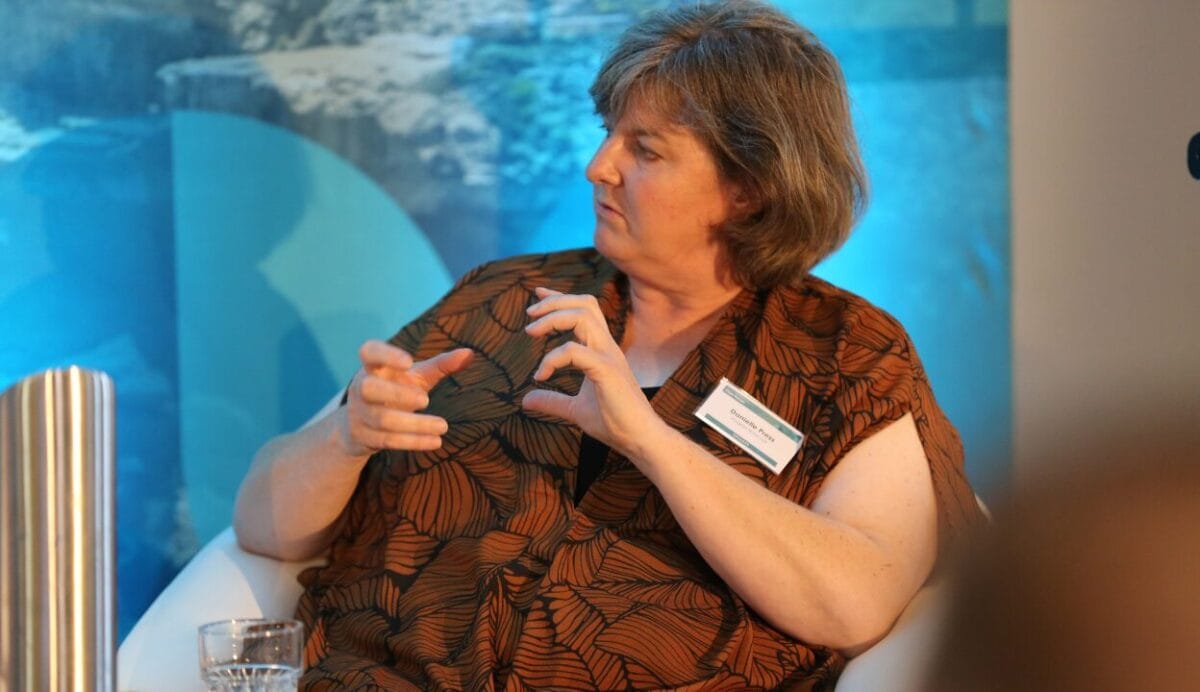

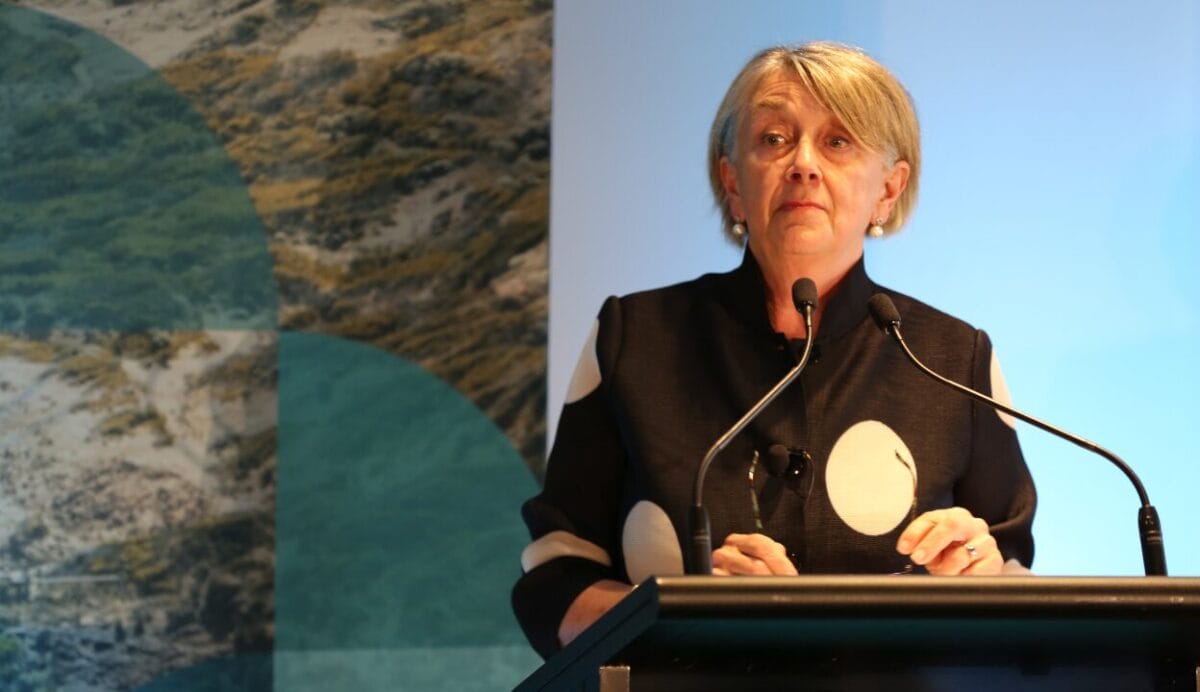
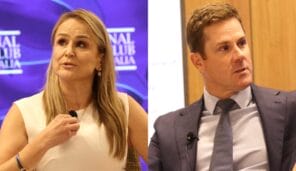
Former ASIC Commissioner Danielle Press says she is confident changes recommended by the independent governance oversight body she’s been appointed to lead will result in listed financial services group Sequoia Financial Group making meaningful changes to its processes and systems in the wake of the First Guardian and Shield managed investment scheme collapses.
Press is independent chair of the body established by Sequoia to guide the company’s board and senior management on internal system improvements to avoid a repeat of a situation where clients of Sequoia subsidiary InterPrac Financial Planning were inappropriately invested in Shield and First Guardian.
The collapse of the funds has become one of the corporate watchdog’s highest priorities with $1.2 billion of retirement savings across 11,000 investors at risk.
ASIC has alleged that lead generation services were used to get customers to rollover their superannuation via a financial adviser into higher risk funds which had conflicts of interests and miss-used member funds.
The regulator has already taken Equity Trustees to court for its due diligence role. The group was the trustee for NQ Super and DASH’s Super Simplifier, while every licensee except InterPrac implicated by ASIC in the scheme has been cancelled.
The governance body is not a formal committee of the Sequoia board, but Press tells Professional Planner it has access to the board as an “escalation point” if it believes the company’s response to its recommendations is inadequate.
“[Sequoia CEO Gary Crole] is on that oversight committee, as is the head of legal and their compliance people. The right people from the business are sitting on the group itself,” Press says.
“I think that the challenge will be making sure that recommendations are actually picked up within the business. But at this stage, and again, it’s very early days here, I’m not getting a sense that anybody is trying to squib their responsibilities to lift [standards].”
Press says she has a good working relationship with Sequoia chair Mike Ryan, and “an open door to the board”.
“It will ultimately have some reporting up through the board’s risk committee to the board, which I think is really important,” she says.
“That’s the escalation point, if you need one. It, for me, was really important to make sure that was articulated: this has to be an all-of-organisation and all-of-enterprise issue. It needs to be an all-of-enterprise discussion.”
Press says the issues surrounding the collapses of Shield and First Guardian are complicated by alleged fraud in the schemes, but lifting governance standards across Sequoia’s Australian financial services licensees – InterPrac and Sequoia Wealth Management – is “relatively straightforward, in a sense”.
“[It’s about] how do you think more about red flags? How do we make sure that we’re acting quickly enough, rather than thinking there might be a problem, but not doing much about it because we’re not sure it’s there yet; how do we become more proactive in oversight of these investments and products and those sorts of things?” she says.
“This one is pretty tough, because there’s a fraud. Fraud is pretty hard to detect most of the time until you know it’s there. And yes, in hindsight, when you look back, there were definitely red flags, but I’m not sure they were blazing red at the time.
“It is about saying… we’ve had a crisis. How do we actually learn from that and get better, rather than just put a put a band-aid over it and move on.”
‘But for the grace of god go I’
As a former Commissioner of the agency tasked with regulating Sequoia’s business, Press’s appointment was eye-catching. She says she was aware attaching her name to the governance body would attract attention and set high expectations of success.
“The [due diligence] I did that was most important to me was, if I am going to do this, are we going to change?” she says.
“I don’t want to be involved in this if it’s just we want a big name… and then walk away and not get anything done. Which is why Mike Ryan was important in my conversation: what is the board looking for, and is the board prepared to support the changes that need to be made?
“I think he is really looking to make the changes that that I think need to be made around tightening up some of the oversight and some of the governance processes. And it’s obvious that has to be tightened when you look at the issues that have transpired. It would be very difficult to sit there and say, no, nothing needs to change, it’s all good.”
Press says she was approached by Crole – whom she already knew, as the head of one of the largest financial advice licensees ASIC regulates – before the Shield and First Guardian issues blew up as a major problem for InterPrac.
“He raised with me generally that there were issues ASIC were looking at [in] the organisation as part of the focus on this issue, the Shield and First Guardian problem,” she says.
“Part of this was about trying to be a little pre-emptive, to say, well, can we get ahead of this and start to fix some of the things that, if ASIC were to put license conditions on, would likely to need fixed?”
Press says the issues at Sequoia and surrounding Shield and First Guardian are part of a recurring pattern across the financial advice industry, despite re-regulation of the sector over more than a decade, starting with the Future of Financial Advice reforms, then the changes flowing from the Hayne royal commission, and now with the protracted Delivering Better Financial Outcomes legislative program.
They’re probably happening elsewhere, in other financial advice networks and businesses as well, Press says.
“There’s an element of ‘there but for the grace of god go I’,” she says.
“This is unfortunate, there is a fraud. There have been things that we should have probably picked up, and I wish they had acted more quickly, sooner. But I suspect if you look at any licensee and any planner, they could have made the same mistakes, and probably have, in funds that weren’t fraudulent.
“The fraud is the complicating factor here. The fact is that these poor investors have been completely ripped off by a fraud. That doesn’t mean that we shouldn’t be better at the advice and that we shouldn’t be better at picking this stuff up, but some of the some of the things that have gone through and have slipped are slipping on good product as well. It’s just that it doesn’t matter a good product.”
Press says the message for the advice community generally is that “we just need to be better at doing what we say we’re doing”.
“We need to be better at being investment professionals, we need to be less reliant on the platforms, we need to be less reliant on the rating agencies. We need we just need to be better,” she says.
No shield from the spotlight
Sequoia announced the formation of the governance committee to the ASX on 1 August, and Press says the disclosure obligations of ASX-listed entities meant it was a higher-profile announcement than had the AFSLs been privately owned.
“I do think that matters, actually; I think it does make it different and probably makes it harder in a lot of ways,” she says.
“[When] you are in an unlisted world, you’re able to fix things much more easily without having to tell people what you’re doing, whereas this becomes much more public. I suspect if they were not a listed company, no one would even know I’m doing this work.”
Press says she is a believer in good financial advice. The qualifier in her statement is “good”; a lot is said about the “value of advice” as if all advice, automatically, leaves people better off, but it’s clear that “bad advice makes you horribly worse off”.
“We talk about the value of advice, but it’s only when it’s good advice that it matters,” she says.
“Making sure we do have a profession that has that very high standards, high ethical standards, is critically important. I firmly believe, and I believed when I was at the regulator, and hold this today, that most financial advisers go to work thinking and hoping and wanting to do the right thing by their clients.”
But there continues to be a goup of individuals who, for whatever reason “see this as an [opportunity] to clip a ticket and take money on the way through, and make egregious rent, if you like”.
“I’m absolutely fine with financial advisers being paid and being paid well, if they’re adding value to their clients,” she says. “But you’ve got to add value, you’ve got to do the work.
“The ethics of this is so important. People trust financial advisers with some of the biggest decisions of their lives. You’ve got to be able to trust that. The thing that broke my heart in some of this Shield stuff is that clients did double-ask the questions. They did say, ‘Are you sure this is the right thing for me?’ And they were told, yes, absolutely, trust us.”
Press has been employed on an initial 12-month contract and says most if not all of the work that needs to be done and the changes Sequoia will need to make to processes and systems can be accomplished in that sort of timeframe.
And she says he will know the job is done “when I don’t wake up in the morning with that ‘Is there something else here?’ question”.
“That’s the big one: what else is here? What else do we need to think about? What else is here?” she says.
“For me, it’s done when you can actually wake up in the morning and think, you know what? I am absolutely sure that 90 per cent of the issue is going to be picked up in the things that we’re doing, because we’ve actually done the work.”




Unless Danielle Press is going to ask a certain director of Sequoia to ride off into the sunset, this is mere window dressing. How is she going to resolve years of recruiting former mortgage brokers and the like on the basis of being a “light touch” from those silly righteous overbearing regulators.