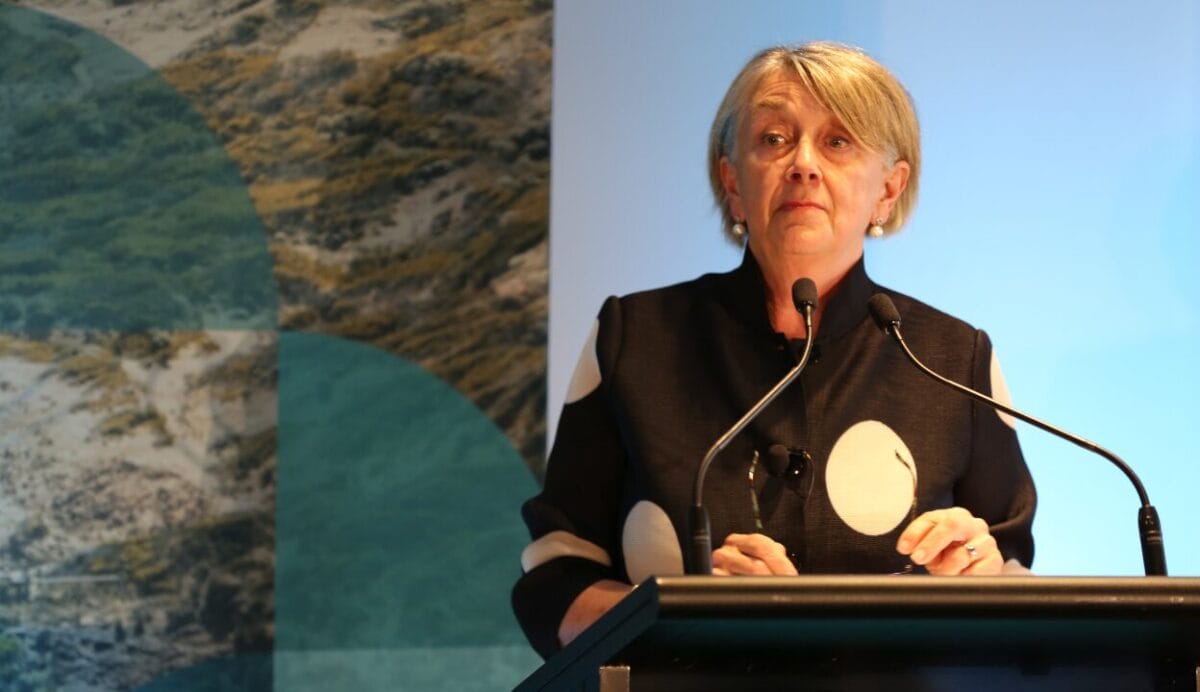

Eight years ago, Patty Knight epitomised clients’ reticence to re-engage with financial advisers after a bad experience.
At that time, Knight had already been burnt twice by poor advice. But when she needed help dealing with an unexpected $10,000 tax liability, resulting from some bad financial advice received years earlier, she decided to seek out another financial planner.
Knight was referred to Daryl Forge of Comet Advisers, formerly JDFA Business & Financial Advisers. Forge’s subsequent claim to the Financial Ombudsman Service led to her former adviser repaying the entire tax liability, due to professional negligence.
With retirement fast approaching, Knight took Forge’s advice to rebuild her wealth by closing a poorly performing self-managed super fund and transferring the proceeds to Dimensional funds via a Macquarie Wrap diversified platform. Meanwhile, Knight maximised her salary-sacrifice contributions to $50,000 annually while her previous transfer-to-retirement strategy remained intact.
“The only thing I didn’t do in the lead-up to retirement, that Daryl [Forge] recommended, was selling $100,000 invested in high dividend ASX-listed shares and transferring the proceeds into my super fund,” Knight recalls. “While I liked the idea of having access to these funds, I haven’t as yet needed to sell any down.”
Between 2011 and 2015, Knight worked part-time and subsidised her salary by taking 10 per cent of her pension fund as an allocated pension. She has now retired and receives $30,000 annually from her full allocated pension, plus $390/week from a rental property she bought 20 years ago.
Before Knight stopped working completely in 2015, Forge recommended that she make provisions for the sorts of things she wouldn’t be able to do once she retired. As a result, she decided to replace the car she had driven for 18 years, and renovate the family home and her investment property, which by this stage were both debt-free.
The last 10 years
Forge says: “The steps outlined in my retirement financial plan for [Knight] were to spend super until exhausted, sell the investment property and live off capital until exhausted, reverse mortgage the primary residence and spend until exhausted and, finally, go onto the age pension.”
Knight has no current plans to move into a nursing home and, at age 67, this eventuality could still be 20-plus years into the future. Assuming the Macquarie Wrap diversified platform continues to deliver about 7 per cent annually, it will be many years before she needs to contemplate selling down either her investment property or some of her shares.
“If I do need to finally move into a nursing home, the way we’ve structured things, the family home will be there to cover it,” she says. “It’s comforting to know I will still be able to deal with the Forges, even if Daryl has formally retired by that point.”
A planner’s evolving strategy
While Knight has remained a valued client, Forge’s business strategy has changed dramatically since Professional Planner first caught up with him in 2011.
In a conscious attempt to add Millennials and Gen-Y clients to the company’s ageing, predominantly Baby Boomer client base, Forge has brought his 27-year-old daughter, Haley, into the business.
Also, JDFA – which Daryl Forge established with his wife, Jennifer Forge, in 2007 – merged with Hudson Baker Accountants & Auditors two years ago. IN 2017, Daryl Forge says, the advice business is trying to cater primarily for two client streams: Baby Boomers who mostly need advice around retirement planning, and younger, upwardly mobile clients with fewer assets and good incomes, who need better cash flow management.
Daryl Forge says both sides of this client divide are increasingly attracted to firms operating in “IFA-land” (independent financial advisers), as opposed to advice from institutionally owned dealer groups – but for different reasons. While Millennials crave greater transparency, Forge says, Baby Boomers simply have long memories of scandals in the bank-controlled advice space.
“The two big dynamics driving advice for Baby Boomers are: A) dealing with the inability of low returns to cover lifestyle needs and B) how long will my money last in retirement?” Forge says. “There’s also growing demand for estate planning.”
Advice for Baby Boomers
One phenomenon Forge is witnessing is the education in aged care that Baby Boomers are gaining, courtesy of their parents’ needs. As well as requiring help managing money for the last 10 years of life, he says, Baby Boomers seek much advice around complex aged-care options, tax and legacy implications, and ensuring there are safeguards against advisers receiving kickbacks for the aged-care solutions they provide.
“While the family home is typically the last end-of-life strategy, the decisions by banks to lower loan-to-valuation ratios (LVRs) mean it’s not as easy to get the money out via reverse-mortgage options,” Forge explains. “Similarly, new rules allowing retirees to put the sale proceeds from downsizing into voluntary superannuation contributions are window dressing, and investors should be wary.”
He says there are also many more hands-on requirements – from paying bills to dealing with government agencies – as clients progress further into retirement. There’s also growing demand from divorcees and widows, he adds, who are often left to manage finances after a lifetime of their husbands’ handling all money matters and need assistance managing cash flow.
He says there’s also demand from a growing number of impaired clients who need help managing their financial affairs. “Helping these clients get a better handle on their finances often has less to do with asset allocation, and is more about getting them to modify their spending behaviour,” Forge says. “It also means monitoring and managing their cash flow needs to ensure they’re not caught up in modern-day online scams.”
Advice for younger clients
At the other end of the spectrum, Forge says, it’s not uncommon for high-flying younger couples to seek help after a self-inflicted cash-burn. In a severe case, he helped one younger couple who, after haemorrhaging their entire combined yearly income of $700,000 on fancy cars, overseas holidays and other extravagances, had no savings and no family home.
“When they finally recognised that their income in retirement would be a third of what they were currently spending, they realised it was time to seek help,” Forge recalls. “They were encouraged to immediately stop spending, buy a home, pay it off with the wife’s salary, live on the husband’s income and accumulate what was left.”
The needs of Millennials, Forge adds, vary from help not squandering inheritances on lavish holidays and bad bank loans, to consolidating multiple credit-card debts. “Millennials need help unravelling their financial affairs, and better discipline around money management,” Forge says. “While it’s harder saving for a deposit when renting, buying the first property is the cornerstone of good wealth creation.”