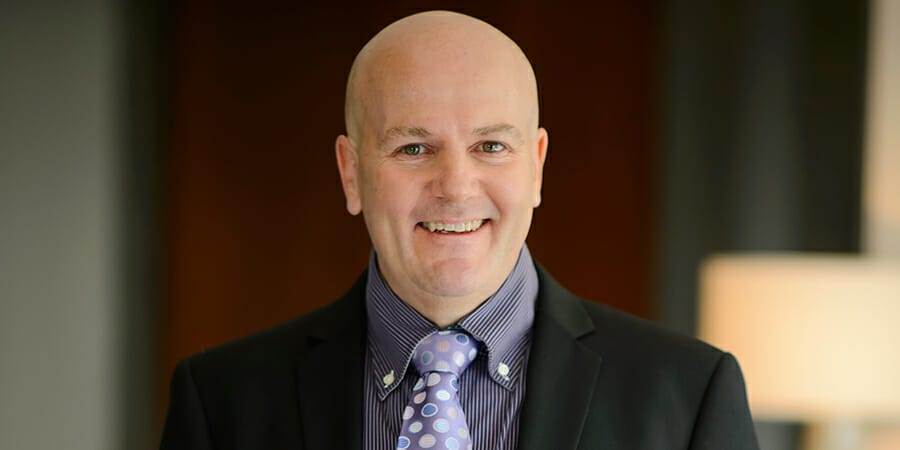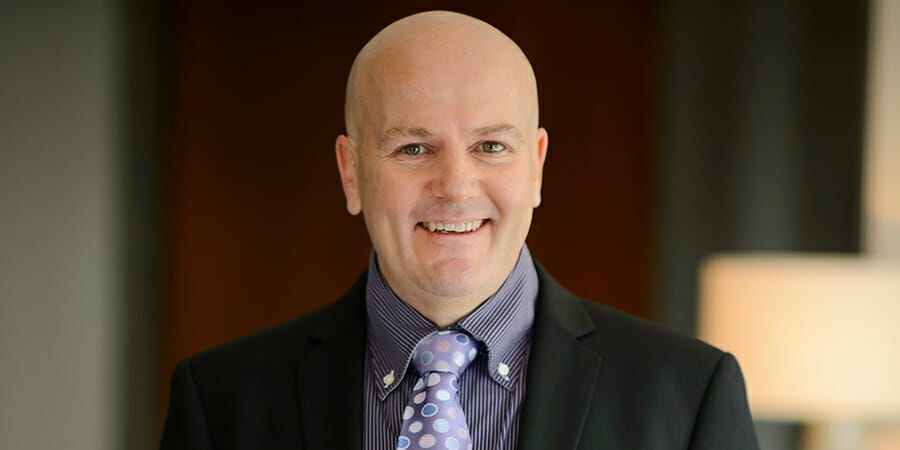

David Favero remembers the portentous moment in his dad’s home office like it was yesterday.
It was, in fact, 15 years ago but the recollection is crystal clear and freighted with the kind of poignancy peculiar to life-changing moments.
His father, Brian, who ran Favero Financial Services at the time, was anxious about the future of the business.
His clients were loyal and business was strong, but he was getting older and wanted to pass the baton at some stage.
Across the table from him, David, who could have been one of Brian’s clients, was ruminating on his own career.
“I was telling [Dad] I was a bit bored in my career, and things were getting stale,” David Favero recalls. “He was telling me he needed some fresh blood; and we just looked at each other and it dawned on us that we were the solution to each other’s problems.”
When David Favero graduated from university, he was reluctant to join his father’s financial planning business because he wanted to strike out on his own.
So he took a job in human resources and occupational health and safety at the Wagga Wagga Base Hospital, before finding a better fit as one of the trainers at the New Enterprise Incentive Scheme (NEIS).
“I loved it because I was helping people,” he says. “In my previous job in HR, I felt like I had just been pushing forms from one side of the desk to another. But in my role as an NEIS trainer, I helped people with their start-up businesses, and while not everyone succeeds, a lot of people do and that is gratifying.”
But after a decade in that role, having worked his way up to executive officer, there was nowhere for him to grow.
This time, his father’s business loomed as a viable, and much more attractive, option.
“I started [in Dad’s business] at the bottom, in admin and as a paraplanner, because I wanted to get to know the industry inside out.”
It turned out to be a timely move for the business. The FSR changes hit – to be followed by FoFA reforms. Suddenly, Brian Favero was inhabiting a very different planning world. He had to make the switch from insurance salesman to financial planner.
“He needed some new ideas and energy,” David says of his father’s business. “His clients took a while to get used to moving from being transactional and product clients to holistic clients. They weren’t used to being asked such personal questions.”
In 2005, Brian Favero suffered a heart attack and never returned to the business. He died some years later, but David knows his father was immensely proud of where he has taken the business.
“Between 2006 and 2009, we went through a massive growth phase, in which we quadrupled our revenue,” David says.
In 2016, he was named Futuro True Adviser of the Year for his dealings with a client who was diagnosed with Parkinson’s. The judges noted that he helped the man tick a number of things off his bucket list, as well as shaping his client’s financial direction at an especially vulnerable time in his life.
As for the future direction of the industry, Favero is hopeful, but notes the disruptive influence of robo-advice.
“For the DIY person, it will be very attractive,” he says. “But [a program] can’t sit across the table from someone and interpret the hopes and dreams of a client. They can’t read their body language. I do think they’re here to stay and [the trend is] going to get bigger, but I think they should be a complement to, and not a replacement for, holistic advice.”
Planner profileDavid Favero Name of firm: Favero Financial Services. Name of licensee: Futuro Financial Services. Time in the industry, previous jobs About 15 years – small-business counsellor and trainer for 10 years prior to that. Academic qualifications: Bachelor of business (business management) at Charles Sturt University, diploma in financial planning. Accreditations: Justice of the peace. Professional association memberships: Association of Financial Advisers. |