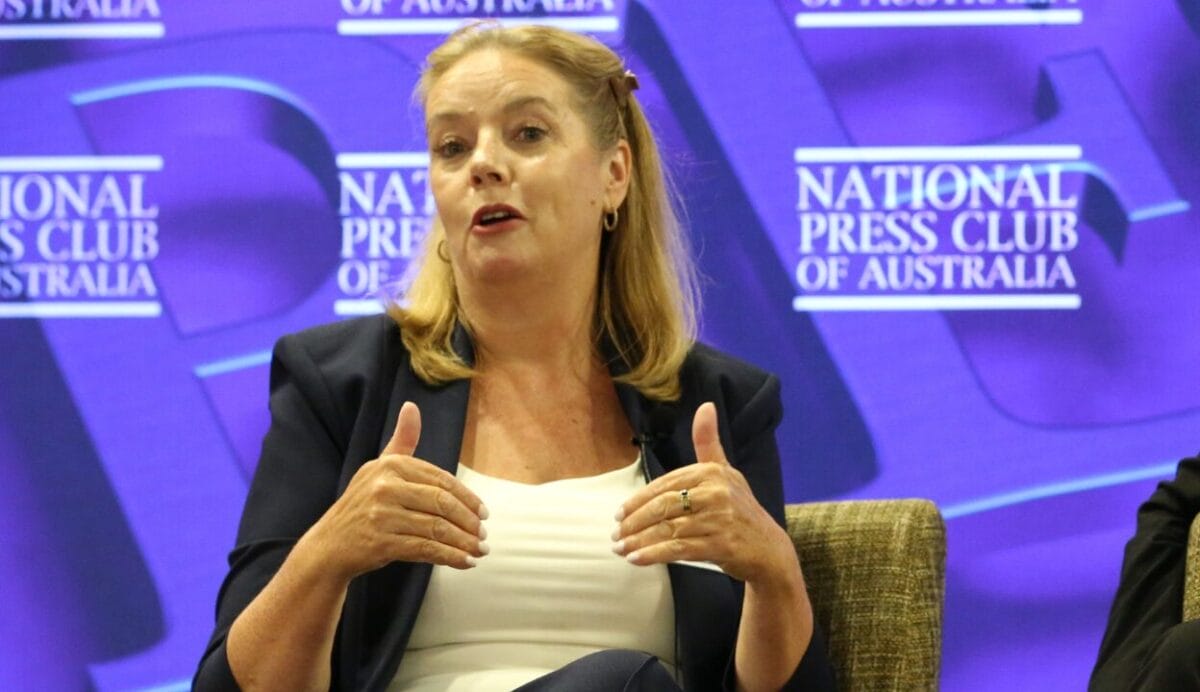

It’s important that we spend a little bit of time understanding the regulatory landscape that we’re heading into now the government has been returned, though obviously with the slimmest of margins. There are a number of issues on the agenda that need to be completed or recommenced.
Some of these are very topical at the moment. For example, robo-advice, which is the terminology that is used, which I think is misleading in itself. There’s a lot of industry discussion and media discussion and hype, but also ASIC is looking at how it is going to cater to fintechs and new technology solutions.
We’ve had some robust discussions with ASIC about this and you may have read some of the comments from myself and the FPA in the press. We are very much about supporting technology and innovation. We think innovation is going to be a great addition and support for you, as practitioners, in how you will further deliver advice that will be effective and efficient and reduce costs. But we don’t think it should be done at the expense of consumer protection.
We don’t think fintechs should be given a free ride in terms of avoiding their obligations to the end user. We don’t think consumers should enter an arrangement with a fintech without having the same protections they would have if they entered an arrangement with you. We also think fintechs should have the same obligations in terms of their licensing conditions and when providing personal advice the same obligations should apply. It doesn’t mean it’s anti-innovation; it means we need to have a level playing field.
If there’s a problem with our licensing framework that doesn’t cater for innovation then in our view, change the licensing framework. Also, I don’t know about you, but I don’t like the term “robo-advice”. Our preference is to call it “automated product selection tools” – at the moment, that’s effectively what that technology is, until such time as that technology improves beyond that. So consultation with ASIC continues.
The regulator
Obviously ASIC has been under a lot of pressure in the past 24 months or three years with the Commonwealth Bank financial planning scandal, CommInsure and a whole range of other issues it has had to front, with the senate inquiry. There’s also been a formal capability review into ASIC – is it doing what it is meant to be doing; does it do what it says it should be doing; does it have the resources? And we saw before the election, the government announce the return of some funding to ASIC and also strengthening some of its powers.
The FPA has felt for a long time that ASIC has struggled in terms of its capability and its resourcing, and I think there’s much work that needs to be done in terms of improving it. But interestingly, for those who run your own licence or are self-licensed, you’d be aware of the ASIC funding model proposal. Government, and this government particularly, is looking to move the funding arrangements of ASIC away from government and imposing it on industry. The model itself hasn’t yet been decided.
We’ve had some great concerns about the equity and fairness of the funding model as it impacts small businesses, so there’s a lot more discussion to be had there. But the reality of it is that the funding model for ASIC will change; it will be funded by industry, and not by government, going forward.
That’s something very important for you to realise and be aware of, and to engage with the FPA if it’s going to impact you, as we further engage and consult with ASIC going forward.
ASIC intervention powers
The Financial System Inquiry (FSI) was a massive piece of work that was done by David Murray at the time, and it made a number of recommendations. Importantly, there’s a few there that we’re very proactive about and we’ve advocated for, and they are in relation to product regulation.
There needs to be greater product regulation. It’s fair to say a lot of the failings in the past, though advisers have been blamed for the advice they provided, some of those products have also failed. What accountability and responsibility have those product providers had as a result of those products failing? How have they been accountable to the end consumer? How have they provided compensation and contributed towards compensation for those consumers affected? So we think stronger product regulation is important.
However, the balance between that and restricting product innovation is obviously important. And that brings us to the ASIC intervention powers and the ability of ASIC to intervene in products. As you know, ASIC does not approve products – it reviews product disclosure statements, but it does not approve products. As a result of that, one of the FSI recommendations is to give ASIC the power to intervene if it feels those products are not doing what they said they would do, or are likely to fail. That’s very important and is something the FPA does support.
Deductibility of advice fees
Tax reform was on the agenda and then off the agenda and then on the agenda and then off the agenda; there has been a missed opportunity to really engage in appropriate tax reform. There’s a lot of discussion about superannuation and negative gearing, but of course one of the areas the FPA is still very interested in, aside from tax reform, is the tax-deductibility of advice fees.
That’s an area we are still pushing. It’s been on the agenda for a long time, but so was the enshrinement of the term financial planner and financial adviser. It was on the FPA agenda for over 10 years, and we now have legislation that’s going to be introduced into the parliament to bring it into fruition.
So it’s one of those things that you never give up on, and we won’t be giving up on that particular reform either.
ASIC financial advisers register
The ASIC financial advisers register has been in play now for 12 months and there’s obviously a debate about its merits and whether it has done anything; and I imagine if I were to ask how many of your clients have mentioned the ASIC register or are aware of the register, I’d get a pretty minimal response. That’s fair.
I think the ASIC register was to achieve a couple of things, and it’s done the first, and that was to have an actual list of every single individual practitioner in the country. That list did not exist before. ASIC could not tell you, with accuracy, how many financial planners were in the industry. For me, that’s a failure of the regulator, but now it does have that list.
That list will be expanded in terms of the verification requirements for education and professional memberships. There will be disciplinary action potentially posted on that list as well. In order for it to be used by consumers, obviously it will need to be promoted and advertised to consumers by the government. That’s a question for them.
But for the employers of financial planners, the register will help you now work out for the first time the history for an adviser you may be taking on where he or she has been, according to the register – which didn’t exist before, especially if you were employing an employee representative who has not had to be on any register in the past.
Royal commission
The elephant in the room is a royal commission inquiry. A royal commission isn’t on the agenda for the current government. However, there’s a lot of talk and debate about it … given what deals the government may have to do with the crossbenches, especially in the senate. And of course, as media does, they ask every new senator who comes on board where they stand on a royal commission. A lot of them are quite supportive of a royal commission.
Will we have a royal commission? I don’t know, but there is a lot of pressure. A concern is it could be a royal commission into financial planning beyond the banks – and that’s not something that the FPA supports. The FPA has done an analysis and there’s been over 54 separate reviews and inquiries into financial advice, either directly or indirectly, in seven years. We’ve had action as a result of those 54 inquiries. What is it that a royal commission is going to uncover that those 54 inquiries haven’t already done?
As a result of those inquiries we’ve had the Future of Financial Advice (FoFA) reforms, the ASIC register, we’ve had the requirement that you all register with the Tax Practitioner’s board under the Tax Agents Services Act (TASA), and now also we’ve got the education and professional standards legislation, and the Life Insurance Framework (LIF). There’s been a whole host of reform and legislation that has resulted from those inquiries and it would be a shame if that reform agenda is put on hold or is delayed as a result of this particular political issue of a royal commission.
This is an edited transcript of comments made by Dante De Gori at the Financial Planning Association 2016 National Roadshow in Melbourne on July 13.