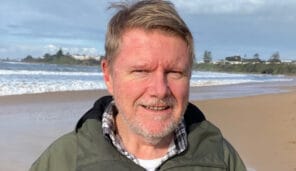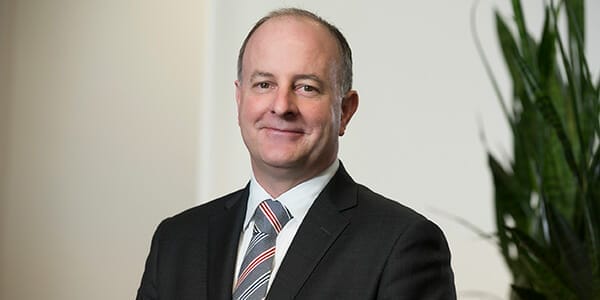


Tim Wedd calls himself the “accidental tourist” of the financial planning world. He studied engineering at Melbourne University “because that is what a lot of people seemed to be doing” and played oboe in the University Chamber Orchestra.
Financial planning was in its infancy at that stage and was yet to feature on many school leavers’ lists of career options. But when Wedd applied for a part-time job as an actuary at a Melbourne life insurance firm, financial planning found him.
“I didn’t even know what an actuary did, but I ended up working in a systems analyst role,” he says.
“A new financial modeling program was being brought in from the US and we were adapting it for an Australian client base.
“I think that was really the clincher for me because I could see how bringing various products together to create a coherent financial plan was the way forward.
“And I could see that I could lead someone to make good decisions.”
It was the mid 1980s and an exciting time to be entering the nascent industry — compulsory superannuation would be introduced over the coming years and managed investments were taking hold — and Wedd saw great potential for a lifelong career.
Thirty years later, and Wedd is still at the coalface of planning: meeting with and phoning clients regularly, helping them through major life transitions and keeping on top of regulatory changes at the company he founded four years ago, Crystal Wealth Management.
Impact on lives
It is a role he savours because of the impact he is able to have on people’s lives —often when they are at their most vulnerable.
“You can actually make a difference,” Wedd says.
“I don’t want to sound trite but you are dealing with the end user, you have tangible results. There is pressure involved but it’s also very rewarding.”
He values his day job because he knows what it is like to not do what he loves the most.
A decade ago, Wedd took a brief hiatus from planning to lead the specialist technical education and consultancy practice Financial Essentials, before selling it to Fairfax Media in 2008.
“I enjoyed educating other professionals for a while, but eventually I missed the clients,” he says.
“You were dealing with second-hand information and other people’s interpretations: it was a lot more one dimensional.”
Wedd says many people view financial advisers as dry number crunchers, but “our role is essentially about financial counseling and behaviour”.
“You do all of the basics, of course, but the thing clients really want to talk about is what is going on in their life or business,” he says.
“You find yourself building these bridges for them to get them on the right track.”
Financial bridge-building
Wedd finds this financial bridge-building extremely satisfying and recalls helping an older woman recently with her financial problems.
“Her husband had some huge tax bills and she had no idea about them,” he says.
“It was only after he got dementia and she had to assume control of the finances that this came to light.
“And then she had a house worth less than what they paid and it was the wrong time to sell.
“But bit by bit I was able to help her get back on track. We got the bank to put the mortgage on hold, we organised for her husband to be put in care.
“She needed a hand to hold and I was able to be there. There are not that many jobs that allow you to do that.”
Wedd also relishes dealing with clients at exciting junctures of their life, such as when they are starting their own business.
“A lot of clients come to us because of an illness or job loss but we are getting more and more people who are in their 30s and looking to make a change in their life,” he says.
Some have been burnt by professionals, be they accountants or unethical advisers, and may be reticent to talk about their financial situation straight off the bat.
“That is when you have to establish the relationship, build the rapport, then come back to the data later,” Wedd says.