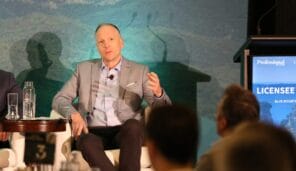

As the financial planning industry inches towards the status of profession and the self regulation needed to achieve that, the Professional Planner Dealer Group Summit, held last week, has heard that the role of financial planning licensees will remain central, but that it will have to evolve.
In a session debriefing a series of earlier small-group discussions, the Summit heard that “co-regulation is essentially today’s model, and self-regulation is a very different approach”.
“It’s similar to how some other professions – the Law Society in the legal profession – are operating,” it head.
“So the first key question is whether a self-regulatory model for financial planning appropriate at this point of its development from industry to profession.”
The Summit heard that one of the key issues in this debate is the resources of the regulator.
“The existing regulatory model wants fewer licensees and a greater degree of control over them,” it heard.
“That doesn’t help the consumer at the end of the day, so really the core question around what sort of a regulatory model should we be looking at needs to come from the bottom up, not the top down.
“If there’s a self-regulatory model in place then obviously the role that ASIC plays today will be quite different under that model.
“They would be stepping back and providing a framework-based approach rather than a direct approach: reviewing the charter of the self-regulatory body; undertaking spot audits to make sure accountability and delivery against that charter was taking place; and [maintaining] public registers with meaningful information, not just a shopping list of people who happen to be licenced – meaningful information, that was informing consumers about what was taking place.”
Licensee role changing
The Summit heard that in a self-regulated financial planning profession, the role of the licensee would change. There was a need for “broad-based representation on the self-regulatory body”.
“It’s got to be consumer groups, it’s got to be product manufacturers, it’s got to be licensees,” the Summit heard.
“We’re talking about the advice component of the value chain, but there are many other participants in the value chain and we can’t ignore those when we’re thinking about a self-regulatory model that binds all of us to a set of systems and processes and…essentially a principles-based approach to regulation,” the Summit heard.
“In terms of the self regulation model, some of the key things that would need to be in place are transparency – that’s something that’s really important in terms of any sort of self-regulatory model – and the role the licensee plays as a service provider managing and mitigating risk.”
The role for licensees and dealer groups in facilitating self regulation is clear.
“The first one is [enforcing] minimum standards – codes of conduct, codes of ethics,” the Summit heard.
“What do we as an industry, across that relatively complex value chain, believe in, in terms of what those standards are?”
“Minimum standards in terms of not just educational standards, but ethical standards for industry participants.”
The Summit heard that licensee capital adequacy requirements would also be central.
“For anyone holding a licence – whether you’re self-licensed or whether you’re a licensee – some form of capital adequacy and participation in a group consumer-compensation scheme is very, very important,” it heard.
“A fidelity-fund-style model – a regular contribution to that consumer-type approach that really reinforces that fiduciary responsibility.”
Engaging with government
The Summit heard that licensees would also have an ongoing role “engaging with government”, but “not a lobbying role as such; a role in making sure that principles-based approach that self-regulation will bring to the table is essentially understood by government so as governments change we don’t get this constant whipsaw effect of regulatory reviews that lead to more change”.
The Summit heard that the four key attributes licensees could bring to the table were transparency, accountability, reporting and discipline.
“That is really the essence of what was coming through in the discussions,” it heard.
“In terms of the role for licensees in a self-regulated model, it’s about real-time monitoring and supervision. It’s about finger-on-the-pulse or the health-check for all the participants in that licensee to understand where they sit.”
The Summit also heard that consistent standards and responsibilities across all licensees would be beneficial – including “reporting of reasons for advisers leaving licensees.”
“Consistent due diligence across all licensees and all groups – so when someone is looking to join a licensee, the due diligence process is standard, so you’ve got that fiduciary element in place, and you’ve got the principles-based [regulatory] approach.”