
Accounting professional associations such as the Institute of Public Accountants (IPA) could become increasingly important to financial planners as some of the traditional divisions between planning and accountancy blur.
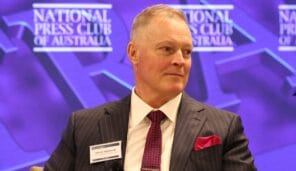
Self managed super funds (SMSFs) is one area where this overlap is becoming particularly apparent. Some of the work financial planners do on SMSFs is legally classed as tax advice, and some of the input of accountants is deemed to be financial advice. “So we’ve got each of those groups operating in each other’s respective backyards,” says Tony Greco, senior tax adviser, Institute of Public Accountants (IPA).
Financial planners and accountants are also being compared and contrasted from a broader level that considers the differences between an industry and a profession.
“The financial planning industry would love to have that sort of kudos, the confidence from the public in the profession. Accountants are valued and they’ve earnt that recognition, and rate very highly amongst their clientele for that reason,” Greco says.
He points out this level of respect has been earned over many years, “and you don’t just get that overnight. It’s a public perception exercise.”
Adviser register
However, Greco believes a shift is occurring, and sees the adviser register – along with higher minimum standards of financial planner education – as a first step in a long journey
“It’s a step in the right direction in regards to the public being able to ascertain the credentials of the adviser, and exposing the ones that have been caught up in some of the instances of bad practice,” he says.
The IPA was involved in the working party that was established by the government soon after the Senate Inquiry into Commonwealth Bank and the Australian Securities and Investment Commission was completed. Accounting bodies, financial planning groups, consumer protection advocates and government were brought together to decide what the adviser register should look like.
While Greco says the IPA would have liked more inclusions in the register, such as whether an adviser is independent or tied to an institution, he believes a compromised solution that can be enacted sooner was a better outcome.
“If that’s going to hold it up, you build a base and move forward…it might be best to say, ‘let’s get it up and running and improve it once underway,’” he says.
Parliamentary Joint Committee inquiry
The initial report from the PJC inquiry also referred to the crucial role of professional associations, suggesting that self-regulation should be overseen by an association that is endorsed by the Professional Standards Council (PSC).
“Professions self-regulate, that’s really what it’s all about. That’s held to be a good thing, and in the accounting profession, that seems to work,” Greco says.
“We’ve got a fair bit of rigour in our associations, we’ve got our code of conduct, that’s what makes our industry a profession really, at the end of the day. It’s that we’ve got a public interest to take account of as well as client interest, along with confidentiality, objectivity and conduct.”
He refers to the active compliance role the IPA plays. “Our members are accountable, and for any breaches, they go in front of a committee, it gets reported.
“Complaints from the public have to be followed through, if members are found to be in breach, they’re subject to various penalties. [This is] all part of what a profession should look like.”
Limited licensing regime
Of course, the financial planning sector faces its own challenges, particularly their new obligations under the Tax Agent Services Act, which take effect from 1 July 2016.
“The initial investigative material is saying that limited licensing is a hell of a lot of work for a small return, so many accountants are scratching their heads saying it doesn’t make any sense.
“It requires around 95 per cent of what a planner has to do, and accountants only get to play in 5 per cent of the available things that a planner can do,” Greco says.
He says the IPA is advising its members to think carefully before making a decision, looking at the needs of their clients going forward, and where their own business is heading.
Technology developments also need to be taken into consideration. “There could be quite a bit of compliance work that could disappear. We’re reminding members that the technology bus has arrived.
“And some of the things that the Australian Tax Office is doing [will] eliminate a lot of compliance work, so it’s a good time to look at what the future may look like,” he says.
In light of this, some accountants are moving out of SMSF work altogether, instead partnering with other orgs that can provide that complete service. “But they need to look exactly at what that means. Need to still be in a position to have enough work to make their model viable. There is a lot of decision-making,” Greco says.
“A lot of them are looking at the opportunity that broadening their service range can bring to their practice.”