
From SixtyFive, the bar on level 65 of 30 Rockefeller Plaza, you can see quite a lot of New York City. From this vantage point near the top of one of the city’s iconic art deco buildings, at night and with the appropriate cocktail in hand (a Manhattan – what else?) the scale of the place becomes apparent – much more than from street level.
It’s a big, busy, fast and competitive city, but like the song says, if you can make it here, you can make it anywhere.
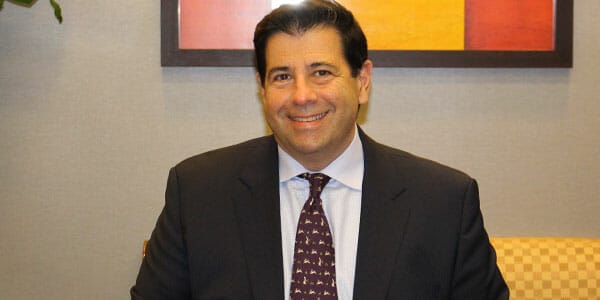
“In New York we have a lot of competition,” says Charlie Hamowy, principal of Hamowy Conigliaro & Associates (HCA), a financial planning practice located on West 45th Street.
“You want another financial planner? I’ll take you to the next floor, and the next floor, and the next floor. So you have to be good – you cannot sell someone something that’s not good in New York.”
HCA is affiliated with the Ameriprise Financial Services group, which was founded in 1894 and has about 10,000 advisers, either employed or operating – like Hamowy – a franchise. It has assets under advice or management of more than $US650 billion ($743 billion).
Timeline
A brief timeline: In 1894, a man called John Tappan founded a business called Investors Syndicate, in Minneapolis, Minnesota. In 1940, Investors Syndicate introduced one of the first mutual funds, called the Investors Mutual Fund. In 1946, Investors Syndicate was renamed Investors Diversified Services (IDS). In 1984 American Express purchased IDS; in 1995, IDS was renamed American Express Financial Advisors (AEFA); and in 2005, AEFA was renamed Ameriprise.
HCA itself employs seven financial advisers, and services roughly 700 clients.
Hamowy is one of Ameriprise’s original Private Wealth Advisors – the best of the best financial planners the company has. About 10 per cent of Ameriprise’s planners have this status. It reflects the state of the broader financial planning profession.
Hamowy is watching the development of financial planning in Australia with a keen interest, and says he hopes it doesn’t make the same mistakes that the profession has made in the US
“The industry in Australia excites me very much, because if I watch that industry evolve the way this industry evolved, I hope it doesn’t,” he says.
“I hope it passes us, because we’re not doing a good job. We have a small group of people doing a very good job for a small group of people.”
Hamowy says that there “may be 100,000 practitioners” in the US, but “the business is driven by the 20 per cent who see themselves as a professional, who aspire to doing it correctly, and challenge themselves to be good”.
“I think what is driving it is the consumer, and the practitioner,” Hanowy says.
Trusted adviser
He says a key issue facing the profession in the US is establishing the idea of the financial planner as trusted adviser. In the mind of the public, Hamowy says, there is little to set financial planners apart from other advisers. There’s no specific licence that authorises an individual to be a financial planner.
“That’s something that we all would love to see,” he says.
“You could be a stockbroker, and call yourself a financial adviser, and the public would not know the difference.
“It’s a very big problem. It allows hundreds and hundreds of thousands of people out there to claim that they give a level of service that doesn’t come anywhere near close to what I do.”
A high level of service comes at a cost, and Hamowy says that “financial planning in and of itself is not a profitable business”.
“People do not pay enough,” he says.
“Thirty per cent of my income comes from fees I charge for financial planning; and 70 per cent comes from compensation I earn from investments I help my clients to implement through.
“Fee-only planners who never make any money from [investments], it’s hard to be in that business. There still are those that do that, but it’s really hard to do that.
“It’s a challenge. Accountants do not sell product; that’s why they’re the most-trusted adviser.
“Open-architecture helps a little bit. When I first came to this company, to Ameriprise, we sold proprietary IDS funds. It wasn’t until 1998, 1999 where we were allowed to start to play around with open architecture. Today I sell almost no Ameriprise. Ameriprise bought a company called Columbia – a very big company – so we may have some Columbia things in there, but I don’t get paid any extra to represent them.
“But if we didn’t make some money from that, we couldn’t offer the service we’re delivering.”
Accounting background
Hamowy, like so many of his contemporaries, came to financial planning from an accounting background. He became a Certified Public Accountant (CPA) and did a stint at News Corporation before leaving to work in the family business. That business helped companies market products using credit card statements, and brought him into contact with American Express.
“It got to a point where I started to miss being a professional, and I think that’s the bottom line,” Hamowy says.
“When you’re an accountant and you become a CPA, you’re held to standards and your professional education is important; when you’re not in that world and you don’t have that structure around you, eventually you start to miss it – or you don’t. I missed it.”
But he was reluctant to go back to mainstream accounting.
“Accounting is interesting but accounting records what happened already. It’s not really creative, unless it’s creative accounting – and it’s way too exact for me. Way too accurate.
Investments interesting
“And I always found investments interesting. People would come to me because I was an accountant and say, oh, you must know about investments, and you must know about taxes, and you must know about insurance, and you must know about this …
“Over time, I felt there was a need for this [kind of] adviser, which I knew for sure I was never trained [for] in the accounting world.
“This was in 1990, and one of our clients when I was with our marketing company was American Express. I didn’t know it at the time, but I thought what a great imprimatur, a great brand to have, if you’re giving financial advice. Turns out, American Express actually owned a company called IDS Financial Services, which it bought in 1984, and it was the company that invented mutual funds, and it was a company that eventually migrated and did some level of what we now call financial planning.
“Next thing I know I’m talking to people about this concept of financial planning – and I loved it. I loved it. And it was amazing how people would open up, and it was amazing the emotions you would get from people.”
“I got into the business, by chance, and after two or three clients, I said, this is really interesting. This is for me. I fell in love with it. It’s powerful. I didn’t know at the time that it was such a young industry and it was a young industry trying to be defined by people who were not in the industry – if that makes any sense.
“Stockbrokers tried to define what financial planners were; the insurance industry tried to define what financial planning is; the accountants tried to define what financial planning is. And it was none of that. But what it was, was not defined.
“What was exciting to me was as we evolved over time we had a chance to really define something.”
Hamowy says it was not unusual for financial planners to be trained like salespeople. But he learned quite quickly that the skills and the tools he had were not what he needed.
“We were selling the clients on the promise of financial planning, but we didn’t actually have the infrastructure to deliver on it,” he says.
More than selling investments
Hamowy had already worked out that financial planning is a lot more than selling an investment product. It included estate planning, tax planning, budgeting, and so on.
“By definition we never could have done that. But that’s what we promised everybody,” he says.
Hamowy and Chris Conigliaro developed what they now call Seasons of Advice, and they spend time training other financial planners on how this approach works.
“Over time, to deliver on [the promise] we needed to figure out how,” Hamowy says.
“So in the late 90s, and the early 2000s when the market crashed and we had all kinds of crises – topped off by September 11 here – my partner and I stepped back and said we can’t just keep telling clients that we know what’s going on. From that came a new way of doing financial planning.
“It creates a proactive model and a systematic process that is uniquely relevant to clients, and our clients are busy so it has built-in co-ordination with other professionals – the accountants and lawyers.”