



The Assistant Treasurer and Minister for Financial Services and Superannuation, Bill Shorten, has defended the Government’s decision to leave intact commissions on life insurance outside of super while abolishing commissions on insurance bought inside super, and says the Government’s Future of Financial Advice (FoFA) package will ultimately lead to more people seeking financial planning services.
Shorten says commissions are a drag on super fund members’ retirement savings, and there is no evidence to support the proposition that the existence of commissions leads to greater levels of insurance coverage being bought inside super funds.
CLICK HERE to read the industry’s mixed response to the new FoFA changes.
Shorten says there is nothing incongruous about leaving what is perceived to be a conflicted remuneration structure on insurance outside super while simultaneously moving to abolish that conflict within super.
“As I became more cognisant and familiar with this issue in the last four months, I failed to see the case, firstly, why there should be fees paid for advice for insurance within superannuation,” he says.
“I failed to see the case, firstly, why there should be fees paid for advice for insurance within superannuation”
“The reason I say that is, superannuation is a compulsory system in Australia, which is an unmitigated good for Australians.
“We think superannuation is a special category. People have to have their savings put into superannuation. We deplore and will do every thing we can to reduce undue fees and charges on their accounts. We want Australians to retire with as much superannuation as possible, not see it whittled away with fees, commissions and charges. And that certainly goes for the provision of advice around insurance within superannuation.”
Secondly, Shorten says, there are tax benefits from paying insurance premiums from superannuation contributions.
“The argument goes, on fees and commissions on insurance in superannuation, that if you didn’t have fees and commissions, there would be an underinsurance problem in superannuation,” he says.
“We believe that because there is preferential treatment for the payment of insurance [premiums] within superannuation, that is a sufficient incentive for people to take up insurance.
“If you look at the trend of insurance payments within superannuation and people taking up insurance, there has been regular growth each year. We do not attribute this to the payment of fees and commissions – which is what the insurance industry would say. Rather, we see it’s the appropriate negotiation of group payments in superannuation and policies in superannuation that attract the preferential tax treatment.
“In other words, we think the insurance, which we do want to see Australians take out, is well catered for in the superannuation system, without any debate about fees and commissions on superannuation advice.”
Shorten says there has not been “the same debate about the issue you’re raising about fees and commissions being paid on life insurance outside of superannuation”.
“I think that’s a further piece of work that needs to be done,” he says.
“While in the past I’ve been sceptical about insurance, and I’m certainly unhappy with the performance of some insurance companies, for instance in the floods, I do accept there’s a challenge for Australians to take greater income protection, disability and live insurance. The jury is out about whether commissions help or hinder this process outside of superannuation; but I’ve become strongly convinced that within superannuation, the presence of fees and commissions add nothing to solve the underinsurance problem, and is instead a drag on people’s account balances.
“I do understand that some of the large insurance operators are unhappy that we’re proposing banning insurance fees within superannuation. But I’ve also spoken behind the scenes to the CEOs of some of Australia’s largest life insurers, and they acknowledge that life will go on, that the real challenges in terms of life insurance in superannuation are not affected by us outlawing fees and commissions on insurance.”
Shorten says there is “a credibility problem with parts of the financial planning industry, which is a disincentive to Australians seeking financial advice”.
“In recognition of this, we want to ensure that consumers, when they seek financial advice, are able to be confident that the financial advice they are receiving isn’t being given in an environment where there’s a conflict of interest,” he says.
“The jury is out about whether commissions help or hinder this process outside of superannuation”
Key elements of the Government’s reform package will address the credibility issue directly, Shorten says. Underpinning all of the proposals is the so-called ‘best interest’ test – the requirement that planners put clients’ interests ahead of their own at all times and in all circumstances.
“While we’re explicitly outlawing certain forms of conflicted remuneration, we’re outlawing conflicted remuneration full-stop, through the best interest test,” Shorten says.
“We are explicitly outlawing conflicted remuneration structures that we think are particularly egregious or inappropriate for the future going forward. But there is an over-arching best interest test, which will deal with all the permutations.
“There are some people in the industry saying these changes are too much; there’s others in the industry saying we’ll find loopholes to get around it. I do not believe they’re too much; do believe they’re overdue. I do not believe that people who just simply think they can find loopholes are sufficiently cognisant or aware of the fact that there will be a best interest test.
“What I want to see is the creation of proper financial advice which will see the best interests of the customer as being the guiding test for all relationships. We’ve explicitly banned certain conflicts, but there is still the best interest test, which is like a bright line on the ground. By putting in a best interest test, what we’re saying is there’s a line beyond which a planner cannot step, and they will have to remain on the side of this brightly regulated line, which says you’re acting in the best interests of your customer, not products and their manufacturer.”
The introduction of a two-yearly opt in arrangement is, Shorten says, “a good compromise between the call from industry, who don’t particularly want opt in, but if they have to, wanted three to five years as the minimum renewal period, and our proposition, which could be as frequent as one year”.
“I have no problem with financial planners seeking a mandate annually from their customers; it happens in other parts of business and in other commercial arrangements that people have,” he says.
“I also understand that for many planners, they’re already having regular contact with their customers, frankly much more frequently than one year. What we’re proposing is that it is mandatory that no planner can leave it longer than two years at a time to seek a renewed mandate from their customers.”
Shorten says the Government was prepared to give the planning industry time to “get their systems up and running”.
“They want to make sure planners do not fall foul of the requirement through not having their systems ready, and the cost of it,” he says.
Shorten says the Government will work with industry and regulators to develop appropriate penalties for breaches of the op-in requirements. However, he says the penalties will be commensurate with the nature and severity of the breaches.
“There’s no way any set of laws, passed by anyone, can eliminate all bad behaviour, stop some people behaving dishonestly”
“We don’t think it’s a jailable offence if you write to someone 90 days before the expiry of your contract and you don’t have a renewal on the day,” Shorten says.
“It’s not going to see thousands of planners marched off into the courts.
“On the other hand we do want a penalty system. We do not think it is too difficult in a modern world of electronic communications to be able to investigate the mandate from your customer. We’ve had examples put to us by planners: what about grandma and grandpa hop in their Winnebago and drive around Australia and get into a black spot somewhere up in the Kimberleys, and then the time expires for the renewal, will the planner get in trouble? Well, clearly not.”
Shorten acknowledges that the FoFA package alone cannot stop collapses like Storm Financial from happening again. But those collapses, he says, were not due to one sngle factor anyway.
“There’s no way any set of laws, passed by anyone, can eliminate all bad behaviour, stop some people behaving dishonestly,” he says.
“But having made that obvious initial point, we do believe that all of those financial collapses were due to a whole set of factors.
“So one, I do not think we can eliminate all dishonesty and human nature, and if we set that high-jump bar for any regulation I think that would be a little difficult. Secondly, all of the financial collapses have been the coincidence, concurrence, the collision of a range of problems all that the same time.
“But part of building confidence in our financial services system, part of building confidence in financial planning, part of improving protection for consumers, is for this part of the financial services industry to catch up with the rest of business. Eliminating conflicts of interest isn’t an anti-business concept. Eliminating perceived conflicts of interest isn’t about red tape. It’s about building confidence in a product.
“A lot of the changes we’re proposing exist in other aspects of industry, and what we’re go doing is bringing a lucrative industry up to the mark in terms of regulation. I think that if you talk to anyone in the industry, they would think that we’ve been consulting at great length with them. It doesn’t mean they’re all happy, and there are certain individual things we’re doing which industry and certain vested interests don’t like. But on balance, consumers will be better off.
“We believe consumers can have better confidence in the industry because of these changes.”





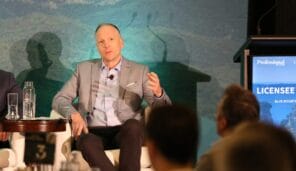












Opt in, abolishing life commissions in super will boost planning: Shorten
Not to dissimilar to English Generals in WW1 telling diggers it would be “character building” to charge German machine gun fire.
I can clearly state that in EVERY new client that I come across NONE have had sufficient insurance as they have no way of calculating a reasonable cover amount. This is particularly the case with TPD and Trauma insurance. The rule is that it costs you more to live than to die after becoming ill. Thank god recently the industry allowed for standalone TPD. People are busy running there day to day lives getting the mortgage paid. There are very few that actually properly consider their insurance needs. I charge a fee for advice, but take commissions when I organise the insurance to cover the costs of implementation and dealing with underwriting requirements. If I cannot charge a commission via a super insurance product then I will have to leave it up to the client to implement which means in most cases it will not happen.
Ahh, but Damian, under the best interest test, you wont be allowed to leave it to the client because you will be required to act in their best interest above yours (their need for cover vs your need to make a living), which will mean recommending insurance via super that you wont get paid for… so in essence the best interest test will REQUIRE you to do the work and not get paid… or walk away from the client completely… or arrange a fee for service for the insurance in super which will be paid for outside of super, which most won’t want, or won’t be able to pay.
Or they can get ‘scaled’ advice from an industry fund.
Well done Mr Shorten. Mission accomplished.