
So often, we publicly attribute what we think, say or do to causes that sound eminently reasonable, but are actually unrelated to our true motives or objectives. Psychologists refer to this process as rationalisation. Human beings are masters at using it to reach illogical or improper conclusions that suit them emotionally, politically, commercially or even professionally.
Come to think of it, your key role as a trusted financial adviser is to curtail rationalisation. You do it every working day by challenging and guiding your clients’ thinking to ensure their decisions are taken logically and with due regard to the costs, benefits and risks of particular courses of action. No doubt, you are confident in your ability to avoid rationalisation, believing your approach to resolving problems to be enlightened, logical and rational. In summary, as a human being and as a professional adviser, logic is your raison d’etre. Or is it?
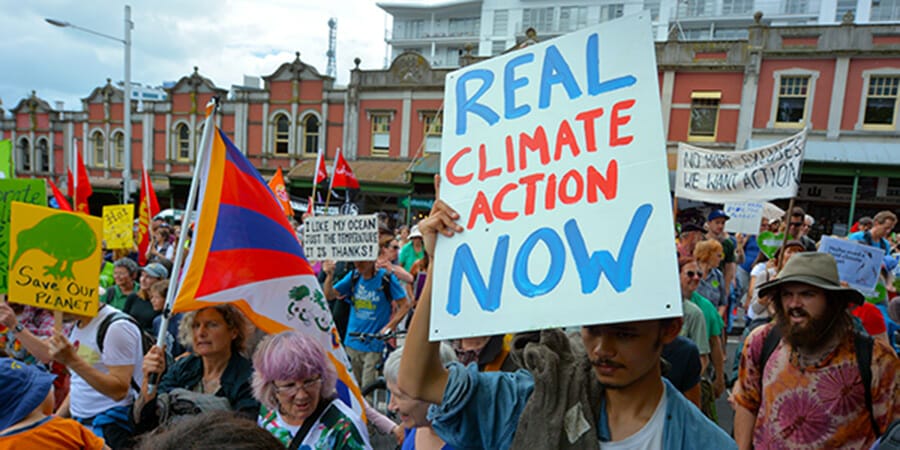
To illustrate my point, take the example of climate change policy, once described famously (or infamously) by a former prime minister of Australia as “the greatest moral challenge of our time”. Depending upon your view of Mr Rudd (a controversial individual at the best of times), you may be inclined to reach a pre-conditioned conclusion about his statement without an objective assessment of the facts. That’s not logical, but it is understandable, given that climate change policy has become extremely partisan and emotionally charged.
The climate conflict
The issue is even more difficult for mere mortals to decide upon in the light of conflicting statements by successive presidents of the United States. On the one hand, president Obama’s position is: “We must do more to combat climate change…We can choose to believe that major weather events were all just a freak coincidence. Or we can choose to believe in the overwhelming judgement of science and act before it’s too late.”
On the other hand, President Trump’s reported position is that the concept of climate change was “created by and for the Chinese in order to make US manufacturing non-competitive”. It’s reasonable to conclude that there’s not much common ground here!
There’s no denying that the cause of climate change action was given a significant boost by Obama’s references to it throughout his time in office. This has pleased the true believers, who have been disappointed by what they have seen as an unnecessarily cautious approach by governments to this most urgent of challenges. Others hold an equally strong belief that human behaviour has nothing to do with climate change (should it be happening at all), that any proposition to the contrary is the greatest fraud of our time and that we should not be wasting public money trying to reduce greenhouse gases.
So strident, divided and political has the debate become that much of the community is confused. One day we hear from an apparently respectable source that the Antarctic ice cap is melting. The next day we are told that it isn’t. What are we to make of this type of contradiction? Bertrand Russell’s words might assist: “The whole problem with the world is that fools and fanatics are always so certain of themselves, but wiser people are so full of doubts.” This should make most of us feel better, but it doesn’t mean we should ignore the issue, hoping that human-induced climate change is the fraud that it is claimed to be, and that if it isn’t, we won’t be around to worry about its consequences.
My point here is that as individual professionals we could play an authoritative role in this important debate. I’m certainly not suggesting that most of us have the knowledge and training to understand and assess the merits of the opposing technical arguments offered by climate scientists and their critics. Clearly, we don’t.
Apply a risk analysis to the climate debate
However, we do have the professional skills and scepticism to undertake a risk analysis. That is something many financial planners do on a regular basis for clients, often with the assistance of respected subject-matter experts whose knowledge we don’t claim to possess, but whose opinions we value and rely upon for purposes of making life-changing decisions.
So why wouldn’t we follow that same process in reaching a conclusion on the controversial issue of climate change? It seems clear that there is an overwhelming consensus among the thousands of highly qualified climate scientists that the Earth’s climate is changing unfavourably due to the behaviour of the human race (UN Intergovernmental Panel on Climate Change et al). Therefore, an analysis of the risks, in which financial planners can properly claim expertise, and not of the science, in which most of us have no expertise, would indicate that we should go with the majority of the experts. Surely that must be so, unless we have strong evidence to prove that most climate scientists are incompetent, or that there is a world-wide conspiracy within the climate science community to cover up the truth or that the scientific community has not reached an overwhelming consensus at all. Frankly, for me at least, none of these possibilities are plausible.
Therefore, it would seem that as individual professionals who are not given to flights of fancy and rationalisations, we have no option but to conclude that human-induced climate change is real and that action must be taken to mitigate it (whatever our personal or political inclinations might be). Of course, if someone would like to present a risk analysis that proves the contrary position, I would be more than happy to consider it. That’s a respectable thing to do, according to economist John Maynard Keynes, who is reported to have said: “When the facts change, I change my mind. What do you do, sir?”
There’s an important message here, not only for the climate change debate, but also for our lives as professional practitioners in our daily relationships with our clients, who trust us to act and advise logically and unemotionally in their best interests, irrespective of our personal inclinations, biases and human propensity to rationalise.
Robert M. C. Brown, Chartered Accountant, is chair of the ADF Financial Services Consumer Centre, a member of the Australian government’s Financial Literacy Board and a member of ASIC’s Consumer Advisory Panel.