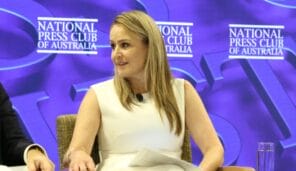

It doesn’t have to be costly or complicated for financial planners to leverage mobile channels of communication with their clients, according to Dr Rebecca Sheils, director, Beddoes Institute.
Beddoes recently collaborated with the Association of Financial Advisers (AFA) and Zurich in compiling Connected Convenience – a cross-generational report into the uptake of mobile technology by Australian financial advice clients.
At the most fundamental level, it highlights the need for websites to be accessible from all types of mobile devices, including smart phones and tablets.
“It doesn’t necessarily [require] mind blowing budgets, but advisers need to be reactive to what’s happening and embrace this new technology.
“If you don’t have a mobile optimised website, you are going to miss between 15 and 25 per cent [of potential clients],” Sheils says.
For smartphone users in particular, this opens up greater opportunities for features such as readily accessible maps and the ability to dial phone numbers by simply clicking a hyperlink.
“It’s not hard stuff, it’s simple…just put yourself in the shoes of your clients. What things make your life much simpler in your [own circumstances],” Sheils says.
Beyond adding functionality for clients, mobile technology can also impact how existing and potential clients perceive a financial planning business.
“If advisers don’t, then you can see how it can alter perceptions clients have about their adviser…they may be seen as inefficient. It will affect the perception of their brand. If they don’t do this, they’re just going to be left behind,” Sheils says.
Mobile readiness of accountants versus planners
Informal surveys suggest as few as 10 per cent of financial planners have a mobile optimised website. Sheils suggests that Australia’s lower- and mid-tier accounting practices are in much the same situation.
However, there are considerable differences between the level of mobile technology uptake of high-end accountants and planning businesses at the same level.
“Four years ago, the big four accounting firms were already thinking about it,” Sheils says. She refers to her own experience, having worked with Pricewaterhouse Coopers around five years ago, when it recognised the utility of social media as a way of collecting client feedback.
For planners, a simple first step is ensuring websites are mobile optimised – which means pages load fast and content is resized and reorganised to be clearly visible on smaller screens. This doesn’t necessarily require planners to engage the services of a professional web designer either, with a number of free do-it-yourself packages such as WordPress and Wix having built-in mobile optimisation.
“We’ve got to crawl before we can walk. There are simple things you can do. Its just thinking through them and being strategic…avoid making it overwhelming,” Sheils says.
Get app-y
The creation of applications (apps) that allow more convenient access to frequently visited sites – such as a financial planners’ website – can be implemented later. While this step involves some additional expense and effort, simple web-based apps can be created for as little as $5,000.
The study found financial advice clients are considerably under-serviced in this area, with preferences for apps high, “yet use of these as a form of digital communication by advice practices was negligible”.
It showed that nearly 8 in 10 financial planning clients who own a mobile device use apps. Generation Y clients used apps to access information on their devices 60 per cent of the time. The rate was similar among ‘baby boomer’ clients, who used apps 53 per cent of the time.
The study also identified clear distinctions in the way tablets are used compared with smart phones. This was particularly significant among baby boomer and Generation Y clients, with older clients preferring to use a tablet for banking or reading (71 per cent) versus a smartphone (23 per cent). Generation Y clients were still more likely to use a tablet for these activities (91 per cent) but were less reluctant to also use smart phones for banking and reading (82 per cent).
“Tablets make it much easier to do something meaningful; they’re great for post meeting follow up,” Sheils says. She refers to the example financial planner Eleanor Dartnall, part of Beddoes’ Most Trusted Adviser Network, who uses tablets to provide financial education