
Much to the dismay of many practitioners, financial services and politics are closely intertwined. This was highlighted like never before last year, when the influence of micro-party senators played a major role in the eventual disallowance of the Future of Financial Advice (FoFA) regulations.
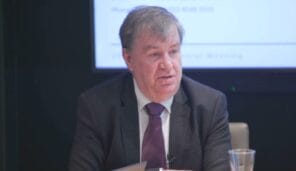
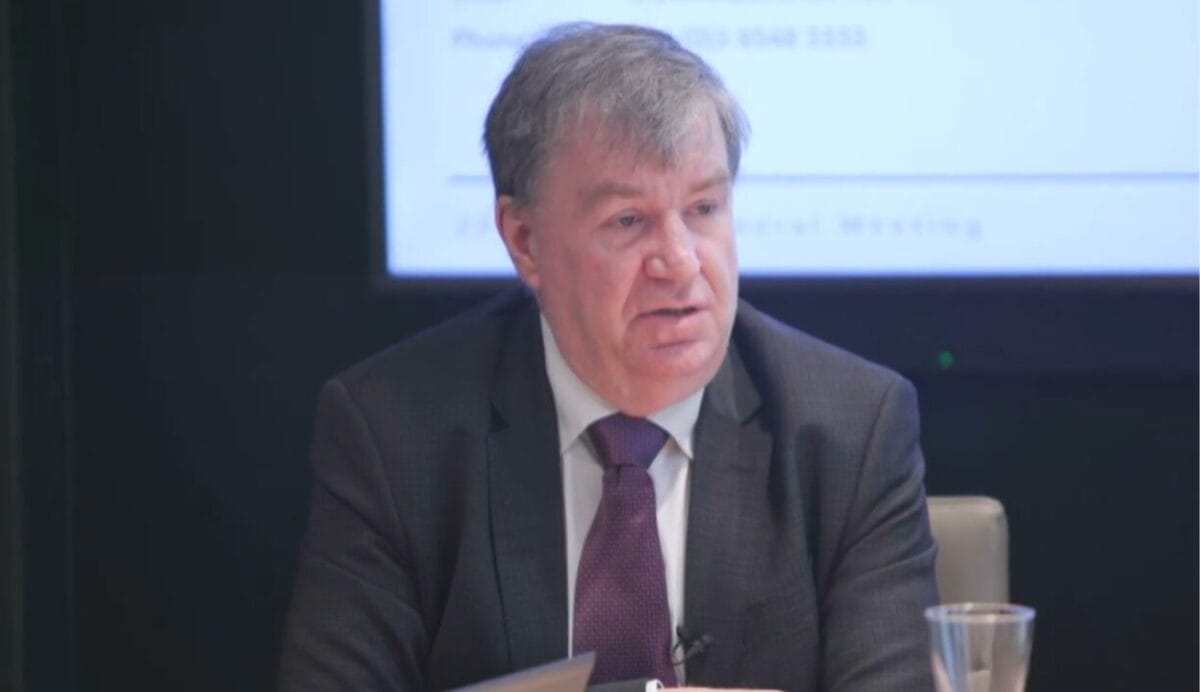
The Australian Greens has also been increasing its involvement in the sector. Peter Whish-Wilson, Australian Greens’ Senator for Tasmania, was a prominent participant in last year’s Senate Inquiry into the Commonwealth Bank and the Australian Securities and Investment Commission.
Between May and December last year, he met with many representatives from the financial planning sector, including those from banks and key industry lobby groups.
“I met with two of the big four banks, with the Australian Bankers’ Association and with all the stakeholder groups around financial planners, and had several meetings with a couple of them,” he says.
He also wrote some 110 letters to financial planners practicing in his home state of Tasmania.
Above all, he says he was struck by the wide disparity in views expressed, including confusion and disagreement about the concept of independence for financial planners. “I’d say that definition of independence was quite controversial. One planner even came to see me in Canberra, who wanted to dispute what an independent financial planning company really was.”
Broking background
Whish-Wilson was put forward to work with on the Greens’ strategies on financial services largely because of his background in the sector. A qualified stock broker and economist, he has extensive experience in the field both in Australia and the United States. He has also taught in the University of Tasmania’s School of Business and Economics.
He played a significant role assisting the fresh new candidates from Palmer United Party (PUP), the Motor Enthusiasts’ Party and Family First, to understand the complexities of the FoFA reforms.
Coaching new crossbenchers
He says he was “horrified” initially at the lack of knowledge of these crossbenchers.
“I think in the first couple of weeks, they didn’t know if they were Arthur or Martha…when Parliament voted against our disallowance,” Whish-Wilson says.
He says he paid particular attention to PUP’s senators at the time, given they had very little previous engagement on any of the issues being addressed by the financial services regulations.
“I went as hard as I could after Palmer, because he nor any of his senators had sat through any of the extensive meetings [on FoFA]. Jacqui Lambie, as a Tasmanian senator, I gave her a really hard time as well,” he says.
Through the involvement of Whish-Wilson, they were then introduced to some of the other stakeholders, including Australian seniors’ lobbyists and Choice, along with other consumer-focused groups.
“I certainly helped them with some of their media responses and speeches as well. They didn’t have the background or the resources to cope with this,” he explains, saying that even with his background, “the complexity took me a lot of reading to understand.”
Inquiry into managed investment schemes
Whish-Wilson was also closely involved in the inquiry into Agribusiness managed investment schemes. “Some of the crossbenchers got to witness first-hand the trauma of people about to lose their houses because they’d been leveraged into some of these financial schemes.”
He says that prior to this, people didn’t properly understand the depth of the impact. “Advisers weren’t acting in their [clients’] best interests, and there were no checks and balances. Crossbenchers saw examples of why Fofa was brought in in the first place.”
This was the point at which many of the crucial crossbenchers shifted their support away from allowing the FoFA changes toward disallowance. “It wasn’t intentional, but it played a very important role,” Whish-Wilson says.