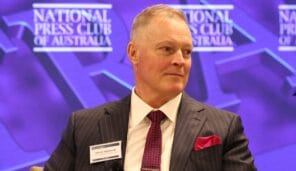

Macquarie Private Wealth (MPW) has culled around a quarter of its financial planners in the last two years, according to Peter Kell, deputy chairman of the Australian Securities and Investments Commission.
The investment bank employed 600 financial advisers in 2012, but this number has now fallen by 25 per cent – and possibly further, if the findings of last years’s Senate Committee are accurate. This suggested the group employed fewer than 300 planners in mid-2014.
Did advisers jump or were they pushed?
“There’s probably a combination of factors,” Kell says, when asked whether the planners have been let go or chosen to leave of their own accord.
“But there’s no doubt that as part of this whole process, Macquarie has put a lot of effort and resources into ensuring that it has the right people in its firm, the additional training has played a part there,” he adds.
ASIC yesterday provided a concluding update on the two-year enforceable undertaking it brought against MPW in January 2013.
The EU has now come to an end, with all the measures requested by the regulator having been implemented. However, ASIC’s oversight is set to continue over the medium term as it seeks to ensure the new systems and processes are sustainable.
“While all reform programs have been implemented, not all were implemented in time to allow full testing. We need to see that not only are these in place in terms of policy and procedures, but they’re actually sustainable and working on the ground,” Kell says.
Financial planning isn’t off the regulator’s hook
The regulator’s deputy chairman also made it clear that the overall financial planning sector remains the major focus of ASIC, despite significant improvements made in recent times.
“The financial advice industry as a whole remains at the top of ASIC’s list for regulatory priorities.
“We have seen a significant lift in standards, but there is still clearly some way to go. But this whole sector remains an area where ASIC wants to see further improvements and better outcomes for consumers overall,” Kell says.
Investment advice rather than life insurance advice were the main areas where concerns emerged within Macquarie’s operations. The major issues where around reporting and compliance systems and procedures.
In responding to the terms of the EU, MPW is said to have investmend “tens of millions…in new compliance training and systems for oversight,” Kell says.
“This is one of the most comprehensive remediation programs, offering every client back to 2004 the chance to have their advice assessed and reviewed.”
Quizzed on whether the long timeframe of the process, which started as early as 2004 when issues first emerged within MPW, the regulator’s deputy chairman says “these sorts of investigations are not necessarily straightforward.”
He also suggests the appeals process also slows down proceedings. “But we’re progressing them as quickly as we can given this is a large and complex matter.”
Kell declined to give details on the number of clients who have been remediated so far, how many advisers still working at MPW are still being investigated or the amount of money Macquarie has paid out so far.
However, he says the EU was structured in such a way that the first stage involved assessing remediation requirements among a small group of MPW advisers identified as being “higher risk”.
According to Kell, further updates from MPW itself are expected in the coming weeks: “Macquarie will be providing an update on this very soon in terms of the amount being paid out.”