

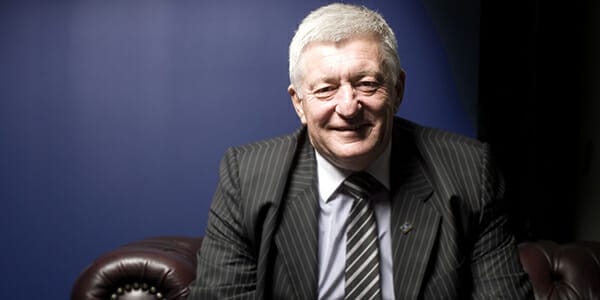

Planned amendments to the Future of Financial Advice (FoFA) legislation expose hypocrisy in relation to conflicted remuneration that prevents financial planners fulfilling their best interests duty, a leading industry player has claimed.
John Hewison, founder and managing director of Hewison Private Wealth, says a fiduciary responsibility is a black-and-white obligation. He says proposed amendments to allow grandfathering of conflicted remuneration are contrary that obligation.
Hewison has published a blog, “The Facts About FoFA” in which he says he is “totally incensed by the Federal Government’s failure to use the Future of Financial Advice (FoFA) legislation to lift the regulatory standards in Australia to a satisfactory level”.
“So why is it that given this long history of commitment to and development of professional standards in financial planning in this country, the Federal Government just doesn’t get it?” Hewison says.
“How is it that when we get the opportunity to appropriate professional standards and consumer protection, the Government buckles to vested interests of the banking sector which is driven by product sales?
“The most insidious part of this legislation is the issue of grandfathering. There are hundreds of billions of dollars of investors’ funds that pay out trailing commissions to advisers every year. grandfathering means that if you were being ripped off by trail commissions pre-FoFA, you will continue to be ripped off post-FoFA. What makes this even more obscene is that there is now a healthy trade in trail books, where commission-driven organisations pay for the right to receive revenue from existing trail commission arrangements.”
Fiduciary duty
Speaking to Professional Planner, Hewison says that “a fiduciary duty is a fiduciary duty”.
“If it’s recognised that product commissions and trailing commissions are not in the public interest, how can you change the rules and leave hundreds of thousands of people stranded with their trailing commission [arrangements]? I don’t know how we can live with that.
“If you have a conflict-based interest in the client, you cannot, in my opinion, fulfil your best interests duty.”
Hewison also says it is impossible for product manufacturers to fulfil a fiduciary obligation to clients, and that they should not also be permitted to provide personal financial advice.
“I know that what I am saying is an extremely difficult unravelling of what has happened in the past, but I just do not think that what has happened in the past is acceptable,” he says.
“In my view, banks do not want to be in the advice business [anyway]; they make no money out of it. It’s just an avenue to flog product. It’s just not right, and I do not think the public gets a good deal.”
What consumers expect
Hewison says comparisons between bank-owned advice businesses and car dealerships – the “if you go into a Ford dealership you expect to be sold a Ford” argument – are facile and do not accurately reflect what consumers believe they will receive from a bank “adviser”.
He says the distinction between personal advice and general advice is nowhere near explicit enough.
“It has to be explained so that [people] know that this person is going to sell me a product, [but] this person is going to give me independent, unbiased advice,” he says.
If there are to be two tiers of “advice” – if “general advice” continues to masquerade under that name – then there should be two tiers of licensing, Hewison says, with the lower tier complying only with the law and the upper tier adhering to professional standards of education, ethics, discipline and competence, and operating in a co-regulatory capacity with government.
“That’s the distinction,” he says.
“The [Financial Planning Association] has done all of this work, and done this work over a long period of time.
“It’s the same as any other professional model. Every other professional model has a self-regulatory authority with an over-riding government regime.”
Be prepared to invest
Hewison says that financial planning businesses “have to be prepared to make an investment” in the right people and standards, and to make a commitment to professionalism, to make that happen.
“That’s always been the problem with our industry,” he says.
“People have not been prepared to make that investment.
“We need to lobby as hard as we can on the differences between product advice and independent financial advice, and a different licensing regime for each and a different standard for each. The only way I can see that happening is to have a co-regulatory model with an organisation like the FPA – or whoever can [police] the appropriate standards and supervision and disciplinary processes – and there should be compulsory membership or participation.
“The government is just going to go with the lobbyists. They’re not going to want to accept this change. But it’s the only way we can get there. I just do not think they are fulfilling their responsibility to the Australian consumer”










Well done John. You have clearly highlighted the difference between providing advice (a service) and selling a product.
Cheers
Mark Hayden
John is spot on. It is not only hypocrisy in allowing the grandfathering of product/ trail commissions, it is also in pre-1 July 2013 clients no longer receiving a FDS. Moreover, it was pure hypocrisy in that the FDS excluded the reporting of commissions in the first place.
It doesn’t matter if you support Liberal’s reforms or not, we still have a situation that those people who pay commissions, often for no service at all, continue to pay and thereby, erode their retirement savings. Guess what is going to happen when these people realise that they are still being conned by financial advisers?
The only saving grace may be those people who have financial advisers who fully comply with FPA’s code of ethics. Then again, those adviser who don’t can still practice.
I think the only way to really meet the ‘best interest’ duty is to follow these measures: independent owned practice, independent owned Licensee, independent compliance function, independent remuneration (i.e. including asset based fees), all advisers being ASIC registered, all advisers being university educated in financial planning and all advisers belonging to a professional body with a professional code of ethnics and enforcement procedures.
Sorry if I have upset you.
Ian Choudhury