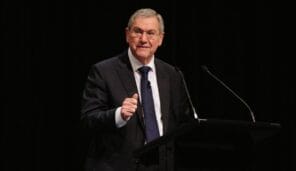

Six years based in the US as Russell Investments’ chief investment officer has taught Pete Gunning that advisers to self-managed super funds could do worse than heed six lessons he has learned.
Gunning, who is now Russell’s Asia-Pacific chief executive officer, told the 2014 SMSF Professionals’ Association of Australia (SPAA) SMSF National Conference in Brisbane that when the worst effects of the global financial crisis were being felt, “the best thing we did for our clients at the time…was [to say], ‘This is really, really bad, but in our humble opinion it’s not the end of the world; it’s not Armageddon’.”
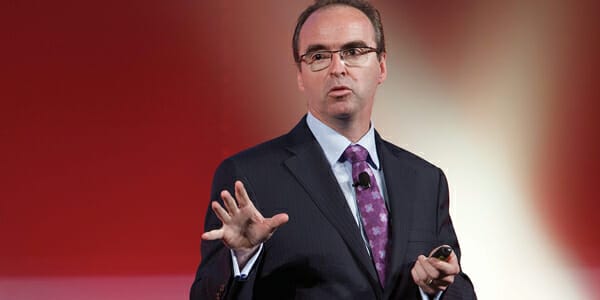
Gunning, pictured right, said this view was founded on six things that will stand all advisers in good stead:
• don’t panic;
• be adaptive;
• when things are small, small thing matter;
• emotional behaviour undermines successful outcomes;
• risk is more certain than returns; and
• there is a hierarchy of asset class returns.
He said that de-risking client portfolios would have been the very easiest thing to do, but panicking would also have been the very worst thing to do.
Evolving
Gunning said that being adaptive does not mean capitulating when things are tough; rather, it means “evolving as more investment opportunities become available”.
Gunning said that in a low return environment, the small things matter.
“And the small things might be being able to implement investment strategies for your clients in a cost-effective manner; it may also mean for those advisers who are looking at active strategies … finding a good manager who can add value on top of a low base is [more valuable] to your clients than when markets are rocketing ahead,” he said.
Pigeons, rats and monkeys
Gunning said the “vast majority of humans are not wired to make good investment decisions”.
“In fact, there’s been quite a few studies that suggest, with the right information, pigeons, rats and monkeys, potentially, make more objective decisions than humans,” he said.
Gunning said that Russell had developed the view that most investors cannot afford the risk they need to take to get the investment outcomes they need, yet the risk associated with investing is more certain than the return that investing generates. But that uncertainty can be managed by remembering that in the long-term there’s a clear hierarchy of asset class returns.
“Investors in the long term do get rewarded for an equity risk premium, they do get rewarded for a liquidity premium,” he said.
“While it may not feel like that over relatively short periods of time, over the longer investment time horizon, that hierarchy stands true, and that means than when you are going to build portfolios for your clients with the particular investment outcome that they’re after, you should take that into account as a foundation.”