
In a normal industry, customers choosing to take their patronage elsewhere would be an unremarkable everyday occurrence. But superannuation is no normal industry. Super funds are really more akin to public utilities, protected by legislation and forming an important plank of the social safety net.
That may help explain why a rise in switching activity between funds has been portrayed not as the natural ebb and flow of a mature market, but a declaration of war and serious danger to the community.
In February, the Super Members Council released analysis of private data from a small number of unnamed member funds which suggested younger Australians with lower super balances now dominate switching activity, with around half of all members switching last year being under the age of 45.
It was picked up with little nuance by the public broadcaster, which warned its circa 12 million ABC News online readers that “an ‘alarming’ number of Australians are switching out of tightly regulated superannuation funds and into more expensive and potentially ‘riskier’ products”.
The campaign might well have been motivated by a desire to protect some vulnerable cohorts of consumers. But it is hard to believe switching from industry to for-profit funds accelerating in recent years – which has resulted in some of the largest SMC members entering “competitive outflow” according to The Conexus Institute’s* analysis of APRA data – is just a coincidence.
The SMC campaign seemingly conflates retail funds and platforms with self-managed super funds, despite the fact that the former in most cases are prudentially regulated retail super funds subject to the same rules as SMC members.
It also undermines the role of professional advisers, who in most cases of switching have made a recommendation for their clients to switch and likely have access to considerably richer data about that consumer than either of the funds involved, such as their life goals, risk tolerance and ESG preferences.
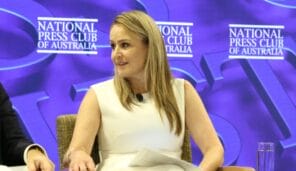
Ironically, the campaign was kicked off just days after the Professional Planner Advice Policy Summit at the National Press Club, at which SMC chief executive Misha Schubert and senior executives representing its member funds joined in the unity message to government and stressed the importance of a system-wide non-partisan response to the lack of access to advice.
In with the old
In typical industry association fashion, the rival Financial Services Council (which represents retail funds and platforms) waited until it had commissioned its own counter-data before firing back, which it did on Monday in a statement to the press.
“Data released today by the FSC shows Australians choosing to switch to a superannuation platform from a default superannuation fund are typically older investors with higher balances,” the statement read.
The FSC is right to push back against the suggestion that its APRA-regulated super fund members are somehow less “mainstream” than their profit-to-member peers, as the ABC article inferred.
But in doing so, it also runs the risk of downplaying some of the serious emerging trends that may be afoot and were a key factor in the $1 billion Shield and First Guardian disaster.
Consumer advocates are worried that there is indeed a large cohort of younger and low-balance consumers who are falling victim to spruikers and lead generators on social media platforms like Instagram and TikTok and ending up being advised to switch their super.
It is not known currently how large this cohort is, but there are estimates that some lead generators are spending up to $20 million a year in advertising with big tech giants – indicating they need to be engaging in an awful lot of switching activity to make a profit.
It is also not known the extent to which retail funds/platforms and/or professional advisers are party to these activities. But according to Super Consumers Australia, some APRA-regulated retail funds have been beneficiaries of this lead-generated switching, whether actively involved or not. And the Shield and First Guardian collapse taught us that even an ultra-minority of rogue advisers can cause significant financial and reputation harm.
The truth is that no-one has a full picture of super switching activity across the market and its legitimacy or otherwise – not individual advisers or super funds, not their lobby groups, not even the prudential regulator.
Perhaps the Australian Taxation Office would have the most comprehensive view, but it has often been loath to wade into the ‘super wars’ for obvious reasons.
Self-managed switching
In lieu of a complete data set, this column is willing to make an educated guess that there are broadly three categories of Australians within this rising cohort of suddenly-engaged superannuants voting with their feet.
The first is the cohort of older and wealthier consumers that the FSC data describes. This group is small numerically but very large in terms of assets under management, which is why its mobilisation warrants considerable unrest. Having been one of the lucky few to receive professional advice, they have been advised to switch.
Perhaps they have been advised to switch due to the “complexity” of their financial needs and the flexibility and choice offered by super platforms, as the FSC suggests. Perhaps there are sometimes other motivations such as the efficiency and user experience available to advisers, as some CoreData research finds.
But either way, it seems a stretch to view these professionally advised and well-heeled Australians as a vulnerable consumer cohort.
Then, there is an emerging cohort that inexplicably still gets little attention in traditional financial services.
Since the Covid-19 pandemic, millions of young Australians have begun participating in financial services as traders and investors in public markets and managed funds. Of those, a considerable portion have chosen to establish their own SMSF, sometimes with the encouragement or assistance of their chosen trading platform, such as Stake* SMSF, a fast-growing SMSF establishment and administration business.
ATO figures suggest that nearly 70 per cent of the new SMSFs established in the September quarter last year were by trustees under the age of 50.
Many in the super and wealth industries may take the view that it is unwise for relatively inexperienced, DIY investors to punt their retirement savings on picking stocks or crypto assets.
Maybe so, but equally, it would not be accurate to describe these deeply engaged and increasingly informed individuals as victims. Instead, they are likely a new and permanent force – and one the professional industry has been slow to engage.
And finally, it is without question that there is also a more concerning cohort of consumers at risk – young Australians casually doomscrolling on their devices and falling prey to a sophisticated scam.
As the pool of superannuation savings continues to grow exponentially, this cybercrime activity will likely grow as well, aided by the digital revolution now underway.
The whole industry has an important role to play sharing their knowledge with government and the public and helping to crack down on the next Shield and First Guardian before it happens.
But conflating its perpetrators with your legitimate and highly regulated competitors does nothing to make consumers safer. It actually does the opposite.
*The Conexus Institute is a not-for-profit think-tank philanthropically funded by Conexus Financial, the publisher of Professional Planner. Conexus Financial chair Geoff Lloyd also chairs Stake.