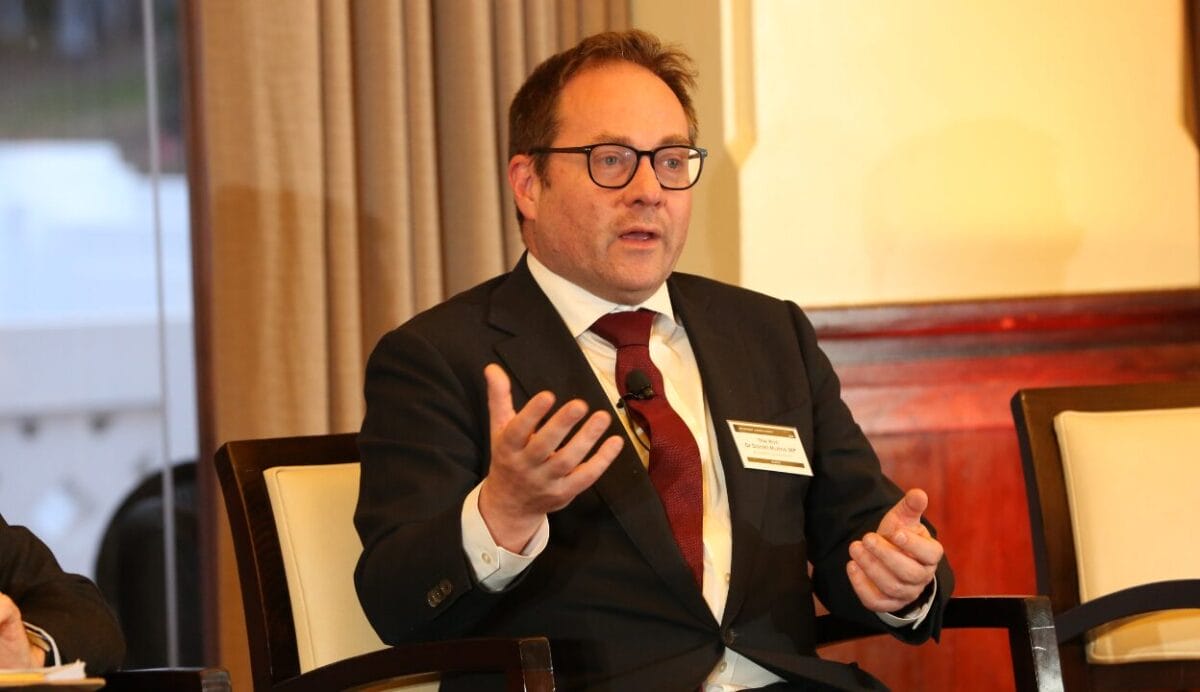

The government will give industry and regulators some space to deal with the fallout of the Shield and First Guardian collapse, but Minister for Financial Services Daniel Mulino believes some policy change will be needed, noting “tension” with investor choice and consumer guardrails.
The $1.2 billion collapse of the failed funds has rattled the financial services industry as ASIC has launched investigations into the managers of the funds, advisers, researchers and platforms.
Macquarie came to an agreement with ASIC to purchase holdings of Shield investors on its platform. The $321 million remediation bill will see clients back to their starting position before switching into the fund and Macquarie will aim to recoup some of the difference from the liquidators.
“Rightly, the first priority is to see the regulators try to protect funds,” Mulino told a PritchittBland Communications event in Melbourne on Thursday.
“I’ve also asked my department to work up policy options with a view to seeing if there are things that can be done in the shorter term and potentially the longer term, but I am conscious that right now the focus in on trying to protect the interests of those almost 12,000 people, but there’s a range of things going on in parallel with that.”
The minister said it was too early to get into the detail of certain policy levers but noted issues with investor choice in the system, making comments similar to ASIC chair Joe Longo in a recent parliamentary committee.
“I would say that clearly there is a tension here between choice in our system – which is really important – and putting some guardrails around that,” Mulino said.
But after years of reforms through the Future of Financial Advice Reforms, the Hayne royal commission and the Delivering Better Financial Outcomes reforms – the latter still in progress – Mulino said broader policy questions will still fall on whether there are sufficient protections for retail investors.
“One of the options might be do we need to put some sand in the wheels,” he said, elaborating that this meant slowing down switching, particularly with large transactions.
ASIC halted flows into the funds due to concerns over the management of products including the misuse of member money for lavish personal expenses and high-risk investments into pet projects tied to directors.
Some 140 advisers are being investigated by ASIC for their role, as the regulator alleged advice firms were paid by the funds to help market the products via lead generation services that used high-pressure sales tactics and relied on loopholes in the law.
The minister said he’s written to the regulators: APRA, about the way in which platforms onboard products which has since seen the prudential regulator tell industry standards need to lift; and with ASIC about whether the capitalisation of managed investment schemes is at appropriate levels which he expects a response on.
“APRA recently completed a thematic review of platforms, [that] is a piece of work going there which is really important,” Mulino said.
Mulino also noted the Financial Services Council’s announcement that it would develop best practice principles for superannuation platform trustees.
Macquarie, Equity Trustees and Netwealth are members of the association which represents platforms, fund managers and other institutional providers.
“The FSC is playing a positive role here in working with a range of platforms to see where the industry can land on what they think is a sensible way forward. There’s a number of elements to that work which is already underway.”
Asked about the status of the post-implementation review into the Compensation Scheme of Last Resort, launched by his predecessor Stephen Jones, Mulino said the Treasury department was working on presenting findings of the review to him.
“That’s an important piece of this but no matter where we land on the specific mechanics of the CSLR and I see the existence of being an important backstop for investors,” Mulino said.
“I think everybody would agree we want to make sure that the amount of people affected in a negative way and potentially having to go down that path should be minimised as much as we can.”