


WT Financial Group (WTL) founder and managing director Keith Cullen says six consecutive years of growth prove that the licensee’s business model is sound, but it cannot rely just on the strong tailwinds enjoyed by the advice industry to generate shareholder value.
WTL reported a 15.6 per cent increase in net revenue to $33 million for the 12 months ended 30 June, a 19.5 per cent increase in earnings before interest, tax, depreciation and amortisation to $8.2 million, and a bump in statutory net profit after tax of 6.9 per cent to $5 million. The company declared a full-year dividend of 1 cent a share, fully franked.
The company said it supports more than 500 financial advisers across around 400 practices, and has about $25 billion in assets under advice, across its Wealth Today, Sentry, Synchron and Millennium3 licensees.
Cullen told the company’s 2026 investor presentation on Monday that the advice industry’s supply and demand remain significantly out of balance, which provides an attractive foundation for growth.
Along with $4.7 trillion in super funds – including $1.1 trillion in self-managed funds – and around a quarter of a million people a year reaching retirement age, “financial decisions around retirement are becoming more complex”.
“Against this demand, we’ve only got around 15,000 advisers, and so more people need advice. There’s more wealth requiring advice, and there just simply isn’t enough advisers,” he said.
However, he said that these tailwinds alone do not guarantee shareholder value will be created.
“Everyone can see the same opportunity.
“The real question for investors is the same as we pose to our advisers all the time: who has the machinery and the ability to capture it?”
Cullen told the meeting that WTL has spent the past six years building the machinery to convert tailwinds into value.
“We’ve built scale, more than 500 advisers, real capability, infrastructure [that] individual practices can’t economically replicate, and we’ve been very focused on building a community.
“We’ve got hundreds of business owners sharing their experience, sharing their intellectual property, and increasingly we have capital through our Investco and Hubco model.
“If you put those together, I think WTL has become something quite unusual. We don’t simply have exposure to the opportunity, we’ve built real machinery to capture it.”
Driving advice practice growth
Cullen said the drivers of advice practice growth are pricing confidence, capacity building, lead flow and creating enterprise value, including succession, “to help them build more productive businesses”.
Advisers historically underpriced the services they provide and such behaviour is not quickly changed.
“Advisers who have undercharged for a decade don’t suddenly reprice because we send them an email,” Cullen said.
Technology and automation are lifting the number of clients an adviser can serve, “getting that average number of clients served per adviser, which is already higher than the market averages in our network, up from 140 towards 240, even onto 300, where some of our best practices are”.
Lead flow is then necessary to backfill the increased capacity that practices are building. And succession planning is “more broadly in the thinking of all of the practices involved”.
“Increasingly, younger advisers that are salaried advisers are looking at what their succession looks like, from salaried adviser into more senior adviser into an equity owner in the business,” he said.
Capital supply
Cullen said Investco and Hubco supply the capital to advice firms, without disturbing practices’ ownership or independence.
“What we add is the scale, the infrastructure, risk management. We add that technology and capability, and we can add in capital. And that’s where our Investco and Hubco strategy becomes the ultimate expression of that philosophy,” he said.
Investco has been built as a long-term capital vehicle rather than mimicking a typical private equity fund with a shorter timeframe and a fixed exit timetable.
“Its purpose is to support entrepreneurs over many years,” he said.
“When liquidity events do occur, they’re expected to be driven by the ambitions of the entrepreneurs and the shareholders involved, rather than the investment structure that we’ve created in itself.
“WTL can then participate in that value through Investco directly, through Hubco, putting equity into the hub [companies] and selectively making investments within our broader ecosystem.”
Back to hiring
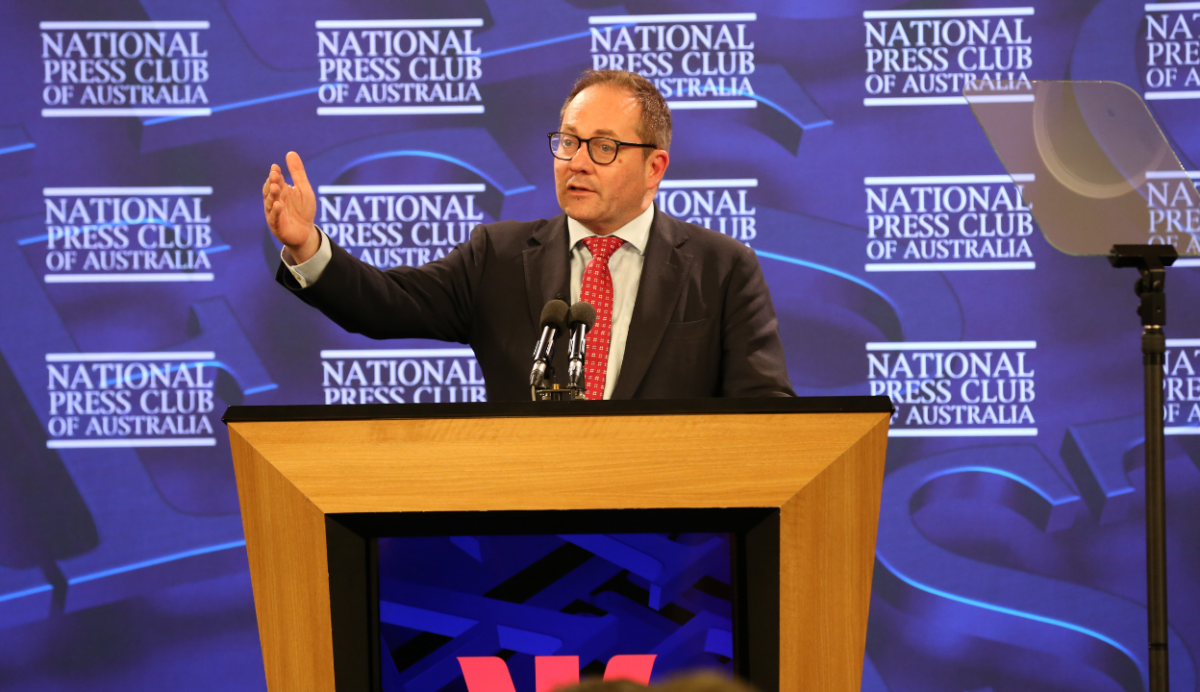
Cullen said the government’s commitment to revised education pathways, reiterated by Assistant Treasurer Daniel Molino in a National Press Club address last month, would help open the doors to practices in the network hiring more advisers.
“When Assistant Treasurer Dr Daniel Mulino spoke at the Press Club, he confirmed again the government’s commitment to more realistic education pathways, and that means we can get back to recruiting advisers again.
“Simpler advice regulation is on its way, meaning more Australians will be receiving advice, and technology and automation really mean more clients per adviser.”
Cullen said WTL was also looking beyond its investments in individual advice practices, to providing the services that support them.
“As practices grow and corporatise, they increasingly need capabilities that aren’t efficiently built by themselves, and that might include their paraplanning services,” he said.
“Then there’s automation technologies, and then there’s specialist services around things such as aged care advice, where there’s strong consumer demand.”
Change drives demand
Cullen said regulatory and policy change, even when unwelcome, tends to generate advice demand rather than diminish it.
“As much as it drives me insane when the government meddles with tax and superannuation or retirement settings, it does actually create more demand for advice,” Cullen said.
“Every time they make one of these changes, there are clients who need to understand what those changes mean for them.”











Leave a Comment
You must be logged in to post a comment.