


Produced in partnership with Betashares.
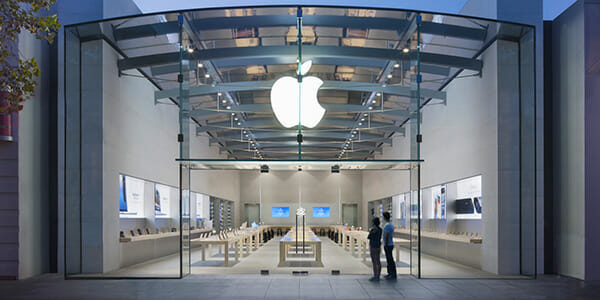
It took 42 years for Apple to become the world’s first public US$1 trillion (AU$1.4 trillion) company in 2018. Just two years later, the company doubled its market capitalisation and today it is valued at US$4.5 trillion.
It took Nvidia over two decades to become a US$1 trillion company in 2023, but in just three short years it has more than quadrupled its market cap to over US$5 trillion.
The figures are impressive but not unusual, at least not anymore.
There are a dozen or so public companies globally with a market cap over US$1 trillion, and more names are set to join the club with technology giants Anthropic, SpaceX and OpenAI expected to launch initial public offerings (IPOs) in the next 12 months.
Over 40 more companies with a market cap of over US$500 billion are also knocking on the door of that exclusive club.
In the past decade, the rise of megacap stocks has reshaped the investment landscape, with a growing share of major indices anchored in a smaller number of names, sectors and geographies.
Megacaps have delivered spectacular growth while also exhibiting defensive characteristics, according to Betashares investment strategist Hugh Lam.

“These companies are dominant market leaders in their respective fields,” he tells Professional Planner.
“They generally have strong balance sheets, large amounts of cash, and dominant market positioning. We find these characteristics often allow these companies to weather market downturns better than smaller competitors.”
As an example, Lam cites the onset of the US conflict between Iran in late February 2026, which caused equity (and bond) markets to fall throughout March, before rebounding in April led by the strong performance of the megacaps.
“That was a clear demonstration of markets rotating towards quality megacap names they are familiar with. Strong earnings also underpinned the rally in equity markets since local lows were set on 30 March,” he says.
“However, the rally has been quite narrow, with a small number of AI hardware and semiconductor names, contributing significantly.”
While the US megacap technology companies make up a large weight of indices like the S&P 500 and Nasdaq 100, they do not resemble the media and technology stocks that sparked the tech boom and bust at the turn of the century.
Many of those companies were speculative startups with little-to-no profits. They raised significant capital and their valuations climbed quickly but they lacked viable business models, ultimately leading to their collapse when interest rates rose and investment capital dried up.
Today’s megacap tech names are high quality, innovative businesses that have grown off the back of strong earnings and profits. Many provide essential services and digital infrastructure to support economic and social activity and, as such, have predictable cashflows. They are at the forefront of the ongoing development of AI models through massive investments in data centre construction.
For investors, they can provide exposure to structural growth opportunities while offering some level of defensiveness to portfolios relative to their smaller peers.
“Although these companies may exhibit characteristics of traditional ‘growth’ and ‘quality’ stocks, it’s worth noting that they are not immune to sudden pullbacks in markets given they are typically concentrated in high-growth sectors like technology,” Lam says.
Despite their moniker, Lam suggests the definition of megacaps is broad and goes beyond a fixed market cap size.
While some corners define megacaps as stocks with a market cap of $200 billion or more, Lam believes a one-dimensional approach doesn’t capture the full picture.
Lam traces the origins of the megacap theme back to the early twentieth century when industrial companies including railroad companies and steel producers dominated the US stock market at the time. The United States Steel Corporation became the world’s first billion-dollar company in 1901. However, there are now hundreds of companies larger than a billion dollars given advancements in technology which allow organisations to scale significantly faster due to near zero marginal costs.
“Today, US indices are dominated by the technology sector with IT accounting for 38 per cent of the S&P 500,” Lam says.
“Of course, this exposure is dominated by the megacap tech companies which have grown in size over time as they capture structural investment themes defining the future such as artificial intelligence.”
Beyond AI, Betashares offers a range of thematic ETFs that allow investors to express their view in other areas of the market.
For example, the Betashares Global Cybersecurity ETF (ASX: HACK) provides exposure to leading companies in the global cyber security sector, including Palo Alto and CrowdStrike, as well as a small number of diversified companies, like Alphabet, which derives a smaller portion of their overall revenues from cyber security activities (following their recent acquisition of cloud and AI security firm Wiz for US$32 billion).
Neither Palo Alto or CrowdStrike are US$1 trillion companies yet, but they are large companies, leaders in their field and rapidly growing.
Betashares also offers an Asian Technology Tigers ETF (ASX: ASIA) which provides exposure to leading South Korean memory chip companies like Samsung and SK Hynix which recently surpassed US$1 trillion market cap, but also other leading firms such as Taiwan Semiconductor Manufacturing, Alibaba and Tencent.
“Major market indices are cap-weighted meaning companies make up a larger size of an index based on their market cap. This is why investors can get exposure to the largest companies capturing the next structural growth opportunities in the world,” Lam says.
“ETFs are building blocks and tools for advisers to build diversified portfolios for their clients, depending on their individual needs and objectives.
“They provide a low-cost, tax-effective and liquid way for investors and advisers to express their views across certain parts of the market but also implement ‘higher conviction’ ideas through thematic exposures like global cybersecurity, global defence and global robotics ETFs.”

















Leave a Comment
You must be logged in to post a comment.