
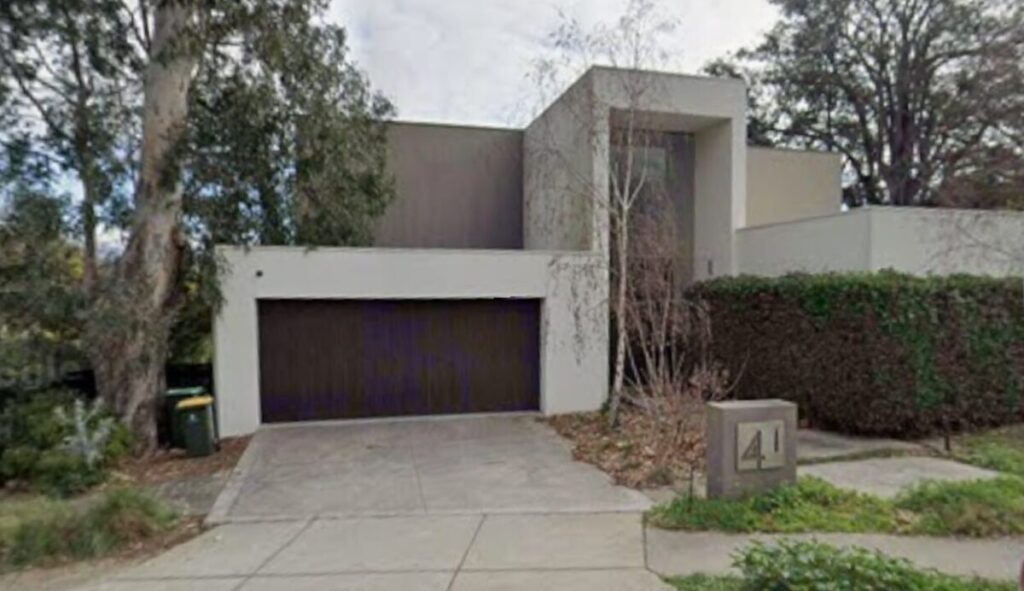

The Federal Court has approved the sale of the house of First Guardian director David Anderson, however several creditors are owed before investors see any of the proceeds.
The property, in the wealthy Melbourne suburb of Hawthorn, was last sold for $9.04 million on 1 December 2020, according to real estate data.
The proceeds of the sale of the property will be distributed first to the receiver (including costs incurred for repairs and agent commissions), outstanding mortgage payable to National Australia Bank, then to claims for Marlau Nominees and private credit firm Millbrook Income Fund.
ASIC obtained freezing orders against First Guardian responsible entity Falcon Capital and David Anderson, director of the fund and responsible entity, in February 2025. Falcon Capital suspended redemptions from First Guardian in May 2024.
FTI Consulting, the liquidator for First Guardian responsible entity Falcon Capital, delivered an update earlier this month stating total recoveries have reached $6.2 million, but there is only an estimated net cash position of $326,000 after expenses.
Both Anderson and chief investment officer and director Simon Selimaj have fronted court, with lawyers for the latter asking the court to release some assets for sale to settle legal bills.
Investments in Shield and First Guardian grew due to a sophisticated network of lead generators that contacted people who used online “superannuation health check” advertisements and applied high-pressure sales tactics to refer them to financial advisers.
ASIC acted against the funds over concerns investor money was being misused on high-risk investments, pet projects of directors and personal expenses, and court proceedings against both funds are ongoing.
Shield was operated separately by Paul Chiodo, and liquidators for the fund, Alvarez and Marsal, are expected to recover around 70 cents on the dollar.
However, while the funds were managed separately, the majority of the distribution is alleged by ASIC to have come from a small group of advisers.
Ferras Merhi, the financial adviser ASIC alleges played a central role in distribution of the funds, has also fronted court on several occasions as proceedings continue.
ASIC has alleged InterPrac authorised representative Merhi signed 6000 Statements of Advice within a three-year period, used marketing companies to push potential clients to his financial advice businesses while receiving nearly $18 million in upfront advice fees and $19 million from entities associated with the funds to market them, and received inflated loans from the fund to help purchase his businesses.
Merhi has disputed any wrongdoing and told Professional Planner last month that he expects the courts will find in favour of any adviser who fights the regulator’s claims that they failed to meet client best interests.
Merhi was licensed by InterPrac Financial Planning, as well as running his own licensee with Financial Services Group Australia which is in liquidation.
ASIC has already taken InterPrac to court over allegations it failed in its oversight responsibilities of advisers involved in distributing the funds.
AFCA has made determinations in favour of Shield and First Guardian investors, but InterPrac is suing the complaints authority over concerns about its jurisdictional coverage, which is unable to apportion blame to managed investment schemes, and has since dragged First Guardian investor and advocate for fellow victims Melinda Kee into the court action.
Rhys Reilly, one of the other InterPrac advisers named in court filings, was given a 10-year ban by the regulator.
Several other licensees have been cancelled for their involvement in the distribution of the funds and InterPrac is currently the only solvent licensee implicated in the collapse of Shield and First Guardian.
The regulator has also taken action against SQM Research and the four trustees involved in hosting the funds.
Platform trustees Macquarie and Netwealth have remediated investors to their starting investment position, but Equity Trustees and Diversa Trustees are fighting allegations of wrongdoing and due diligence failures in court.
Diversa Trustees has also applied for a government bailout for investors worth $239 million.


















Leave a Comment
You must be logged in to post a comment.