


Advice practices that have strong record-keeping processes in place will thrive in a post-Statement of Advice environment, with the lengthy advice documents already not the most important piece of evidence in the dispute resolution process.
Quality of Advice Review lead Michelle Levy’s final proposals were released on Wednesday morning which re-affirmed her suggestion to eliminate the current legislative framework around creating SOAs.
Levy suggested replacing the prescriptive best interests and safe harbour steps with a principles-based ‘good advice’ regime, essentially providing the same outcome without the extensive compliance steps required.
However, advisers will still be required to present a written record of the advice given to clients, on demand.
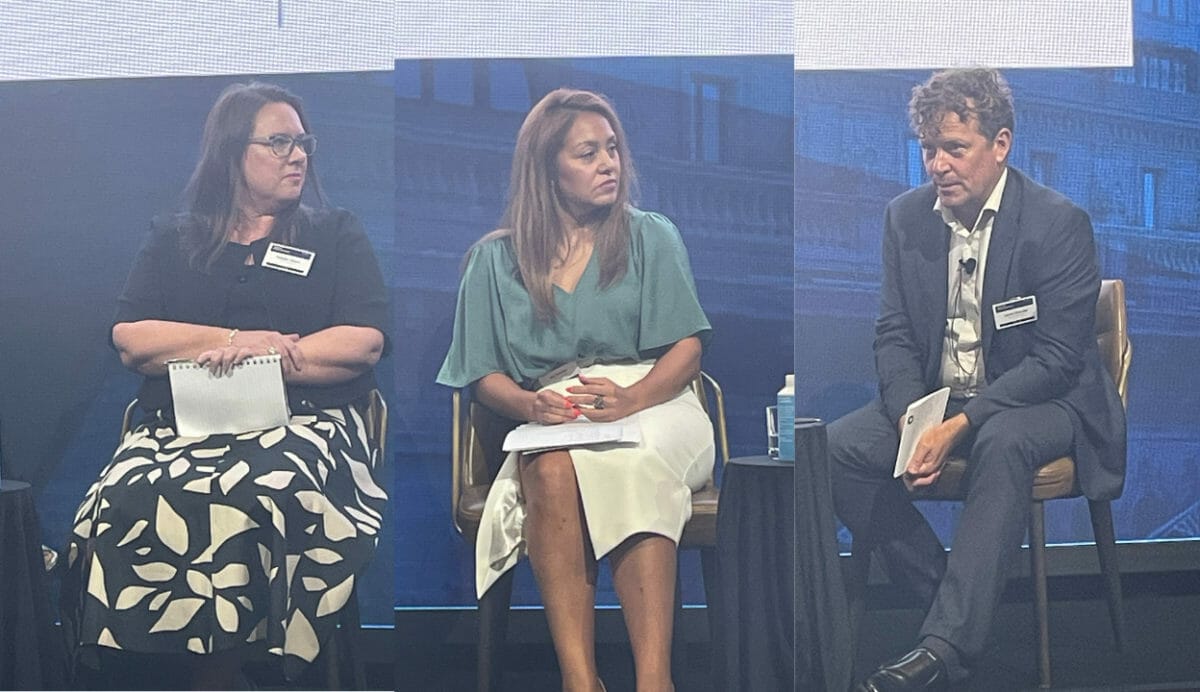
With limited time to digest Levy’s recommendations, the Professional Planner Advice Practitioner Summit hosted a panel discussing the future of best interests duty around two hours after the proposals were made public.
Noting Levy’s recommendation that professionals will still be required to give advisers written documents on request, Centrepoint licensee general manager Allison Dummett said she’d prefer to see these documents reflect client conversations.
“I would like to see documents evolve to the stage where they’re a lot more like the conversations you have with the client,” Dummett said.
“Because I’ve never seen a situation where a phrase missing or present in a document is what a matter hinged on.”
She added that licensees have noticed an improvement of the quality of provided in the time best interests duty and the code of ethics have existed.
From the perspective of the complaints authority, AFCA advice ombudsman Shail Singh said the dispute process will always come down to evidence that proved the adviser gave proper advice that is free of any conflicted interests.
“If something goes wrong how do you demonstrate that you’ve satisfied your professional obligations?” Singh said.
Financial services minister Stephen Jones will consult on all of Levy’s recommendations during the coming months and Professional Planner will host the minister in March during the consultation process in Sydney, Melbourne and Brisbane.
SOAs were never the saviour
Under the current regulatory framework, Singh said following the objectives laid out by the client is important and that long SOAs do not add any assurance on the quality on the advice given.
“Informed consent continues to be a big theme of someone understanding exactly what the advice is. Is there a conflict of interest,” Singh said.
He added files notes and the record of all the client conversations are more valuable.
“I really should be clear on that – the longer [SOAs] often don’t help and sometimes you have to look at the other documentation to understand whether informed consent was given to a particular strategy.”
Dummett added that it’s very much the case that file notes tell the story and not the SOA.
“So much happens outside the SOA,” she said. “File notes are so much more important today than they ever were.”
A long drive down a short road
Reflecting on the history of how the industry has reached this point, Singh said the misconduct over the last decade showed why the current legislative framework was created.
“There was some conduct anyone would look back on today and say ‘hold on what exactly was going on there’,” Singh said.
“You think about various agribusiness type investments, failure to diversify, high gearing. That was the idea behind it. It was an attempt to get rid some of this conduct.”
Evalesco Financial Services director Jeff Thurecht noted best interests duty came in as a response to much of the negative media and public perception that advisers lacked a duty to do so.
“I found that quite offensive, [but] that showed internally within the industry and profession, acceptance we were doing the right thing, but externally there was no proof points or clear evidence,” Thurecht said.
“That’s how we got through working through that process to end up with best interests duty in the current form.”
Dummett added that many of the changes to the advice profession are still in its infancy.
“It was only in 2004 that the requirement to provide an advice document came into play,” Dummett said.
“[Then there was] removal of conflicted remuneration, the introduction of best interest and safe harbour, then further down the track we had the code of ethics.”
Dummett noted that by the time the code was introduced it was largely describing what was already law.
“Where we arrived at is that we can be much more principles-based with the removal of the best interest duty and demonstrate we’ve acted in the clients best interest,” she said.




















Leave a Comment
You must be logged in to post a comment.