
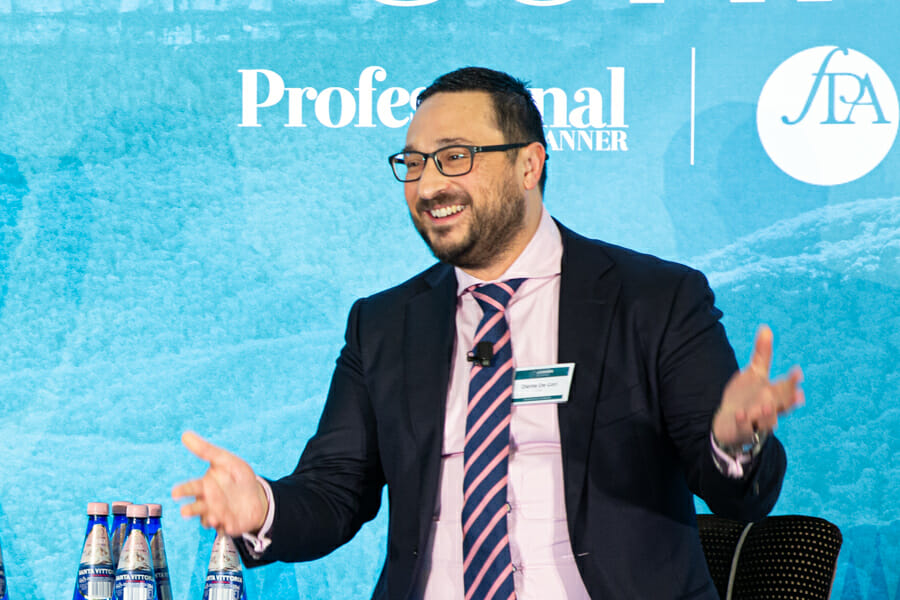

It’s possible the major advice associations could merge according to FPA chief executive Dante De Gori, but creating a ‘super association’ would be problematic due to the idiosyncratic views and priorities of the respective member cohorts.
In lieu of a merger, advisers can expect to see a lot more collaboration between the AFA and FPA.
Appearing on a panel at the Professional Planner Licensee Summit in Katoomba Tuesday, De Gori was asked if a consolidation of the industry’s two major representative groups – the Financial Planning Association and the Association of Financial Planners – would benefit the profession by creating a stronger and more unified representative voice in Canberra. “There are arguments that it could,” De Gori said.
Anything’s possible, he continued, and the direction each association takes is ultimately the choice of members. Yet the two groups have unique member bases, with often disparate views.
“To say there’s going to be only one voice is I think quite a difficult task,” he explained. “There’s always going to be differences and nuances in terms of what each of us all need and want.”
The historical footprint of each association is well known; the AFA leans towards life insurance advice while the FPA has a broader base and a focus on the global Certified Financial Planner designation. FPA Australia has a much larger membership base, but the AFA has a much longer history.
There are other associations, but each is usually excluded from merger speculation. The Self-managed Superannuation Fund Association has a specific membership cohort focussed on self-directed retirement funds, while other associations are largely seen as too niche or divisive.
If there was to be a merger, the AFA and the FPA would be the primary candidates. Each has been weakened by the contraction in adviser numbers and has felt the sting of industry observers calling for better representation and stronger leadership.
To that end, De Gori says, the associations are increasingly coming together to represent a united front.
“What we’ve tried to do in the association space is work a lot more collaboratively,” he explained. “We will go to Canberra and we’ll go there together.”
Yet there are still more steps the industry associations could take to present a stronger voice, he suggested.
“There are things I think we could put on a sheet of paper, and say ‘here are the top four or five things’ – do we all agree that’s our primary focus?'”
It doesn’t mean there aren’t specific issues each organization wants to deal with or promote to government on its own, De Gori continued, “but those high level, big picture true reform pieces of the profession, I think there’s a real opportunity to come together and get some consensus.”
The associations will always have their own policy platforms, he said, but there will also always be areas that they can agree on and co-sign.
“Now we’re probably all going to argue on how to get there, but the idea is you want to put in place the end point – what is it we’re trying to achieve, and where can we find a consensus?”





















Leave a Comment
You must be logged in to post a comment.