
The option of being self-licensed need not be daunting if financial planners can find the right partner to work with. And if anecdotal evidence on the number of planners intending to acquire their own Australian financial services licence (AFSL) plays out for real, there will be a significant number looking for such a partner.
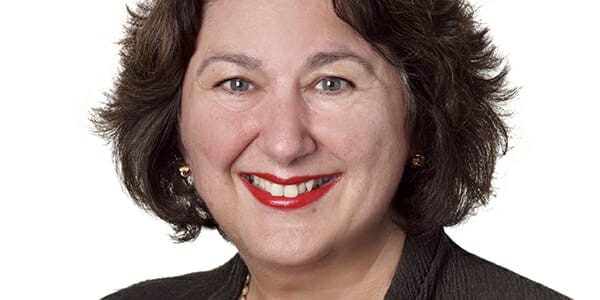
Soula Cargakis (pictured), chief executive officer of Associated Advisory Practices (AAP), a subsidiary of Centrepoint Alliance and a sister company to Professional Investment Services (PIS), has worked with independently owned financial planning practices for almost three decades.
She says pent-up demand for AFSL applications is rising.
“We didn’t [traditionally] do the licencing piece, but we’ve just launched that,” she says.
“We’ve spoken to three people this week [in May] already. We’ve got a heap waiting to see what’s going to happen with grandfathering – I think that’s why we’re not seeing it [happening yet].
“But we’ve got a few that we’re talking to at the moment.”
Let independents be themselves
The key to working with self-licensed firms, Cargakis says, is to let them be themselves. As a generalisation, own-AFSL firms are set up like that because they want to do things their own way. That means they have a very different mindset and philosophy from some bank-owned advice businesses.
“I think it’s about them making decisions, about wanting to make the decisions,” Cargakis says.
“I think that’s the difference. I have not worked with bank-owned dealer groups, so I don’t know how they get their referrals or how they market themselves or how they grow their businesses, so I can’t make any comment on that. All my work over 26 years has been on the independents’ side.
“I look at the independents and they’re all about building relationships. They’ve got to go out and get the clients. They’re not given to them. I could be making a huge assumption, and I don’t know how the bank-owned ones work.
“But I look at our advisers and I think that they’re about building relationships – building relationships with their referral partners. They’re so strong around that relationship piece, because nothing is given to them.
“They want to build something for themselves. It’s about controlling their own destiny, and they are more entrepreneurial. They have to work for it – there’s no one behind [the scenes] giving them something.”
Cargakis says the licensees AAP services account for about 900 authorised representatives.
“When we look at how many advisers we look after under the umbrella of AAP and PIS, it’s probably one in two of the independents,” she says.
“There’s well over 900 advisers in AAP. There’s more than 200 licensees – it’s a bit hard to tell; I do not have every single adviser on our books, because we deal with the licensee in the majority of cases, and they have a number of ARs. Our market is predominantly the boutiques.”
Professional indemnity
A critical part of the offer to independents is the structure of professional indemnity (PI) insurance. Capacity in the Australian market is drying up as underwriters pull out, and Cargakis says issues other than just price are coming to the fore.
“We’ve got an exclusive PI offer, done through an underwriter in the London market,” she says.
“It’s not all just about price. PI is one of the biggest issues and we see that all the time, so it’s comfort knowing there’s PI insurance there for them, making it easy for them to renew it every year.
“I hear some horror stories that people find out a few days before their PI renewal what they’re going to pay. We’re doing it four to six weeks out.
“I met the underwriter at the end of last year, and they came out [to Australia] recently, and they’re willing to do it because it’s based around our professional standards, Centrepoint’s professional standards. We’ve got six lawyers…as part of the [professional standards team] team. These are young guys in their 30s that are lawyers, that have worked at ASIC, FOS and Minter Ellison, and they just want to make a difference.
“How we got this PI is really around what we do with the dealers. We educate, we run PD days; we do their compliance; we run RM training; and that’s what it’s based around.”
Advisers’ council
Cargakis says the final decision on PI cover was made in conjunction with the AAP advisers’ council.
“We put three proposals on the table and came to the agreement that this was the one to go with,” she says.
“The key – this is what we said when we spoke to the various insurers – was that we wanted a good price, of course, but we wanted continuity. We wanted it easy to renew – not filling out reams of paper very year; they’ll be able to do it online – but we also wanted a good claims process around it.
“If you’re a boutique licensee and you were to get a claim, you’ve got to do the work. It’s different from a large institution or dealer group where there are people there to do that work. So we wanted a good process – touch wood that they don’t get claims.”
Cargakis says independent financial planning businesses have a bright future, and the recent consolidation of the industry into institutionally owned licensees is part of a natural cycle.
“It’s interesting because you see comments about consolidation; then everyone will say people are leaving dealer groups; and then there’s consolidation into the Big Four. I think it’s cycles, really. And the other thing is there will always be those people who want to be licensed to someone and there will be those people who choose to have their own licence.
“They’ve got a good future, and they’ve got a good place in this industry.”
Public perception
Current disquiet about lobbying by banks for the reintroduction of commissions on general advice, and the revelations of malpractice at Commonwealth Financial Planning (CFPL) must inevitably feed into how the public perceives institutionally owned advice networks relative to the independents.
“It’s not good advertising for the banks at the moment, is it?” Cargakis says.
She says that the ownership status of a licensee must have a bearing on the quality of the advice the consumer ultimately receives.
“I think it does,” she says.
“If you walk into a bank and you’re introduced to someone, when have you made a choice of who to go to? You haven’t made that choice.”
Cargakis cites the example of a personal friend who went to her local bank branch.
“She has a home loan and a small credit card,” Cargakis says.
“That’s not a relationship. So where has she made the choice? She hasn’t made a choice. She hasn’t made a decision.
“But there’s an example – someone’s gone to the bank, gone to a teller. They’ve said, have you got a financial plan? No I don’t. They’ve said, Fred here will help you – it won’t cost you anything. But she didn’t make that choice. She didn’t go into that bank that day looking to invest $40,000.”
Strong relationships
Maintaining strong relationships with clients – which from AAP’s perspective means licensees – is paramount in maintaining standards and a high level of support.
“We understand the independents,” Cargakis says.
“We’re not out to make them something else. We understand how they operate. We basically offer them – if I look at our tag – ‘big business benefits with small business independence’. The idea is if they were part of a dealer group, what would they get? Professional standards – which is compliance – practice management, education: the normal things a dealer group would give them.
“We do not tell them where to put their clients’ investments. We understand their independence and they have their own licence because they want to have the choice.
“Where we differ from others is the camaraderie that has grown within AAP. I think that is one of the key things, that we give them a feeling of belonging, but they have their own branding, their own independence, their own choices. That’s what’s important to them.
“We’ve had businesses sell to each other within AAP, so we can facilitate that as well.
“It’s the kind of things you’d usually see in a dealer group, rather than in a service provider. That’s where we’re a little bit different as a service provider – we try to keep it very personal.”
Humble beginnings
AAP’s licensee base has grown to its current level from very humble beginnings.
“When I joined PIS 10 years ago, there were a handful of dealers that PIS had a relationship with,” Cargakis says. She already knew many of those licensees from her time working at Navigator.
“I think there were about four licensees, and said, ‘Can I take them over? Let me see what I can do with them,” she says.
“At the time, I think PIS was doing some commission processing for them. So there was a relationship there for these four dealers – they were boutiques. So I took them over and it grew form there.
“I said, OK, we’re doing commission processing for them, what else can we do for them? Can we do some compliance for them? What else can we do? I was used to the boutique market because that’s the area I’ve always been working in.
“I knew what those guys were like and what they needed.”
Culture to protect
Today, AAP tends to be choosy about the licensees it will work with – and for good reason.
“We’ve got a culture to protect,” Cargakis says.
“We had a new client, an accounting firm it was. The planner was really good, they had a financial planning arm and they had their own licence. But the accountant wanted the SoA to not be an SoA, to be something else; and he wanted us to sign off on it, and he knew best. And I said, look, no. Just tell him they need to go somewhere else. We won’t do that. We won’t compromise.
“We have a culture to protect and I do not ever want one of our AAP licensee on the front page of The Age, thank you very much.
“It doesn’t impact us personally, because it’s their licence, and we probably wouldn’t even be mentioned. But I still don’t want that to happen.”