
The professional standards manager for Centrepoint Alliance, Rhett Das, has called for a delay to the June 30 implementation of the Tax Agent Services Act (TASA) for financial planners because key pieces of compliance information still are not confirmed.
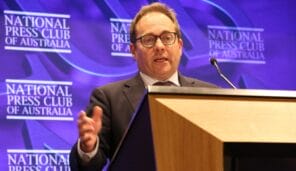
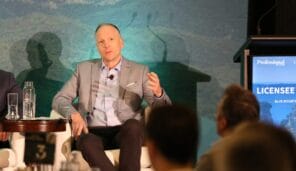
Das (pictured) told the Professional Investment Services (PIS) conference in Shanghai that it is impossible for licensee and dealer groups to give definitive guidance to advisers about complying with the TASA rules.
After June 30, any financial planner who provides a tax (financial) advice service for a fee will be required to notify the Tax Practitioners Board (TPB) that they wish to be registered to provide that advice. When they are registered, advisers must comply with the TPB’s code of professional conduct, which includes requirements relating to continuing professional education (CPE) and professional indemnity (PI) insurance.
No details
“We really don’t have all the details yet,” Das told the conference.
“We don’t have all the details about the education requirements. We don’t have all the details about what it is you’re going to need, the subjects you’ll be able to complete to ensure that you’re compliant with the requirements of the TPB.”
Das said it is his personal view “and also I speak for the company when we think even though this is going to come out in July, I really think this should be deferred for at least 12 months”.
“How are you supposed to provide information to clients…when we don’t have all the information?” he said.
“Basically, that’s what we’d like to see, and we’ll wait to see what developments come forth.”
Limited use
Speaking to Professional Planner, Das said that guidance issued last week by the TPB was of only limited use to dealer groups and advisers.
“We’ve been given theoretical guidance in terms of what came out last week about what they consider to be tax (financial) advice or when tax (financial) advice could be provided,” Das said.
“But what would be easier I think from an adviser’s point of view, and even for a dealer group that is having to monitor and supervise and educate their advisers, is actual examples – if you did A, this might trigger a tax-advice scenario; and if I recommend that you dispose of a product, this could have a [capital gains tax] CGT implication. Just practical examples, like you might even see in a regulatory guide put out by ASIC.
Difficult to endorse
“It’s very difficult for us to endorse something that we’re not even 100 per cent sure we have enough details on yet to make a decision,” he says.
“From July 1, based on the information we have today, if someone said to me, ‘Should I be registering?’, I’d say, well, you’re effectively signing up for something that you do not have all the information about.”
Simon Hoyle travelled to the 2014 Professional Investment Services conference in Shanghai as a guest of PIS.