Structured sub-funds avoid having to reinvent the wheel. Krystine Lumanta reports.
Private ancillary funds (PAFs) – formerly known as prescribed private funds – have received a lot of attention since their inception. However, it has come to light that not every client with philanthropic goals is suited to this arrangement.
Financial planners must therefore consider other options that suit their clients’ cashflow, tax situation and, ultimately, what they want to do with their money.
Enter sub-funds – an alternative option that is supported by a parent structure or an “umbrella” of a community foundation.
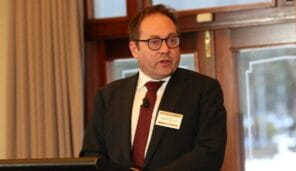
According to Belinda Morrissey, director of philanthropic development at Sydney Community Foundation (SCF), sub-funds are “for those that do not want the ‘self-managed’ option, which comes in the form of PAFs”.
SCF allows donors to establish a named sub-fund within the structure of the foundation’s public fund at a lower entry point of $50,000, gradually invested over the course of five years.
‘You wouldn’t set up a PAF even if someone was dead keen to do that’
The compliance, accounting and legislative responsibilities are all handled by the foundation, as there is no need to set up a separate trust for each sub-fund.
“I’ve been doing a lot of work with the Professional Advisers Network that we have at SCF – with the wealth advisers particularly – talking to them about the concept of setting up a named sub-fund,” Morrissey says.
“They’ve realised it’s like setting up a PAF but a lot simpler, and they don’t really under- stand the concept until it’s been explained to them.
“One of the wealth advisers I was speaking to said, ‘Effectively, you’re a wrap platform for philanthropists’.
“From an adviser point of view, it is an alternative to a private ancillary fund [as] that concept is a big hurdle,” Morrissey says.
“Also, individuals think [setting up a PAF is] a difficult process to go through and more hassle than they were looking for.”
A key benefit of sub-funds lies in the donor’s ability to set one up without committing to a cause until they are ready.
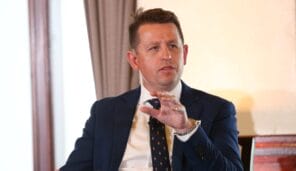
Bruce Christie, values-based financial adviser at Centric Wealth, says that this aspect was part of the appeal for him in setting up his own sub-fund.
“At the time I didn’t really know… I wanted to do something more meaningful than throw in $5000 at the end of the year,” he says.
“So I was able to establish a sub-fund, make the contribution, get a tax deduction and then over a period of time, think about what I really wanted to do.
“The money sits quarantined in the sub- fund, accumulates interest and then there’s an amount that can be contributed each year…and the more modest donor could be several hundred thousand dollars, so it can certainly still be significant – just not at that [higher] level.”
Christie says donors can also update their strategy and reallocate the monies to another cause if they have a change of heart; and they can add more capital if they want to. The sub-fund can be kept private or made public, so that others can make donations as well.
“So there is a high level of flexibility by using a sub-fund to achieve philanthropy through the more modest donor,” he says.
Advisers need to be aware that “there are very few ways of providing for people who want to donate with an effective solution”, according to Christie.
“Really there’s only, as far as I’m aware, three or four choices,” he says.
“If you’ve got an awful amount of money and want a lot of control, you can do a PAF.
“If you want it really, really simple you can just make a straight donation.
“So the middle ground is the ancillary fund of a financial institution like Perpetual, Goldman Sachs or ANZ.
“The other option is really a sub-fund. If you’re in Sydney, there’s the Sydney Community Foundation; or if you’re in Melbourne, there’s the Melbourne Community Foundation.
“If more financial advisers knew about this limited range of choice to help clients, then I think the people who want to give their money, if they were better informed of those choices, I would think that there’d maybe be more effective giving taking place,” Christie says.
“If you start to jump into solving problems with products, then you’re sort of putting the cart before the horse.
“You wouldn’t set up a PAF even if someone was dead keen to do that, unless they wanted to make a pretty sizeable donation, because there’s costs associated in doing it and, more to the point, there’s responsibilities in doing it.
“I always use the analogy: You wouldn’t set up a self-managed superannuation fund [SMSF] unless you had a million dollars [or] if there’s something specific you wanted to do that can only be done within a self-managed fund.
“And equally, the same argument applies to a PAF. It’s not just picking something off a shelf. There’s a process in getting to know your client.”