

As major superannuation funds develop increasingly sophisticated advice offerings, they have found themselves in a position that puts them at a distinct advantage to other advice providers outside the superannuation sphere. And it’s one that potentially raises significant strategic and tactical issues
for the broader advice industry.
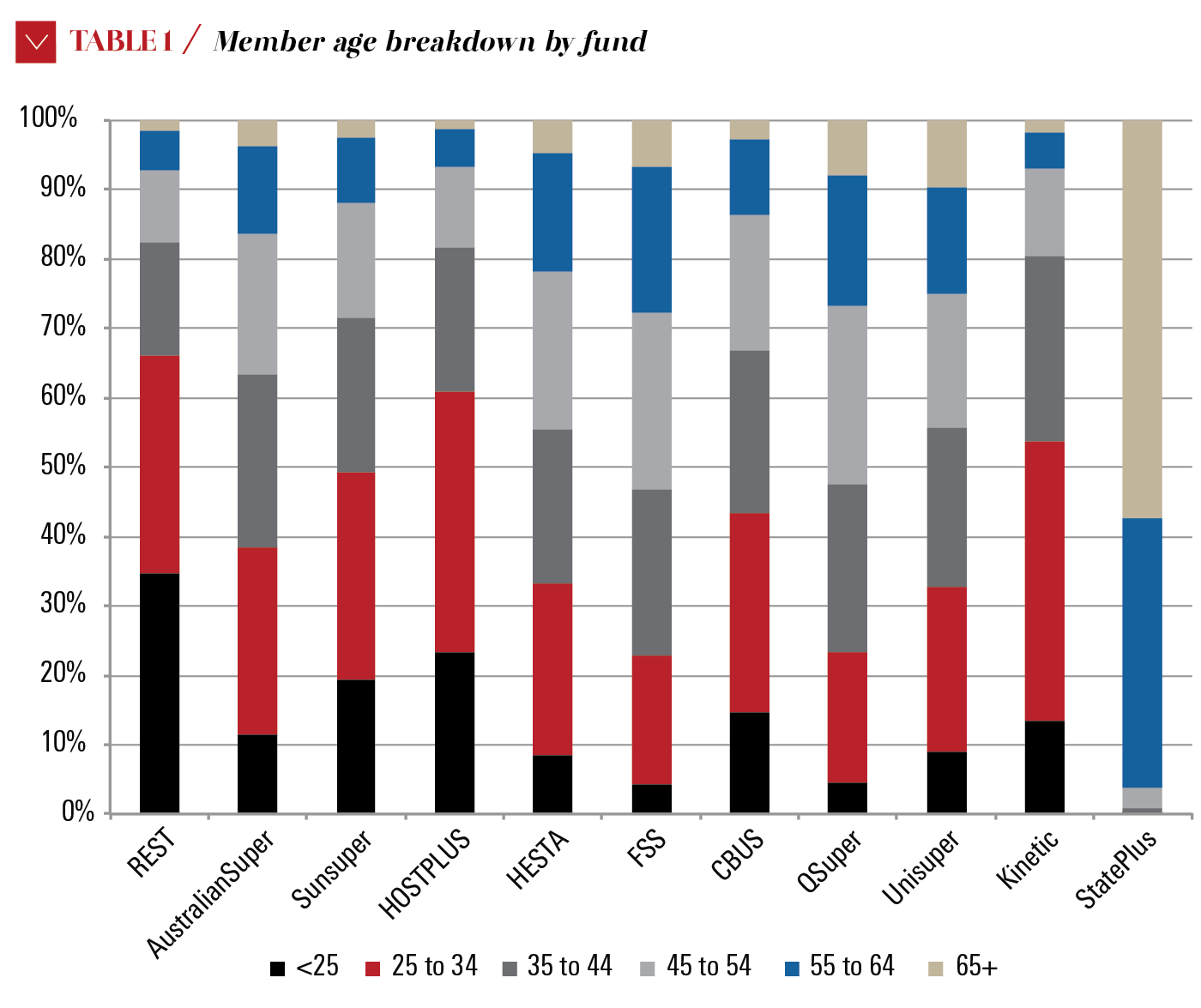
Each of the 10 largest funds has more than 300,000 members; REST and AustralianSuper each have more than two million; and Sunsuper has more than a million. A large membership means a fund can create significant economies of scale and fund sophisticated advice businesses. Even relatively small providers, such as StatePlus, have invested heavily in technology to improve the efficiency of front- middle- and back-office functions and improve the quality of advice.
Funds are able to carefully and smartly segment their members and develop advice offerings with precise relevance to each segment. And spurred on by legal and fiduciary factors, they are creating advice offerings that largely bypass the broader financial planning industry.
Those initial advantages are overlaid with some striking structural differences: fielding employed or salaried advisers; charging fees for service unconnected to product or to aggregating funds; and setting management benchmarks and key performance indicators on things like quality of advice, and Net Promoter Scores (NPS).
That stands in contrast with advice entities where significant time and energy is spent on marketing and finding new clients, where more activities are directed towards aggregating funds (in product or on platform) to generate a margin and drive revenue, and where, to a greater or lesser degree, product and product-related considerations impinge on advice conversations.
Needs, wants and channel preferences
Defining a relevant advice offering requires a deep understanding of members’ needs and preferences.
For StatePlus it involved doing detailed research, involving more than 2500 members. Jason Andriessen, general manager of marketing and financial planning, says the aim was to understand members’ “needs, wants and channel preferences.”
“And an objective was to produce a segmentation model that allowed us to see how these people, this market, clusters into smaller groups with like characteristics,” he says.
Andriessen says that in addition to traditional segmentation involving account balances, age and attitudes towards risk, StatePlus went “one step deeper … and we looked at attitudes and behaviours when it comes to making decisions around money and how, by extension, they would like consumer advice, and we saw that they clustered into four groups.”
StatePlus focused on two of those groups – so-called “outsourcers” and “coach-seekers” – and in addition “worked out six questions that we could ask every one of our clients and prospective clients to better segment where they cluster into that group.”
“We’ve rolled that out across the entire business and our digital framework as well,” Andriessen says.
“It’s produced a common language where we seek to better understand what [our clients’] decision making framework is. It allows us to better shape our messaging when we reach out to them, but it also enables us to better shape our advice offers. And on the basis of that research we did introduce a whole new category of advice, what we call ‘event advice’.”
The country’s largest fund, REST, has likewise built its advice offering on deep insights into member needs and preferences.
“We do a lot of member research and a couple of things gave rise to us implementing [an] education hub on our website,” says Andrew Howard, chief operating officer at REST.
Different questions at different stages
 “One of those is that people have differing levels of confidence in their own financial literacy, and the other was that depending on what stage of life people are
at, they are going to ask different types of questions.”
Howard says that REST’s research suggests that “our members don’t necessarily perceive that advice is for them, because they have a different view of what advice actually is, whereas when we make it digestible and presentable through education and over the phone consultation, they find themselves on a good path.”
“We are trying to develop our advice and education offer around those principles of easy access, self-serve and then get them access to professionals when they are ready for something that is more complicated,” he says.
Howard adds the superannuation fund has a partnership with Link Advice that gives them access to financial planners if it is needed.
“That happens most often after somebody had a chance to explore general advice questions or intra-fund advice questions over the phone, but if they need to go ahead and have a sit-down financial planning appointment, we can organise that through Link Advice,” he says.
“If they do take advice that is more complicated, the first piece of advice request is at no cost.”
Hostplus has pursued a similar strategy. Paul Watson, group executive of business growth, product and advice at Hostplus, says they use digital advice to achieve small and early wins, which in turn builds trust. This increase in trust facilitated a feed through into phone advice, which tackled intra-fund advice through to comprehensive advice, thanks to the embedded financial planner model it used.
The embedded model worked by having financial planners from Industry Funds Service (IFS) work alongside Hostplus call centre staff in the same centre.
“For all intents and purposes they are part of our family in providing advice to members,” Watson says.
“That model served us well for quite some time, but with the increase in engagement and the increase in complexity around both product and advice and strategy, we’ve moved to the next iteration where we insource our own financial planners and they are operating under an authorised representative model, with IFS taking on more of a dealer group approach.
AustralianSuper has 20 employed financial planners that are licensed through IFS. They are salaried and do not receive any commission.
“A member traditionally would receive that face-to-face pre-retirement advice through that channel,” says Shane Hancock, head of advice and education at AustralianSuper.
“We also have an accredited advice channel. So currently we have 660 financial planners that are accredited with AustralianSuper, from a range of different licensees from across the country.”
Hancock says there is no way the internal advice team can service more than two million members, and the accreditation approach allows wider geographical coverage and more members to access the service.
Dedicated data science team
 While superannuation funds only have a very loose appreciation of the details about their individual members, aside from age and account balance, there are some that buck the trend. Sunsuper has a membership of more than one million and a dedicated data science team to develop better products and advice through deeper understanding of who the members are, and what their needs are.
The insights from the team have already been used to redesign insurance products, following its discovery that one-third of people who claimed total and permanent disability were back at work within three years.
Now its team is focused on advice, following the board’s approval of a three-year strategic plan to improve the super fund’s capabilities.
“You don’t build an end-to-end advice platform overnight,” says Anne Fuchs, manager of retail distribution and advice at Sunsuper.
“We have a really very impressive team of data scientists that allow us to know our clients deeply – to use data in a way so that we are speaking to them as an individual, and not speaking to them en masse.
“As we establish our advice strategy in 2017 and beyond, the behavioural finance and ‘finology’ will be integral – so, actually understanding what money means to somebody and their relationship with it. Is it for enjoyment? Is it for security? What does it actually represent to them? Because it is that which will actually form their view of how that money is invested, and on how much extra they are actually prepared to put away in super.”
Fuchs adds that another advantage of using the data science team is they know which moment to approach a member, with which component of advice, to make a material difference to their position.
However, the super fund is agnostic about from where its members get advice.
Similar to AustralianSuper, if one of Sunsuper’s members wants to get financial advice from an adviser that is in their community, the super fund is happy to partner with that adviser, as long as they are acting in the best interests of the client.
“That generally hasn’t been the status quo and position of an industry super fund,” Fuchs says.
Currently, Sunsuper has a national advice panel consisting of 66 advisers that are spread across the country, to whom the super fund can refer its members.
“We’ve only scraped the surface in terms of promoting advisers and it is early days for us,” Fuchs says.
“What we need to do is actually integrate these advisers into our business, introducing them to our employee teams that are onsite, building trust and relationships so that they can seamlessly refer when the time arises.”
CFP qualification just the ‘starting point’
 For Sunsuper to partner with an adviser they require them to be a Certified Financial Planner (CFP), or an equivalent qualification. Holding other qualifications would not preclude a partnership, though the CFP is definitely the starting point. In addition, the adviser would also need five years’ experience and use a fee-for-service model.
“It is not about the hard metrics, but it [is] also around the shared value, around the best interests test, how we treat our members,” Fuchs says.
“We recognise that sometimes Sunsuper may not be appropriate, but equally pragmatic commercial reality comes in to it too. We want to partner with people who are willing to advise on Sunsuper when it is appropriate for the client.”
Fuchs adds that industry funds going into advice more proactively is, in the scheme of the amount of change going on, a microcosm of the shakeup that’s going on in the broader advice industry.
“No one really wants to get financial advice,” she says.
“People drop out of the process because it’s too hard, so the objective is to make it streamlined so that they don’t actually have an excuse to drop off. Because the thing is if we let them drop off we fail, because they go to retirement [with] less money.
“Our CEO, Scott Hartley, often says that fees are important, investment performance is important, but that the one biggest thing that will determine the balance someone will retire with is their engagement as early as possible in getting the financial advice.”
Cbus chief executive officer David Atkin says it is essential that fund members can access professional financial advice to ensure they get the best possible retirement outcomes.
“It’s important that funds have thought out how to proceed in this area to provide great service to the members and to minimise cross-subsidies,” he says.
The head of advice and retirement at Cbus, Greg Harper, says the fund has done “a lot of work developing an integrated advice service model, that includes an ‘advice over the phone service’ with 33 advice staff, a national seminar program, a landmark referral program with the Financial Planning Association [FPA] with 53 participating FPA Professional Practices and nationwide service coverage.”
Harper says getting the right performance planning measures in place is central to providing advice that is always in the best interests of members.
“We hear about commissions all the time and rightly so, where product incentivisation drives the wrong behaviour, and advice isn’t strictly in the best interest of the member,” Harper says.
‘Lazy’ performance planning measurement
 “If you’ve got performance planning measures in place that drive the wrong behaviours, they are equally as bad – because essentially it drives product incentivisation. It influences a bias towards your own product, which may not provide advice in the best interests of the member.
“It’s lazy performance planning measurement as well.”
Harper says performance measurements such as the number of SoAs written in a month, and additional contributions to a fund, are just as likely to bias behaviour as straight cash incentives.
“The fundamental thing is that best interest test, and our service model that aligns with it: our performance planning measures on professional engagement, technical competence, follow-through and closure of actions – without a bias and without pressure,” he says.
“Great service, professional engagement, technical competence, having the right conversations and imparting your considered knowledge – so the member can make more informed decisions – are all critical ingredients for providing advice in our member’s best interest.
“Whatever the advice requirement is, we do [it] strictly in the best interests of the member. It’s unbridled, and not compromised.”
Harper says KPIs that may seem to be in the best interests of the member sometimes unintentionally are not. Others, however, obviously distort advice. Removing all forms of product incentivisation and conflicted performance planning measures are critical in developing a holistic and integrated advice model for members. But the advice process needs to be untainted from start to finish.
“If you’ve got KPI on FUM and additional contributions and those dollar figures, how bad do you think that’s going to be in driving advice that’s compromised?” he says.
Harper says “we know that Cbus is a high performing fund, with all profits to members, strong returns over the past 32 years (since inception) and great services for members nationwide, but we are all obligated legally and ethically to give advice strictly in the members’ best interests.
“If that means taking money out of the fund … to eliminate debt, or to satisfy other personal requirements, or we don’t give advice to make additional contributions because the member doesn’t have surplus income, or there are adverse impacts due to preservation issues … then that’s the advice we will give, because that’s in the best interest of our members.”
Serving members’ best interests is at the core of super funds’ advice offerings, but a clear benefit of sound advice is “definitely increased retention,” says Jack McCartney, executive manager of advice and employer relationships at UniSuper.
McCartney says the advice provided does not need to be particularly complex for the member/fund relationship to be cemented.
“Just having that relationship, so people know where to go when the time is right, is part of it as well – just educating them and letting them know we do have this wonderful service here that’s in their interests,” he says.
Selling quality service, not product
He says Unisuper tracks the quality of advice it provides by calculating a Net Promoter Score for each of its advisers, and this approach springs
from a philosophy of “giving great service that is genuinely in the member’s best interest.”
“Probably what we do sell is our service. People know when they’re being sold something and can smell it a mile away and they’re over it.”
McCartney says a focus on quality frees up its advisers to focus on service.
“Advisers, if they want to spend two hours with somebody, they do,” he says.
“They have enough time and if they want to go overboard they can, because it is always about the member – they know they have got to get a great NPS score.
“If you’re doing that and you’re doing it in an ethical way, then you’re going to run a great business.”
McCartney says super funds are uniquely placed in the financial services space to approach advice in this way – it does not happen the same way across the advice industry.
“Having done this and having run a few businesses over the years, I think this is the model of the future that’s here now,” McCartney says.
“It’s interesting. If you looked at FoFA [the Future of Financial Advice legislation] in its purest sense, it’s about the member getting [the] best advice.
“If you had the main providers all providing strong products, and their advisers generally did the right thing, they would still get a fair share in their own products. They would advise on other [products] but at the same time, those other advisers would advise back to them.
“It should actually be possible to do it. It should actually work, but I don’t think anyone is actually doing it. They’d have to get together and agree it, but it’s probably the old world and they think that’s the way they have to do it, and the way people are remunerated – the whole thing needs to be changed.”
Cbus’s Harper says the fund has “an obligation to help members with information that ultimately assists them in making astute and considered, informed decisions.”
“Financial advice is about collecting information from the member, it’s about considering that information, presenting it back to the member, providing them with sound guidance and advice to drive an informed decision, made by the member, that is in their best interest. Ultimately, the decision is made by the member, not the adviser.
“Good advice is always based on the member’s goals, circumstances and objectives, and what they would like to do, based on the appropriate information being discussed with, and presented to them.”