
A report released last month paints a picture of a financial planning profession lagging behind growing demand from clients for advice and guidance on efficient and effective philanthropy.
The report, A study of professional advisers in Australia, produced by the Australian Centre for Philanthropy and Nonprofit Studies (ACPNS) at the Queensland University of Technology Business School, reveals that most advisers have discussed philanthropy with just one in 10 or fewer of their high-net-worth clients.
Even though the report finds that discussions about philanthropy are becoming more common, it also shows that advisers’ awareness of their clients’ growing interest in philanthropy continues to lag that growth in interest.
And interest in philanthropy is expected to increase significantly in coming years with an expected intergenerational transfer of wealth, estimated by ING Direct in September last year to be in the order of $2.4 trillion, from baby boomers to their children and grandchildren.
Even so, “about a quarter [of advisers] haven’t discussed it with any [clients],” says Dr Wendy Scaife, acting director of ACPNS and a co-author of the report.
“That number has gone down. It’s a better figure than 2008, because then more than half [of advisers] hadn’t discussed philanthropy with any clients. More people are having some discussion [today].”
Clients face a range of options when it comes to structuring their giving, ranging from ad-hoc one-off contributions through to regular donations, setting up a sub-fund of a public ancillary fund, or setting up a private ancillary fund.
Download the full cover story, “Giving Back”, as a PDF
Structured approach
Antonia Ruffell, chief executive officer of Australian Philanthropic Services (APS), works with advisers and financial planners whose clients want to take a more structured approach to giving.
“Every year we have a number of advisers who come to us and say they’ve got this client – these advisers may not even have a big portfolio of wealthy clients – but they’ve got one client who has suddenly sold a business, they’ve sold it for $150 million and they’re going to have a big tax issue, this year, once only,” she says. “And so they will set up a private ancillary fund right now. They’re the ones who are responding to an immediate need.
“And the other side is the clients where it just makes sense, and it’s something they want to do. That’s where they’re having the ongoing conversation, and it will often come out of an estate planning conversation, a tax planning conversation, or just a general conversation about what wealth means to them and their family.”
Ruffell says an inheritance often gives the recipient pause to stop and think deeply about what to do.
“Often, people, when they have inherited wealth, have a sense of duty to the person who they’ve inherited the money from, “she says. “They want to do something in memory of their father, their mother, their aunty, their uncle, whoever it is. If it’s money they haven’t earned, there’s a different attitude to it. And also, the kids of people who have the PAF [private ancillary fund] today will inherit control of [it].”
Get involved
Scaife says it is easier for advisers to raise the issue of they have had involvement in giving themselves.
“I think that gives you credibility,” she says. “It’s an opportunity for advisers to reflect on giving according to their means. If you really want to understand the attitudes of your clients, sashay a little bit into the field yourself.”
The Financial Planning Association (FPA) supports the Future2 Foundation as a way for individual financial planners to experience firsthand the benefits that can flow from philanthropic work.
Future2 was initially set up with only administrative support by the FPA to be the charitable foundation for the entire financial planning community. More recently Future2 was brought back into the FPA fold. It raises funds through a range of initiatives, including the annual Future2 Wheel Classic bike ride, and makes grants to community groups that do work to support disadvantaged youth around the country. Grant recipients are nominated by FPA members, and considered by the Future2 trustees.
And some financial planning businesses have established their own foundations to support good causes. One such firm is Hewison Private Wealth, which set up the Hewison Foundation late last year to coincide with the firm’s 30th anniversary, and start formally giving back to the community that has supported it over those years. Count Financial has operated a charitable foundation since 2004, and more recently, Count founder Barry Lambert has extended his personal philanthropic activities significantly.
Conflicting with wealth creation
The ACPNS report finds that many advisers say they are reluctant to advise on philanthropy because they fear it will not generate revenue for the business or because they see advice on giving money away as conflicting with their role in wealth creation.
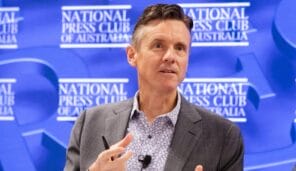
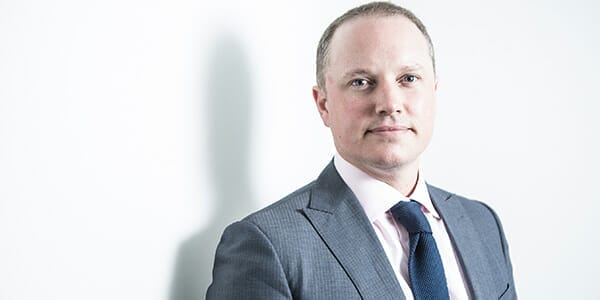
Ben Clark, head of philanthropy for Australian Executor Trustees (pictured), says the ACPNS study is valuable in identifying some of the roadblocks, both real and perceived, to financial planners getting more deeply involved in conversations and actions with clients about philanthropy.
“What we’re hoping to achieve is to further the benchmarking exercise and to get a litmus of what adviser appetite is at the moment,” Clark says.
“It’s a really interesting period for a number of reasons. One is that we’re still in a period of market volatility, and we know that affects and impacts on people’s decisions to give, and that’s largely tied to the notion of making an irrevocable gift and surrendering your beneficial ownership of the assets you’re donating to your foundation or indeed to a charity.”
Emerging solutions
Clark says new solutions are emerging that address advisers’ traditional concerns about entering the philanthropy space.
“We’ve honed our attention really on this model … around genuine partnership and supporting the adviser to succeed,” he says.
“It’s a pretty simple concept. What we do, essentially, is take on the risk; leave the adviser to focus on returns and investing the assets and determining the investment strategy; and being the central point of contact for the client, who is now freed up and unencumbered from those issues to really focus on the reward of their foundation, which is giving the money away.”
Ruffell says advisers that are most comfortable having those kinds of holistic, values-based conversations are the ones that tend to refer clients to APS most often.
“Their characteristics would be that they’re the people dealing with high-net-worth clients … and the people who are comfortable talking about philanthropy and do it all the time and get more referrals are those advisers having values-based conversations – having conversations around what’s important to the family,” she says.
“Are they concerned about issues of wealth transfer or the impact of money on their children? Concerned about the legacy they’re going to leave? A lot of people have made a lot of money and want to think about how they can do great things with that money. It’s not just all about themselves.”
Ruffell says philanthropy is usually driven by a genuine desire to do something meaningful, simply not by the desire to solve a tax problem.
“It is a solution to a tax issue, it has tax advantages,” she says. “But every time I’m in an early-stage meeting with an adviser and their client you will always hear the client saying something like, ‘I feel like it’s the right thing to do’, ‘I want to give back’, ‘I’ve been incredibly fortunate’, ‘I want to give other people the opportunity’, ‘I want to inspire my kids to have a sense of responsibility around wealth’. Those sorts of things will always come up.
“Most people are already giving in some way already and they have all got some desire to do good. What the PAF does is provide the structure to help them think more strategically about how they’re going to do that good.”