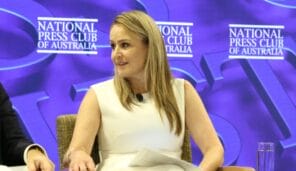

The growing number of individuals seeking to provide advice on self-managed superannuation funds (SMSFs) is generating increased demand for the provision of specialist accreditation, accroding to the chief executive officer of the SMSF Association, Andrea Slattery.
Slattery told the association’s state technical conference in Sydney yesterday that there has been a spike in the interest in SMSF advice among lawyers and accountants.
“While it’s always been there, there’s been a significant increase recently,” Slattery said.
“Many of these professionals are actually choosing to join our ranks with their commitment to excellence, because they recognise the market acknowledgement of our membership that the association brings through our specialisation.”
Slattery said demand from employers for “entry-level” accreditation for employees has led to the development of the SMSF Practitioner (SSP) designation.
“Employers have been challenging us for some time to help to allow their employees to start a journey and a career in SMSF advice and service,” Slattery said.
“The program is specifically designed to give an independent validation of foundation SMSF knowledge and skills, and it’s going to begin on August 10. I ask you to all make enquiries about that if you’ve got people that are interested in that journey.
“We also announced earlier this year a postgraduate program in SMSF professionalism at the Adelaide University, and we’re continuing with other career programs to help you further your professionalism in your journey t postgraduate level.”
Fastest-growing
Slattery said SMSFs continue to be recognised as the fastest-growing sector of a superannuation system that is itself recognised as the second-best in the world.
“The SMSF sector is also expected, [in research by Deloitte], to continue to lead the superannuation sector for the next 20 years, and the superannuation sector is going to be a leader of GDP growth for Australia over that next 20 years as well,” she said.
Slattery said the high and increasing profile of th SMSF sector has led to greater regulator scrutiny and action.
“Quite recently, ASIC disqualified an SMSF auditor under the SIS [Superannuation Industry (Supervision)] Act, a move we wholeheartedly supported,” Slattery said.
“As I said at the time, and given the critical role of the auditor as the gatekeeper in the SMSF process, it was pleasing to see the co-regulation that occurred between ASIC and…the ATO as they worked together as co-regulators in this sector.
“It’s also very important that you understand the SMSF Specialist Auditor our program, is actually the only recognised accreditation in Australia for auditors, and so it’s really important that we continue to have those auditors achieve specialisation and recognition in the market.”
Slattery said SMSFA supported a Parliamentary Joint Committee (PJC) report’s proposals to lift the professional, ethical and education standards of advisers.
“In broad terms we concur with the PJC for co-regulation [of advice] and not a regulated environment,” she said.
Nurture a profession
“We believe is the correct strategy to continue to nurture a profession. In essence, it’s a carrot’ approach. This is where people are encouraged to enhance their professionalism throughout their career via a personal commitment to their on professionalism. This is an alternative to the ‘stick’ approach which we’ve had in the past, whish is a compliance-based system which works towards the lowest common denominator.”
Slattery said the SMSFA state technical conferences had attracted more than 1000 attendees in the five capital cities.
“We’re the peak body representing the $600 billion Australian SMSF sector,” she said.
“And the SMSF Association exists to enable Australians to take greater control over their own future through a sustainable SMSF community.
“Our focus is to continually improve quality and competence of advice services and product delivery, the knowledge of trustees and the credibility and health of the SMSF community, which contributes strongly to long term capital and national prosperity.
“We believe that insisting on tighter controls, accrediting and educating professionals an providing accurate and appropriate advice to trustees is the best way to ensure that SMSFs continue to provide their promised benefits.”