
It was the former French president Charles de Gaulle who is reported to have asked: “How can anyone govern a country that has 246 different kinds of cheese?”
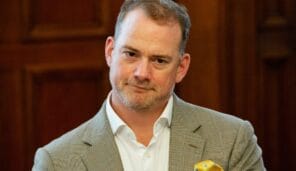
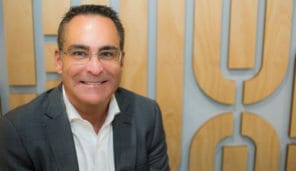
Governing any entity – a nation or a corporation – that is so disparate and diverse is a challenging proposition, and it’s the kind of situation facing Spiro Paule, chief executive officer of the Findex Wealth Accountants Group as he integrates the acquisition of the listed accounting firm Crowe Horwath.
“They’ve got something like 540 applications that they are supporting across the network,” Paule says.
“They might be 10 versions of MYOB and 12 versions of Xero. Clients migrate data in from their accounting packages and their software packages, so we have to keep all of those going to accommodate all of them. This is creating incredible inefficiency through the business, because there’s nothing standard.”
But that inefficiency also gives a hint of the potential that Findex saw in the struggling accounting group.
“The Findex group is used to significant profitability, of above 40 per cent EBIT [earnings before interest and tax],” Paule says.
“Crowe Howarth is certainly well below 10 per cent, so if I can get from there to us – and we’re actually nearly at 50…
“That’s what you can bank. [EBIT] is what you can bank at the end of the day and pay your tax and move on. There’s no one I know does more than 50 per cent. The average is about 20, and if I can get [Crowe Horwath] to 20, I’ve tripled our investment. So we’ll see.”
The ace in the hole for Paule is the Findex administration system, which he says has been developed over 20 years and is capable of supporting a multi-brand strategy, while creating a consistent method and standard of service delivery. Simplifying the Crowe Horwath back office will slash costs; and that’s before Findex turns its attention – and its financial firepower to further acquisitions – to expanding the range of services it provides to Crowe Horwath’s estimated 250,000 small and medium-sized enterprise clients.
And all of that is before Paule embarks on more acquisitions – which he says are currently under consideration.
The ‘Volkswagen of financial services’
Findex operates six brands in the financial planning space, from Centric Wealth at the high-net-worth end of the spectrum, to Movo, the company’s version of an online advice service.
While Paule describes the task of aggregating so many separate businesses under Findex umbrella as being like “turning milkbars in to supermarkets”, he likens Findex’s multi-brand wealth management strategy to that of carmaker Volkswagen.
“We run six brands. We call ourselves the Volkswagen of financial services,” he says.
“Volkswagen has absolutely premium car brands in its stable, like Lamborghini and Maserati and Bentley and Porsche and Audi; and then it’s got budget brands – its own VW, and SEAT and Skoda. There’s even Bugatti, which is super-premium.
“It manages all of those brands absolutely without compromise in terms of the brand experience. They are just this year going to be the largest carmaker in the world, and it’s done that quite distinctly differently from everybody else.
“It’s picked up a lot of very strong but failing brands – all of the others were struggling at some point in time and were going out of business – and it picked them up restored value, restored the brand and restored their competitiveness. They’re all now quite viable brands in their own right. We’re emulating that approach in financial services.”
Paule says it is “a moot point as to whether Crowe Horwath was failing or not”.
I think it was failing, and I’m not gilding the lily there,” he says.
“It was failing, and it’s going to stop failing now. Centric wasn’t failing, but it wasn’t doing as well as it could.”
Different proposition
Pre-acquisition Centric shared a similarity with Findex in that it had an aggressive private equity investor on its register. That investment drove some interesting business decisions as the investor prepared to exit the business, but Paule says Findex is in a different position with its backer, KKR.
“[CHAMP] had 80 per cent of the equity; KKR have 40 per cent with us,” he says.
“It’s a different proposition. We also were careful to negotiate a pretty lengthy period of seven years with them. I didn’t want to be under pressure trying to exit them after two or three years, which is probably their optimal time, whilst we’ve got a job to do.
“And the job is quite big at Crowe Horwath – not in terms of the job, but just the geographical scale to get there and do it well. We see that as taking some time, and I didn’t need any pressure from an investor saying please give me my money back. They’re OK with that, obviously it’s written down, and if we get to exit them earlier because they choose to go and we can, we will. But no one is putting their hand up. It’s very early in the piece anyway.”
More acquisitions
While Findex is focused on maximising the efficiency of the Crowe Horwth business, Paule says this does not mean more acquisitions won’t happen.
Watch this space,” he says. “We’re already talking to some.
“There’s two minds to this. One is to fill out markets in which we’re weak, and in Adelaide we don’t have any accounting, so we’re looking at Adelaide. We’re looking at places like Melbourne because we’re still under-represented for a major market there. We’re looking at places we’re not, just to see if we can get a true connection across the country. So that’s one side.
Paule says Findex needs to fill in some of the gaps in the Crow Horwath product and services suite – adjacencies”, as he describes them; “services that we need to continue to fill out to make sure our clients can continue to truly get everything they need”.
“Now we’ve go a much bigger footprint of clients – we’ve gone 250,000 SME clients – and those people are really only getting pretty much one service out of us, and they need to be getting four or five,” he says.
“They’re buying those other things somewhere; it’s just not with us. And we need to make sure that we give them a reason to buy them from us. But we’re not a manufacturer, so we’re happy to go and broke the best services out there, at the right price, and give our clients a deal to do them with us, package them all up. We’ve got their strategy, so we know what the best products are that will fit that strategy…and make sure they’re all assembled well so they’re not clunky or inefficient.”