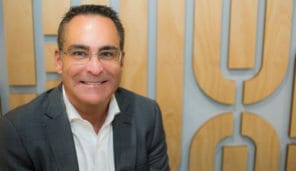

Unethical, immoral and even criminal activity by companies starts in the boardroom, and if company is rotten at the top it is far more likely to be rotten all the way through, according to Michael Woodford, former president of Olympus, and author of the book Exposure – From President to Whistleblower at Olympus.
Please CLICK HERE to read “If financial planners don’t ‘get’ professionalism now, we never will”.
Woodford was appointed president of Olympus, the giant Japanese technology company, in April 2011 and then chief executive officer in October the same year. Within a couple of weeks he learned of a $US1.7 billion (then about $1.74 billion) merger and acquisition fraud, set in motion years earlier essentially to cover up some poor high-risk investments.
The fraud involved Olympus paying about $US1 billion for companies that were virtually worthless, and paying a further $US700 million for clearly bogus consulting advice.
Stunned
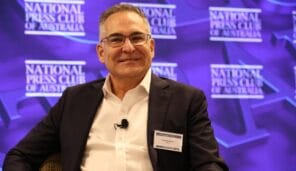
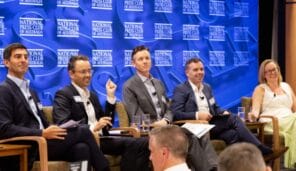
Woodford, in Australia as a guest of CFA Societies Australia as the keynote speaker in its “Putting Investors First” awareness week, says he was stunned by the lack of willingness by the company, and its directors in particular, to address or even acknowledge the fraud.
Ultimately, Woodford turned whistle blower against his employer, handing over a meticulously researched dossier on the M&A activity to a newspaper reporter. His book recounts that experience, and its aftermath – including his departure from Japan amid suggestions that he had become a target of the Yakuza.
Suffice it to say Woodford, who says he suspected the worst about human nature even before his Olympus experience, is today completely “jaded and cynical” about the ability and the willingness of individuals to act and behave correctly when the pressure is on.
It is especially bad in companies where corporate culture, which Woodford says starts at the top, mitigates against openness and transparency.
Woodford firmly believes there should be formal processes embedded into corporate structures to enable whistle blowers to come forward. And he says regulators should have formal procedures for dealing with whistle blowers effectively, and anonymously.
Integrity
But ultimately it comes down to individual integrity, he says, and the courage and willingness of individuals to do the right thing.
How regulators deal with whistle blowers was highlighted this week when the deputy chair of the Australian Securities and Investments Commission (ASIC), Peter Kell, said it should have “[communicated] better with whistle blowers who came to us with information about CFP [Commonwealth Financial Planning]”.
In addition, Kell said in a video posted by ASIC on YouTube that ASIC supports law reform that would enable it to “take action against managers and executives in financial services firms that do the wrong thing”.
Woodford says meaningful penalties for individuals – not just fines levied on companies, which shareholders ultimately pay anyway – are part of the process of changing corporate culture and encouraging better behaviour.
Ethics
The process of ethical decision making in financial planning was canvassed extensively in a 2010 paper, Ethics and Financial Advice: The Final Frontier, published by Dr June Smith, of Victoria University.
The paper said that one of the top five ethical issues identified by financial planers was “the perceived conflict of interest arising from ownership structures amongst larger AFS Licensees and the impact these ownership structures have on limiting the Approved Financial Product Lists from which financial advisers could give advice”.
“This issue was perceived to be compounded by the impost of performance targets set for the sale of particular financial products within those businesses, which is in turn was perceived to impact on the quality and independence of the advice,” it said.
At a out the same time the Victoria University paper was published, whistle blowers within CFPL were seeking to alert ASIC to these very sorts of issues – and ASIC wasn’t, it now admits, responding appropriately or effectively.
Intrinsic value
Woodford says the experiences of whistle blowers, and of individuals who stand up against a prevailing corporate culture, can be uncomfortable. For his part, he says he is happy now to be out of the corporate world, and to be involved in charitable enterprises and engaged as a speaker on ethics and accountability – or as he puts it, “doing something with intrinsic value, rather than the bullshit bingo of corporate life”.