
There’s more than meets the eye in research released yesterday by Goldman Sachs Asset Management (GSAM) that finds an “alarmingly low” proportion of investors rely on a financial adviser to make investment decisions.
The research found the proportion of people relying on investment advisers had declined from 17 per cent in 2012 to 10 per cent in 2013. On the face of it, such a finding represents a catastrophe for the industry. But the research tells a more nuanced story than that.
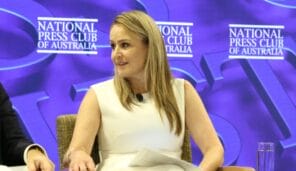
The managing director and head of third-party distribution (TPD) for GSAM, Jessica Jones, says that compared to their counterparts in the US, Australian advisers typically offer “a very holistic solution” to clients.
“They provide tax advice, which is a huge thing here for retail investors compared to other markets,” Jones says.
“They do beyond just offering financial advice. I think that is why a lot of investors, particularly high-net-worth investors have a financial adviser. But the evidence suggests, when you ask them whether they rely wholeheartedly on this investment adviser for [investment] advice, that number is decreasing.”
The survey revealed that 41 per cent of respondents “had a financial adviser”. Whatever it is that these advisers do, investment advice that clients follow apparently isn’t top of the list of services provided.
But it’s difficult to conclude that the finding is necessarily bad news. The survey also found that 27 per cent of respondents were trustees of self-managed super funds. Making investment decisions for themselves is one of the reasons most often put forward by trustees for why they set up a self-managed fund in the first place. But there is plenty advisers can do for SMSF trustees outside providing investment advice.
Jones said future research would test further the reasons for the apparent decline in the reliance on advice, but she said consolidation of advice businesses might be an underlying reason, along with the ongoing effect of the global financial crisis “and maybe that feeling of being let down by professional advisers and fund managers and the industry in general is still a reason that maybe people are moving into the SMSF space”.
Further analysis of the survey respondents sheds light on other reasons for why the provision of investment advice might not be valued highly by respondents. The research was carried out by market research agency Colmar Brunton, drawing on members of the firm’s Investor Pulse panel. To get onto this panel a respondent has to opt in; further, the respondent has to already be an active and direct investor in the sharemarket.
There are about 2000 such investors; the GSAM research sampled 600 of them and the composition of the panel helps to explain some of the other findings of the research, too.
For example, the investment portfolios of 48 per cent of respondents contain “mainly Australian equities”; and respondents’ portfolios are not adequately diversified among asset classes, particularly fixed interest.
It identified a startling disconnect between investors’ professed risk appetite – which investors themselves indicated is declining – with a tendency to invest more in risky assets – primarily Australian shares.
Jones said that the research nevertheless identified opportunities for fund managers and financial planners to play more of an educational role among retail investors.
“I don’t think this marks the end of professional advice,” she said.
“There’s still a huge opportunity for advisers to be given the tools – more products and more knowledge or education on how to attract people back to professional advice.”
Jones said that the GSAM research showed that overall, “retail investors here in Australia are more confident in the economy than they were last year”.
“Retail investors are highly exposed to Australian equities,” she said.
“They have lower knowledge of other asset classes, but investors are keen to learn more, so that’s a great opportunity for advisers and the investment industry in general.
“Portfolios lack diversification; fixed income remains under-represented.”