
Financial planners who want to most effectively service the burgeoning self-managed super fund market need to abandon a traditional reliance on funds under management to generate revenue and concentrate instead on charging a fee for providing professional services, a leading industry consultant says.
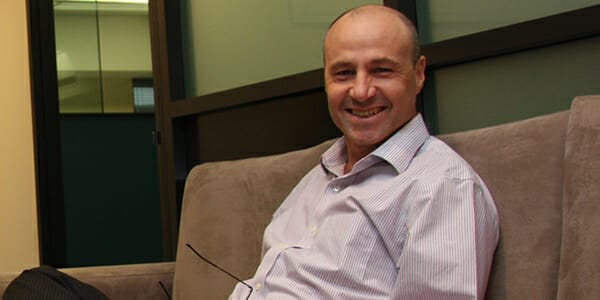
Tony McDonald, the former managing director of the ASX-listed Snowball Financial Group and now principal of T&C consulting, says SMSF trustees are deeply suspicious of advisers who want to get their hands on the SMSF’s assets.
“A lot of the advice business models have been built around asset gathering, because of the asset-based fees on FUM – they’ve been ‘FUM models’, because that was the primary remuneration model and that’s where a lot of the margin was. It was FUM margin, not necessarily advice margin.
“So when you meet the self-managed super fund trustee, they’re not necessarily homogenous. They range form the complete I-know-it-all DIYer to the high delegator, who is pretty much like a non-SMSF trustee.
“But it’s safe to say, given the research, that they do think a little bit differently, because they have got an SMSF. So they do not naturally fit hand-in-glove with what has been the traditional FUM-gathering model for advisers.
“The second thing they do not naturally fit in with, which is related, is the whole integration issue around their accountant, their other assets. You’ve got to work with the accounting side. We all know SMSFs are essentially vehicles built around tax planning and estate planning.
“So you’ve got a potential mismatch between the traditional advice rem model, which was an asset-gathering rem model, and skill-based strategic advice.”
McDonald says if a financial planning business is inextricably wedded to the FUM model it can still target SMSF trustees but will be relevant only to “the vast minority”.
“I just don’t think most [trustees] are wired that way,” he says.
Doing nothing is not an option, McDonald says. It’s potentially unrewarding to continue to offer a service that’s unattractive to trustees, so the most productive path is to revisit the business model. He says a business does not necessarily have to be reengineered in its entirety – it’s possible to establish an “SMSF division” within an existing business that services trustees in the way they prefer.
“You cross to Rubicon in terms of my first job is to build a relationship with the client which is more strategic-advice-oriented rather than FUM-oriented; and I look upon it more as the beginning of a long-term relationship, where over time I’m effectively getting a retainer,” McDonald says.
“I will get FUM over time because – and I do not think the industry has walked up to this one yet – when you get pretty old you don’t want to be doing the SMSF yourself. You’re too old. So you’re naturally forced to be a high delegator and you’re naturally forced to be a FUM-to-the-adviser person anyway. I know some advisers who are hurtling down that path. They do not seek FUM to begin with. They genuinely think ‘client relationship’ to start with.
The more vertically integrated corporatised advice model still thinks FUM, but they think a different style of FUM for the SMSF trustee. The classic example of that is the MDA: they are clipping the ticket on the MDA. Or they’re putting together core portfolios using listed investment companies, index funds, et cetera. They’re saying to the client, give me your core FUM, and I’ll manage that, and then you can go and do your funky stuff – your high-touch, I’m-doing-this, I’m-the-smartest-person-in-the-room stuff.
“Allied with that in terms of revisions to business models is, you’re going to have to upskill, sunshine. You’re going to have to upskill into that whole SMSF world.”
The SMSF Professionals’ Association of Australia’s director of technical and professional standards, Graeme Colley, supports McDonald’s view on advice business evolution.
“The self-managed-fund model is a fee-for-service model; it’s more like an accountant’s model, if I can say that,” Colley says.
“Once you’re starting to look at funds under management – and I know this from looking at our members, who are basically fee-for-service, and previous dealer groups, where the dealer group is saying to some of the financial planners there you just hand over your self-managed fund to us and we’ll look after it for you – the resistance to that is huge.
“Financial planners understand self-managed funds, and understand why it’s different. A self-managed fund is a service, it’s not a product in the same way that a managed fund is a product. And it doesn’t have the same cost structures.
“That assessment of self-managed funds, and that [advice] model, is pretty spot-on.”