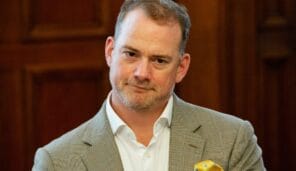

The number of financial planning businesses that meet the Corporations Act definition of “independent” is tiny, but that number has now grown by one, after Heffron director Ben Smythe established his own firm in the Sydney suburb of Brookvale.
Smythe Financial Management was established in October 2013 after a year of planning, operating with its own Australian Financial Services licence.
“It’s something I’ve been thinking about for a while,” Smythe says.
“I’ve been involved with Heffron for nearly 10 years now, and we are obviously very aligned in terms of what we want for the industry. I’ve spoken to Meg and Martin [Heffron] on and off about it for a while.”
Smythe remains as a consultant and a director of Heffron, but setting up his own firm was “just an opportunity for me to try to make a difference in the financial advice industry”.
“That is what really motivated me,” Smythe says.
“We’re all very passionate that the industry is broken, to a point, and that’s what really drove me.”
Smythe says his own business will enable him to “have control of my own destiny”.
“Heffron is still Meg and Martin’s business, in the nicest possible way. They’re very inclusive, but ultimately it wasn’t my business. And Heffron is a B2B business. Traditionally, advisers and accountants user their services. So it wasn’t a natural fit for [Heffron] to offer an advice business. That was why the arrangement was met that I’d go out and set up my own business.
“I’m a client of Heffron. With a client, where an SMSF is right for them, Heffron’s the best in the business. I still have a good relationship with them.”
Making a difference
Smythe says he’s realistic about the difference a single business can make, but longer-term he plans to link with other like-minded businesses.
“I think the power is going to be to find a collective of similar advisers like me, if collective is the right term, and try to come together, and then I think we’ll have more of a chance of making a bigger difference,” he says.
Smythe Financial Management operates on a pure fee for service, right down to charging a fee, and receiving no commission, on risk products. Smythe says it was a challenge to find insurance companies that understood and could support his business model and offer no-commission risk products.
“It was frightening” how few understood the approach, Smythe says, but eventually he found TAL and OnePath as risk product providers.
Likewise, sourcing professional indemnity insurance proved challenging. Most underwriters initially demanded that he have an approved product list, and could not fathom the idea that the firm would be providing services for a fee, not selling product.
“They can’t get their head around this model,” he says.
“They say, ‘you need an approved product list’. I’d say, ‘I’m not actually selling product; I’m providing advice’.
“I do not have an approved product list. I do not need one. I’m not using platforms. I do not sell product; I’m providing advice.”
Smythe says his pre-launch research identified an opportunity to service clients in the wealth-accumulation phase of their lives.
“The market is dominated by advisers who look after retirees or close-to-retirees, and for logical reasons: they have assets, they have FUM which you need to meet the fees,” he says.
“I saw an opportunity for wealth accumulators, in terms of what I was offering. So, getting them between 35 and 50, and having a client for 20 or 30 years. And a similar demographic to me – I’m 40 years old – and I thought they would value more what I was offering, that central point-of-control service.
“My value proposition is superannuation, tax; I bring a team of experts with me…and bring the subject-matter experts to the table as and when required for a client. Based on my research, the wealth accumulation market was more attracted to that kind of offering.”
No obstructions
Smythe acquired his own AFSL “because I didn’t want to be obstructed in any way”, he says.
“There are other people out there who, like me, have got their own licence as well…who did say they, ‘look, happy for you to join me’ – and that’s probably where I’ll end up, in a bit of a collective.
“But to start off I didn’t want any obstructions. It’s about independence, and [the Corporations Act] defines independence.
“I specifically wanted to set my business up to be independent, to meet that definition, because there’s very few advisers in Australia who can actually genuinely meet that definition.
“Ultimately, what I call this ‘new breed’ of advisers, there are more [of them], and I think it will grow; it just probably needs a bit of time, and people seeing that you can do it. That safety-in-numbers thing, as well.”