
Listed financial planning and investment group, SFG Australia, is bargaining on a major “deconsolidation” of the financial planning industry. Backing that call up, it is launching a service designed to provide critical business support services to practices that hold their own Australian financial services licence (AFSL).
The new SFG business, Actuate Alliance Services, was born from its parent’s experience in developing business and support services for its own network of financial planning practices.
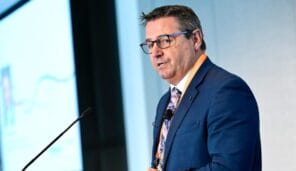
Dan Powell, head of Actuate and pictured right, said that the period leading up to the introduction of the Future of Financial Advice (FoFA) reforms had been particularly stressful for small own-AFSL firms. Those firms need smart business solutions to help them minimise the time spent on non-productive activities and maximise that spent on productive activities, primarily face-to-face time with clients.
Powell says that as the changes bed down, a growing number of other financial planners, currently housed within institutionally owned dealer groups or franchise models, will think more closely about obtaining their own AFSLs.
Poised for change
Actuate services are priced on a flat-fee basis or on a simple charge-out basis, and are not tied to other services and solutions offered by the SFG group.
The managing director of SFG, Tony Fenning, said that some of the advisers in the group initially spent about 30 per cent of their time dealing directly with clients and about 70 per cent on administration. Improving systems and processes had turned that around so the typical adviser now spends about 80 per cent of their time in front of clients.
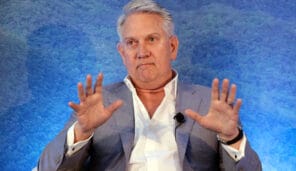
Fenning said the Australian financial planning profession was poised to enter a new phase. “Internationally, there’s plenty of evidence that what will happen next in Australia is a deconsolidation, following the remaining consolidation,” he said. “And that typically comes when the large organisations – in America that’s what they call the wire houses or investment banks – start to get so big that they can’t focus around the needs of the individual or the small teams.
“They got so big that the advisers over there in the States really said it’s time to go back now to our roots of looking after clients first, spending time with clients and building our own businesses again.
Natural partners
“With that, from a personal perspective and an SFG perspective, it’s helping competition, it’s helping entrepreneurship, it’s getting the economy running again. It’s at the heart of how to improve the industry.
“We think people who are used to that are the natural partners of small and medium business to take it to the next level because they know how to do it, they’ve done it, they’re there and they know what the next steps are.
“We think there’s no longer any real leader in that space in Australia.”
“The big guys have got the advantage for the moment, but they’re not the natural players in this space. They get too big and they lose focus and they think ‘big company’ – they don’t think entrepreneurship.”
SFG is well placed to know what small practices need and to provide efficient solutions, according to Fenning.
“Entrepreneurship and building advice businesses is in our DNA,” he said.
“It’s what I’ve been doing for… 24 years. In all that time, what we’ve been doing is working away to produce the best advice business, typically starting small and building up.”
Deep contact with clients
“To do that requires a really big commitment. It has to centre around the client, because the client’s needs and the way that advice is delivered have changed dramatically.
“[It used to be] about selling investment products; today it’s about really deep contact with clients and having a whole lot of profile information and being able to put that information through the adviser’s skill set and competencies to turn that into a life-action plan. That’s a dramatic change from what was fundamentally an investment business to [being] fundamentally a life coach or mentor.”
Powell said the impact of FoFA on own-AFSL firms has been “played out”.
“The time is right to invest more in it and put a robustness around it,” he said.
“We see growth in that single-office, boutique-level [advice businesses]. But one of the strengths of FoFA is it’s forcing AFSLs to put processes into their businesses. You need systems. You can’t do it by memory or a paper diary. You need a process. So they do need someone to support them. We believe that’s where that opportunity is.”