Listed financial services company, Centrepoint Alliance, is in the process of topping-up professional indemnity cover for its trouble subsidiary, PIS, as it develops a new platform to attract and retain advisers.
PIS shed 168 advice practices in the year to June 30, ending up with 533 practices compared to 701 in the previous corresponding period. The reduction in advisers resulted in net revenues falling by 28 per cent to $24.3 million, compared to $33.9 million in the 2011/12 financial year.
PIS posted an $11.2-million loss for the year, impacted by $10 million in increased provisioning for client claims and $500,000 in fees related to the group’s enforceable undertaking from the Australian Securities and Investment Commission.
According to the Centrepoint Alliance 2013 annual report, PIS is in the process of “purchasing additional (professional indemnity) insurance to ringfence and limit liability on legacy claims”.
The annual report said the group had made an extensive investment in compliance activities and processes related to PIS’ enforceable undertaking, and was also working on an upgrade of its “adviser systems and services”, while developing “a new client and customer-centric model”.
In an ASX announcement last week, Centrepoint Alliance managing director John de Zwart said PIS had undergone a transformation to meet the new Future of Financial Advice (FoFA) requirements.
“As a leading independent player, Centrepoint is exceptionally well placed in a marketplace which is undergoing rapid consumer and regulatory-driven change,” he said.
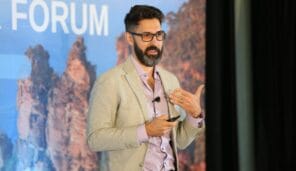
De Zwart made similar comments at the Financial Services Council (FSC) conference in August, where he reaffirmed Centrepoint Alliance’s commitment to keeping PIS independently owned. However, he said the FoFA reforms were pushing non-aligned dealer groups to pursue vertically integrated models to ensure their ongoing survival and profitability.
“Anytime these [independently owned] assets come up for sale, the institutions grab them. It’s only a matter of time before that sector disappears unless we evolve it, and we are working very fast to evolve it,” he said while speaking on a panel at the FSC conference in August.
On the panel, de Zwart observed that many advisers were struggling to provide full-service advice to large client books and were subsequently “giving up clients at a rapid rate”. He said that the group was investing heavily in new technology to enable new scaled-advice models, and was using social media to build trust among younger people.
The idea, he said, was that “when they are ready, they feel they already have a relationship with us”.