
Produced in partnership with Centuria.
Port Adelaide, situated 14 kilometres north of the Adelaide CBD, is known for its rich maritime history, colonial architecture and the famous Port Adelaide Football Club, affectionately called Port Power.
It is also home to the Port Adelaide Distribution Centre, a 32-hectare, 13-building logistics hub acquired in August for $216 million by Australasian real estate manager, Centuria.
Applications for the Centuria Port Adelaide Industrial Fund, which opened in September 2025 and closed four weeks later, were oversubscribed and backed heavily by the financial advice community.
It is Australia’s largest single-asset unlisted industrial fund.
According to Ben Harrop, head of distribution at Centuria, the group aimed to raise $116 million from wholesale and retail investors but received over $300 million in applications, reflecting the strong demand for prized commercial real estate and stable returns with the potential for capital growth.
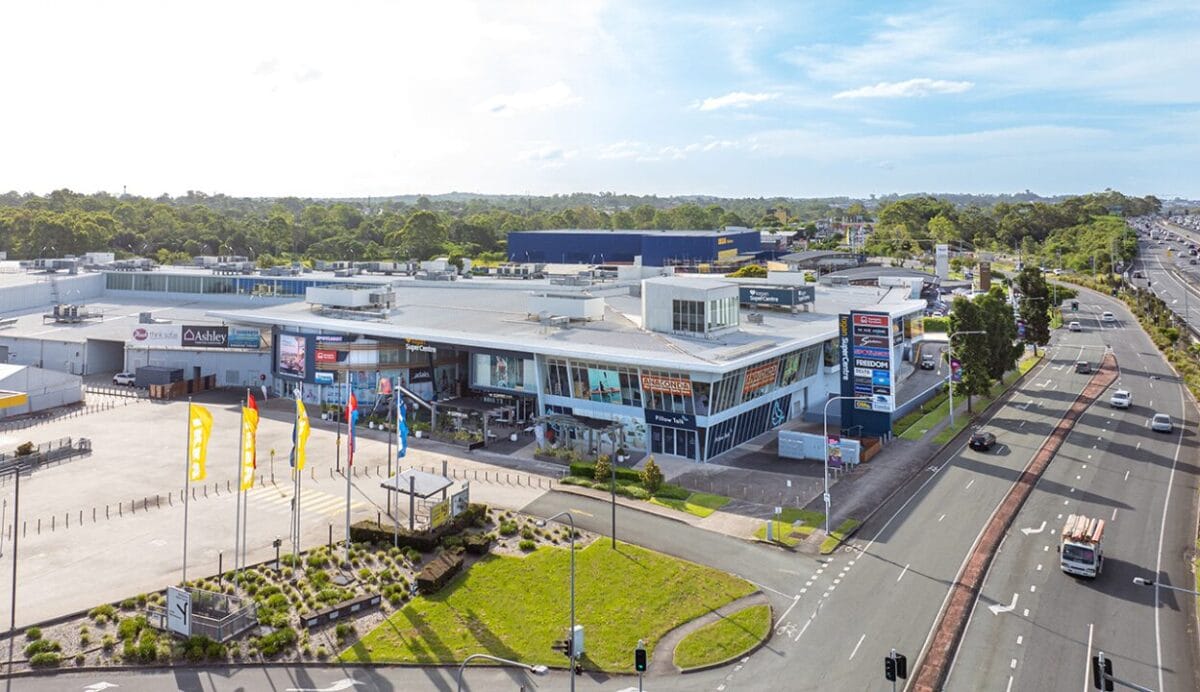
This followed the successful capital raise for the Centuria Logan Super Centre Fund in early 2025.
For both trusts, advised clients represented around 40 per cent of investors.
More broadly, advised clients account for around a quarter of Centuria’s $21 billion in total assets under management.
“It’s generally high-end advisory firms with sophisticated, high net worth investors [HNWIs] that gravitate to us because their clients understand the illiquid nature of our funds and they have more than enough money to meet their lifestyle requirements,” Harrop tells Professional Planner.
“Investors who want to access the benefits of private markets need to understand that there is a trade-off. Commercial property with good tenants on long-term leases can deliver regular income, diversification benefits and strong returns with lower volatility, but these are closed-ended funds with a fixed timeframe and exit so investors give up some liquidity.”
Interestingly, a growing number of Centuria’s investors are retirees, challenging the assumption that illiquid alternative investments are unsuitable for older people.
While retirees, like most investors, need and value liquidity, Harrop says that, in a diversified portfolio, different assets play different roles.
“When it comes to portfolio construction, we’re seeing many advised clients hold around 80 per cent in liquid assets and 20 per cent in illiquid assets, and they’re comfortable with that level of illiquidity and risk because they don’t need T+2 across their whole portfolio,” he says, adding that some HNWIs have as much as 40 per cent of their portfolio in private markets.
From pretty ugly to looking good
The success of the Port Adelaide Industrial Fund points to a broader turnaround in the embattled commercial property sector. The Fund is targeting an average yield of 7.5 per cent and is seeking to deliver an internal rate of return in the double digits if the modelled terminal value of the property is achieved, according to Harrop.
“There’s been a reset since Covid and we’re starting to see those sorts of returns across the board, which is extraordinary,” he says.
The commercial property sector, which spans retail, office and industrial, has faced many challenges in recent years, including volatile economic conditions, higher and tighter financing, and rising construction costs.
The onset of the Covid-19 pandemic in 2020 brought additional uncertainty, with retail and office bearing the brunt of lockdowns and work from home restrictions.
The outcome has been several years of disappointing returns, however, Centuria believes the cycle has turned. People are back in the office and out and about, and investors are staring at a strong recovery, as conditions continue to improve, Harrop says.
“It was pretty ugly out there and it didn’t help that every other major asset class, including housing, delivered double digit returns during a period when commercial property underperformed, due largely to the high cost of debt,” he says.
“Obviously there is a bit of uncertainty at the moment with the war in Iran and inflation higher than the RBA would like, but in terms of valuations, things are starting to turn. We can see from our books that valuations have ticked up in the past year.”
With property cycles typically lasting seven to ten years, Harrop says future growth will be underpinned by under supply; immigration and population growth; and global capital pouring into Australia.
Centuria’s resilience and performance is also being boosted by its increasing exposure to alternative sub-sectors, including healthcare, agriculture and data centres.
The listed property giant has over $5 billion in alternative property, representing around a quarter of total assets under management. In 2020, that figure was $700 million.
“Office and industrial are still at our core but we made a deliberate move several years ago to branch out because we could see where the market was moving in terms of demand from HNWI and advisory firms,” Harrop says.
“They’re looking for more of a tilt, which can also be seen in some of the newer ETFs, so we started increasing our exposure in sub-sectors like agriculture, healthcare and retail.”
Harrop likens Centuria’s increasing specialisation in private markets to the evolution of asset management in public markets.
“Back in the day, investors used to buy an Australian share fund and now there are so many different permutations,” he says.
“From our perspective, the fundamentals are still the same across the board; it’s all about buying well, getting your tenants set, creating amenities for tenants, making sure they pay their rent, and managing the cost of debt”
Not surprisingly, the direction of interest rates is one of the biggest challenges for commercial property investors. Another risk is rising unemployment, although Harrop points out that unemployment in Australia remains historically low.
“Like any investment, there’s always risk. It’s the same with real estate because we’re dealing with markets, but it ultimately comes down to the individual asset,” he says.
“There are markets within markets and real estate is all about buying well, which means getting access to deal flow.”
As the manager of two of the largest commercial property trusts in Australia: the Centuria Industrial REIT (ASX: CIP) and the Centuria Office REIT (ASX: COF), not much happens without Centuria knowing about it.
“Anyone selling a commercial property in Australia will approach us because we’ve got a good reputation and we like doing off-market deals,” Harrop says. “We can move fast and, once we’ve done our due diligence, we generally go unconditional and we can hold an asset on our balance sheet. There’s certainty dealing with us, which means we get to see all the deals.”