
Produced in partnership with North.
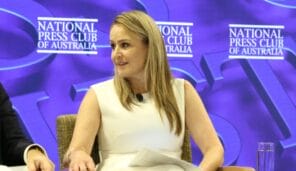
When Kristine Goodwin, director of growth and distribution at North, sits down with Ashley Tilston, CEO of Spectrum Wealth Partners, the conversation quickly moves beyond markets, products and performance. Instead, it lands on a far more complex question facing advisers today: what does retirement actually mean now and how should advice businesses evolve to support it?
Goodwin frames retirement not as a moment in time, but as an aspirational concept. “It’s no longer just an age dependent, forced event,” she observes. “It’s a deliberate choice about how people want to live.” Ashley agrees, it’s a shift he sees play out daily in client conversations.
“Very rarely do we see clients who just want everything to stop,” he says. “People want flexibility. They still want purpose. They want to choose their own adventure.”
That single insight sets the tone for a wide-ranging discussion about the changing retirement landscape, the growing psychological burden placed on advisers, and the pressure on advice businesses to deliver deeply personalised outcomes at scale.
Retirement is now a journey advisers must help design
Historically, retirement advice was built around an end point: stop work at 65, fund a predictable lifestyle, preserve capital. According to Tilston, that framing no longer holds.
Clients today are living longer, staying healthier and approaching retirement with far more intention. They want to travel, work part‑time, consult, or contribute in different ways, all while maintaining optionality. For advisers, that creates a new kind of complexity.
“You’re taking something emotional, how someone wants their life to look and turning it into a quantifiable measure,” Tilston explains. “That’s not easy, but it is essential.”
Goodwin notes that this evolution has coincided with heightened anxiety. Clients are not just worried about their own longevity, but about their children’s financial futures. Helping adult children into housing, supporting grandchildren through education or acting as guarantors has become a common feature of retirement planning.
As Tilston points out, this introduces a constant push-and-pull. Parents are often willing to compromise their own financial security to support family, and advisers are left navigating those trade-offs with care.
The adviser’s role has shifted from optimiser to interpreter
Throughout the conversation, Goodwin returns to a central theme: confidence. Many Australians, she notes, don’t feel confident about retirement, despite having accumulated significant assets.
Tilston believes the root cause often isn’t financial at all.
“People compare themselves to the world now, not their immediate network,” he says. “Social media, the news cycle, housing affordability, it all feeds anxiety.”
In that environment, advice is less about chasing the best possible return and more about interpretation. Ashley argues that if clients are only focused on performance, they’ll always be reacting. But if advisers can help them define why they need a particular return and what success actually looks like, decision making becomes steadier.
This is where psychology becomes central to advice. Tilston spends significant time understanding clients’ relationship with money, shaped by upbringing, life experience and past economic shocks. For some retirees, the hardest moment isn’t market volatility, it’s the final pay cheque.
“No matter how many times you show them the numbers, there’s something psychological about not earning another dollar,” he reflects.
Personalisation versus profitability: the modern advice tension
Goodwin then steers the conversation toward a challenge many practice owners feel acutely: how do you deliver deeply personalised retirement advice while still running a profitable, scalable business?
Tilston is candid about the difficulty of wearing both hats, adviser and business owner. He describes a clear specialisation trend emerging across the industry. Practices can no longer be all things to all people.
“The cost and complexity of delivering advice means you have to be very clear on who you serve,” he says. Accumulators, pre-retirees and retirees all have different needs and trying to service them all drives inefficiency.
To manage this, Tilston leans on a familiar 80/20 rule. Roughly 70 per cent to 80 per cent of advice work, data collection, modelling, reporting and administration, can and should be automated. The remaining 20 per cent is the human element: judgement, psychology and connection.
“That 20 per cent is where we add value,” he says. “And that’s what clients actually want time spent on.”
Where platforms fit and where they must evolve
As the discussion turns to technology, Goodwin positions platforms as sitting “somewhere in the middle” of this challenge, between efficiency and experience.
Tilston is clear that investment management itself is now hygiene. It needs to be seamless and intuitive. Anything less creates friction. But he argues that managing portfolios alone isn’t where platforms truly add value.
For retirement advice, the real differentiator is cash‑flow modelling and scenario planning.
Every year, Tilston’s practice revisits retirement projections with clients, tracking how changes in markets, spending or family support affect longevity. These conversations: Can I gift this money? What happens if markets fall? How long does my money last? are where confidence is built.
The problem, as Tilston sees it, is fragmentation. Data often lives in multiple systems, forcing advisers to duplicate work just to produce insight. That duplication adds cost, consumes time and ultimately reduces capacity.
“We’re not coders,” he says. “Our skill set is EQ, not building tech stacks.”
A subtle shift in expectation
As the interview draws to a close, Goodwin reflects on what she’s hearing: advisers don’t need more technology, they need better integrated technology that shortens the gap between client questions and meaningful answers.
By bringing portfolio data, cashflow modelling and reporting into a more interactive, client friendly environment, Goodwin suggests platforms can help advisers spend less time stitching systems together and more time doing the work that can’t be automated.
For advisers navigating the next phase of retirement advice, the message from both sides of the conversation is clear: the future belongs to practices that combine clarity of purpose, thoughtful use of technology and a deep understanding of what money really means to the people they serve.
Retirement may no longer be a finish line, but with the right balance of psychology, scale and support, it remains one of the most impactful journeys advisers can help clients navigate.