
The Financial Advice Association Australia has called for changes to the rules that govern the Australian Financial Complaints Authority, taking issue with the lack of accountability across the advice value chain in matters like the failed Shield and First Guardian master funds.
The collapse of the Shield and First Guardian funds has left $1.2 billion of retirement savings of 11,000 Australians in limbo after ASIC acted due to concerns advisers were rolling over investors into high-risk products without factoring in best interests.
The regulator has alleged multiple issues with the fund, including mislabelling of the risk profile and misuse of member money.
But criticism has been distributed across the advice chain, from the telemarketers responsible for luring clients to advisers, as well as the tick of approval given by platforms, licensees, ratings houses and auditors who are meant to be the “gatekeepers” according to ASIC.
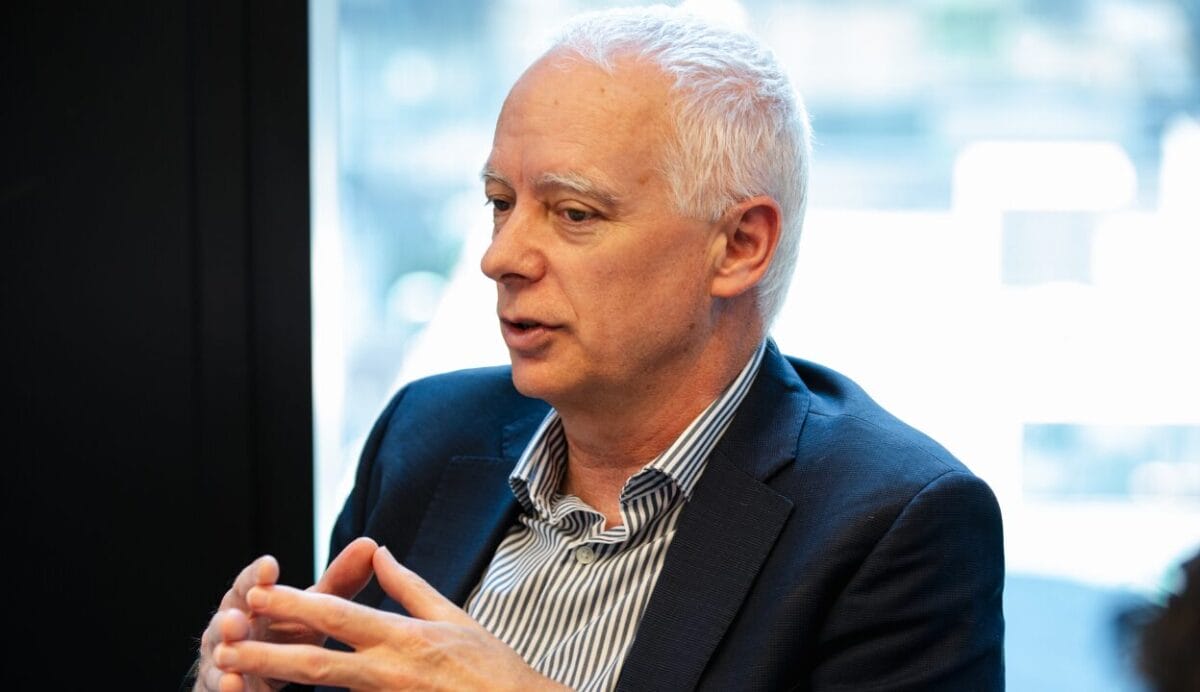
FAAA general manager for policy Phil Anderson said the law should be changed to allow complaints that involve advice to attribute loss to other parties even if it was a failure of the Best Interests Duty or any other legal advice obligation.
For complex, multi-facetted matters like Shield and First Guardian, Anderson said a mechanism is needed to negotiate a settlement across all contributing parties to minimise the impact on the Compensation Scheme of Last Resort.
Anderson also suggested a change to AFCA Rule C.1.5, which would allow complaints against investment funds and super funds, including the decision to include an unsuitable investment fund on an investment menu or failure to take action after warnings about the product.
Anderson noted that AFCA Rule C.1.5 excludes investment and superannuation complaints with respect to the investment performance of a financial investment, other than a complaint concerning non-disclosure or misrepresentation or a complaint relating to the management of a fund or scheme as a whole.
“We are aware of complaints to AFCA against the super funds who included Shield and First Guardian on their investment menus that have been rejected on the basis of AFCA Rule C.1.5,” Anderson said in a note on Thursday.
“AFCA have determined that these complaints do not fall within their jurisdiction as the investment performance of Shield and First Guardian are excluded; and super funds’ decision to list these investments on their platforms relate to the management of the fund as a whole.”
Anderson suggested that Part 23 of the Superannuation Industry (Supervision) Act could be triggered by funds, which would allow them to apply to the government, via APRA, for financial assistance where the fund has suffered a loss because of fraud or theft which is recovered via a levy in across the super sector.
“The decision to make a claim under Part 23 of the SIS Act sits with the super fund trustee, and it is unclear whether any of the funds involved in Shield and First Guardian will choose to take this action,” Anderson said.
Anderson also mentioned other options that could be used to compensation members including the operational risk reserves for funds, which is currently legally untested; ASIC action to seek client compensation, as in the case of Macquarie; or through class actions.
While Macquarie came to an agreement with ASIC to remediate Shield members on the platform, other trustees have dragged their heels, with a source close to Equity Trustees telling Professional Planner that other avenues of industry remediation should be leveraged, including the CSLR.
Shield was offered on NQ Super and DASH’s Super Simplifier platforms, for which Equity Trustees was trustee, while First Guardian was offered on NQ Super/Freedom of Choice.
Diversa Trustees was also trustee for several platforms that held First Guardian: OneVue’s Your Choice Super, Australian Practical Superannuation and Praemium Super. Netwealth also hosted the First Guardian funds, while Macquarie hosted only Shield.
An update from Netwealth sent to investors noted ASIC’s investigation into First Guardian, the only one of the two funds held on the platform, was less progressed than into Shield. The update offered no indication about the direction the company would take but said that it is continuing to “explore all avenues available”.
But remediation from the trustees wouldn’t prevent AFCA complaints progressing to the CSLR which could see members remediated because of poor advice, which the scheme has advocated should be excluded to help maintain the sustainability of the remediation service.
AFCA can only accept complaints against companies that are members of the external dispute resolution service which includes advice licensees, responsible entities and superannuation trustees – although Anderson notes researchers and auditors aren’t, which gives no recourse to clients to complain.
Anderson also said AFCA cannot accept complaints against the actions or conduct of professional indemnity (PI) insurers.
Another concern was when there was responsibility of loss against two financial services providers – i.e. a super fund and financial adviser – clients must make two separate complaints which increase the effort and complexity for consumers.