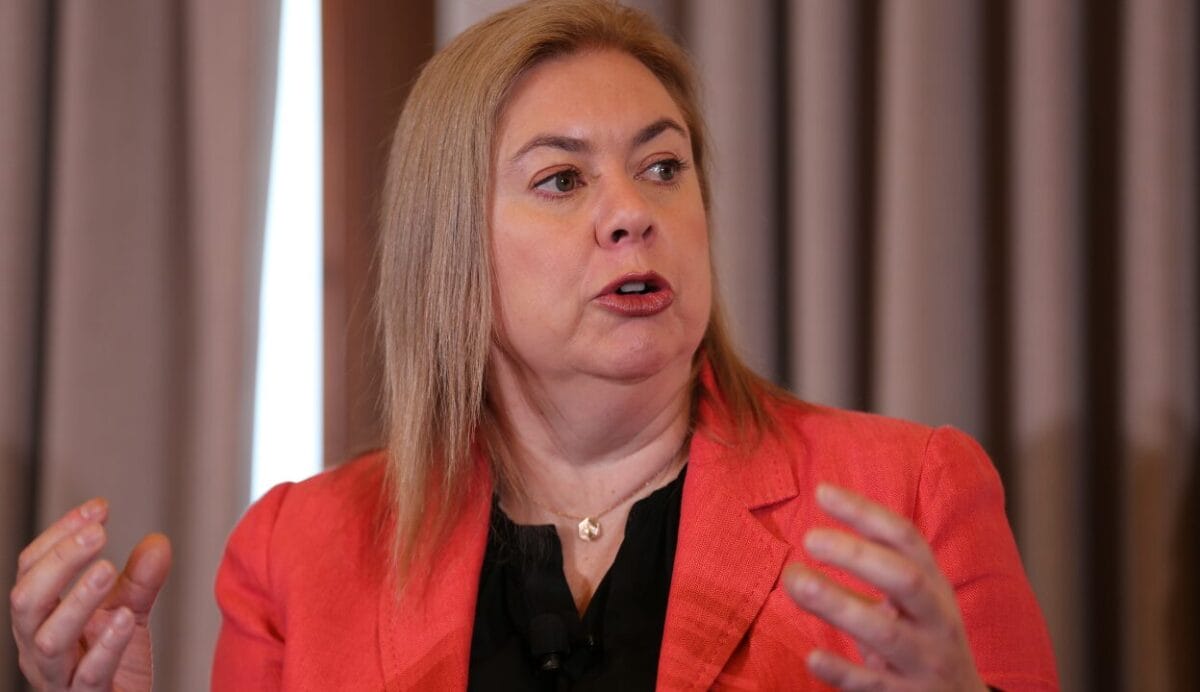

The Financial Advice Association Australia has used a submission to Treasury to push back against breaching the subsector funding cap for financial advisers while warning that changes to the special levy would not address deep-rooted problems with the CSLR.
The association had previously said that the CSLR special levy should be fully allocated across a broad range of sectors based on “capacity to pay” rather than requiring financial advisers to pay above the $20 million sector cap.
“As the Shield and First Guardian scandals show, failings in the financial sector often incorporate a range of players, including responsible entities, investment managers, research houses, superannuation funds, platforms, advice licensees, advisers and auditors,” FAAA chief executive Sarah Abood said in a release accompanying the FAA’s submission to Treasury’s consultation on exceeding sector caps.
Abood also reiterated the call to government to reinstate the recently discontinued Senate Inquiry into Wealth Management Companies, otherwise known as the Dixon Inquiry, and to broader its scope to include the collapsed Shield and First Guardian master funds.
“These failures are complex and must be fully investigated to ensure we understand what went wrong – and how to stop them occurring in the future,” Abood said.
Abood said that despite the complexity of those failures and the many groups and organisations that played a role in them, it is likely that only the advice sector will be held accountable by AFCA as it “currently has no ability to attribute loss to other parties if a financial adviser is assessed to have provided inappropriate advice”.
“This is a highly unfair, inequitable and unsustainable element of the current law and practice,” Abood said.
“If this aspect is not fixed, the full losses will flow through to a liability for the financial advice sector under the CSLR, as the scale of losses [estimated at $1.2 billion] are likely to sink all the advice businesses involved.”
The FAAA’s preferred option for the special levy would be for it to be allocated to the “broadest possible range of sectors” on the basis of capacity to pay, minimising the potential impact on the viability of any one sector and allowing for repeatability should another special levy need to be raised.
It warned against allocating the levy based on the perceived “culpability” of any one sector, saying that the concept of collective punishment is also “fundamentally flawed” and would only reward wrongdoers.
“The moral hazard of this approach acts as a positive encouragement to bad behaviour, as businesses which actually do the wrong thing are not making any contribution towards client compensation,” the FAAA said in its submission.
Abood said that consumers are “entitled to feel safe when engaging with regulated financial services” and that every financial services sector benefits from consumers having confidence in the system – making it appropriate for all sectors to contribute to their compensation when one sector has reached its capacity.
“It’s not appropriate to ask financial advisers to pay more than the sector cap,” Abood said.
“The $20 million sector cap is already very high, particularly when you bear in mind that the vast majority of this levy is paid by small, privately owned firms with very limited capacity to absorb extra costs.”