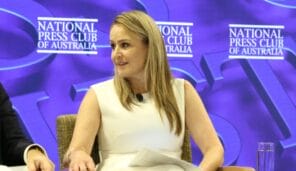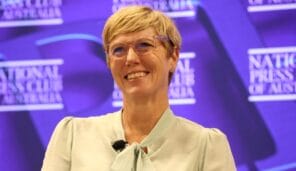

Women make up approximately 22 per cent of financial advisers, according to analysis of ASIC’s Financial Advisers Register.
The data highlights a significant gender imbalance but it also shows how far the profession has come since the early-1990s when women represented just 8 per cent of advisers.
Nestworth Financial Strategists CEO Helen Blackford remembers those early days fondly, despite being one of a handful of female advisers back then.
“I just loved helping people,” she tells Professional Planner.
“I could help them organise their money and give advice that puts them in a better position. That was the driving force for me then and it still gets me out of bed every morning.”
Over the past 30 years, the financial services industry has given Blackford many opportunities and experiences. She has held a variety of roles and run some of Australia’s largest licensees including Lonsdale, Millennium3 and IOOF Alliances. In 2024, she joined AZ NGA-owned national advisory firm, Nestworth.
Blackford is a big supporter of International Women’s Day. While it is sometimes criticised for being tokenistic and symbolic, it is “meaningful” to her and her team. The theme of this year’s International Women’s Day is “give to gain,” which Blackford says is highly relevant for the advice profession.
“This is a particularly special International Women’s Day for me because 30 years ago I could never have imagined leading a financial advisory firm where half of the employees are women and 44 per cent of advisers are women,” she says.
“There are so many amazing women in our business and across the profession, and that is a significant change from even ten years ago. There is still a long way to go but we need the celebrate the advancements that have been made.”
Facts and figures
Nestworth financial strategist Diane Scott recalls being one of the only women at events or conferences when she joined the industry 20 years ago, however, it’s not uncommon for women to make up half the room these days.
She observes that the nature of advice has changed over the past 20 years, creating opportunities for women.
“It used to be all about numbers and facts and figures, but a big part of an adviser’s job is to talk to clients about their goals and how they feel about their life,” Scott says.
“That side of financial planning is critically important although it doesn’t get as much visibility, and women tend to be very good at this because they’re empathetic.”
After finishing high school and travelling for a couple of years, Scott got a job as an administration assistant at a financial planning firm in Maroochydore, Queensland. In 2016, she became a financial adviser.
“I’d never even heard of financial planning, and it just blew my mind that there were things that people could do to maximise their wealth and that’s been my goal ever since,” she says.
“I’m here to educate people about their options and guide them to make smart, informed decisions.”
Yogita Patel’s journey to becoming a financial adviser started at around age 16. As a young girl in the United Kingdom, Patel was always interested in banking and personal finance, which led her to study finance and pursue a career in financial services. After migrating to Australia, Patel spent seven years in risk and compliance at Westpac. During that period, she completed her Diploma and Advanced Diploma of Financial Planning and joined Wealthwise in 2015.
One of the biggest changes over the past 10-20 years is the growing number of strong, passionate and confident female advisers.
“I come across many talented women who are driven to improve their clients’ lives, build their skills and grow their businesses,” Patel says.
Women in leadership
While Blackford, Scott and Patel are very different and have had different paths to financial advice, they all agree that the profession needs to attract more women because they bring a different perspective because many women prefer to speak to another woman.
Research also shows that companies with women in senior leadership positions perform better.
Scott says International Women’s Day is about so much more than morning tea and cake; it is a genuine opportunity to appreciate the contribution of women in the workplace, at home and in society.
“Women are proving to themselves, each other and the world that they are independent and can build their own wealth, which is something that they couldn’t historically do and that needs to be celebrated,” she says.
This year, Nestworth is ramping up its International Women’s Day celebrations by hosting a series of client events around the country.
It was actually one of Blackford’s male colleagues at AZ NGA, Bernard Begg, who encouraged her to make a big deal of the day, particularly as women have more obstacles to overcome to build their careers and wealth.
“We want to show our appreciation for all the amazing women in our community and celebrate the different skills, talents and insights that they bring to the table,” Blackford says.
“We want to increase understanding of women’s issues, especially in relation to finances, for example, women are usually the ones who take time off to have children and that impacts their careers and super balances and that has a real, tangible impact on our clients. We can empathise and help them overcome those challenges.”
‘A man is not a financial plan’
For Patel, International Women’s Day is about everyone – both men and women – supporting women, and championing women’s independence.
“In past generations, and many parts of the world, finances are solely managed by men,” she says.
“Women don’t get a say, and they don’t have a chance to learn about money so International Women’s Day is an opportunity to encourage women to understand their position and finances, even if they are married or in a relationship because, as they say, a man is not a financial plan.”
In Patel’s experience, financial planning can be a fantastic career path for women because of the flexibility and diversity it offers.
“Some people think jobs in finance and wealth management require long hours in the office but there’s a lot more thought given to the importance of work/life balance,” she says.
“The industry is moving in the right direction in terms of being as attractive as possible to get more women in, be that in a back-office role, management or as an adviser. There just needs to be more advocacy.”
Scott is appreciative of the women and mothers, and men, who paved the way for her to work, study and have a family all at the same time.
As the profession strives to attract talent and address the advice demand and supply imbalance, Scott urges more businesses to consider mentoring professional year (PY) advisers.
“One of the most important issues for advice businesses around the country and the profession more broadly is how to attract, train and retain PY advisers and offering flexibility is a big part of that,” she says.
“For women, particularly those with young children or those thinking about starting a family, if you invest in them, they will become your biggest advocates. Whatever you invest in them, they will return in spades. That’s how it is with me. I could not have achieved what I’ve achieved without my partner, my family and the support of management. I feel supported to do my job, but I’m also able to drop my kids to school and attend school events, and I’m very much a present parent and I’m grateful.”