
This article is featured in the Professional Planner ‘Guide on Financial Advice in 2026’, download the full copy of the guide here.
While 2025 was a chaotic year in geopolitics and investment markets, it was relatively calm for the financial advice and wealth management sector, with the exception of the collapse of Shield and First Guardian.
Many advisers spent 2025 focused on growing their business through both M&A and organic activity, while also experimenting with AI to drive process improvements and efficiencies. In 2026, the plan is to continue building across those areas to accelerate growth.
In Professional Planner’s Strategic outlook guide for financial advice, leading advisers share their plans, expectations and predictions for 2026.
Natallia Smith, founder and financial adviser, TruWealth
As a specialist in advice for women, particularly women over 50, business has been booming and there may still be another couple of years in this bull market.
A growing portion of our clients are divorcees, and more advice businesses are carving out a niche because people need specialist advice when they’re going through a major life event or transition and experiencing challenges.
Divorce and retirement are obvious examples, but redundancy is another one. A number of workplaces, including the Victorian public sector, have announced redundancies and many people are understandably seeking support. Inheritance planning is another growth area.
Client expectations are rising too because people’s lives are increasingly complex, for example, there are a lot more blended families and blended finances. When it comes to advice, there is a sharp focus on cost and value for money, which is not new, but clients are turning to their adviser to connect them with trusted specialists in other areas like family law and estate planning. That is becoming a key part of the service.
To manage and sustain growth, advice businesses need to lift productivity and efficiency, and this will see AI increasingly embedded into systems and processes.
Nick Perrett, chief executive, Yarra Lane
The gap between advice firms that use AI and automation and those that don’t will become very apparent in the next 12-18 months, as enterprising firms accelerate the integration of these technologies into their systems and processes.
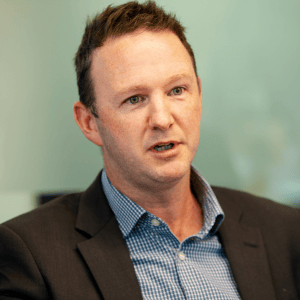 Until recently, advisers could still get away with dragging their feet on understanding and using AI, but that is no longer optional for businesses that want to grow and be around for the long-term to serve the needs of clients.
As a profession grappling with significant challenges, including rising costs and a skills and talent shortage, the only time and cost-effective solution for putting capacity back in the system and disseminating quality advice at scale lies in technology.
These factors and the many benefits of AI and automation – speed, efficiency, reduced errors and so on – is driving widespread experimentation and adoption. In 2026, most advice businesses, if not all, will incorporate the use of AI and automation into their processes in some form. Many are already there with file notes but this will extend to booking meetings, assistance responding to emails and drafting advice documents.
Software providers and service providers including platforms, licensees and outsourcing partners will drive the acceleration of this trend.
More advice businesses will develop a technology strategy. This doesn’t have to be a long, formal document. It may look like regular discussions about a firm’s approach, objectives and progress in relation to AI and automation. For more sophisticated firms, it may involve mapping and redesigning processes, which involves a combination of people, automation and AI. A small number of advice firms already use digital employees, which cost roughly $60,000 per annum each and work continuously 24/7, 365 days a year. In the near future, this will become commonplace.
Norma Falconer, founder and financial planner, Think Capital Advice
Now that the deadline for meeting the new professional education standards has passed (on 31 December 2025), the biggest challenge for the advice profession will be finding suitable succession solutions.
For principals with a preference to identify, mentor and back potential successors, the profession’s shrinking talent pool is a major concern. Other challenges include the rising capital value of advice businesses, which is making the already difficult task of securing finance even harder for potential equity owners, many of whom already have large mortgages.
A handful of large players are actively buying and consolidating advice businesses, which has potential benefits, such as scale and synergies, but there are also potential risks. As businesses get bigger, a corporate mindset and bureaucracy can creep in.
Small businesses, on the other hand, are more flexible, nimble and very client-centric. They can adapt quicker to meet the needs of their clients.
For some firms, the shrinking talent pool also creates a massive opportunity. Advisers with excess capacity and those that are already leveraging AI and technology to improve efficiencies and scale their business are in a strong position to continue growing and increasing the number of clients per adviser.
Julien Renard, partner and financial adviser, ASO Wealth
Technology has been a big challenge for the wealth management industry for a long time because the tech is so clunky and there is a lot of legacy, however, better solutions are coming and advisers are ready to jump.
 There is a strong desire across the profession to make businesses really efficient and deliver a superior client experience.
We are focused on enhancing our tech stack and incorporating AI into our processes. Across the board, advice businesses and licensees are doing a lot of research on AI and trialling solutions, and that will continue to build.
The focus on cyber security will also increase. Cyber risk and data security is one of the biggest concerns for advisers, not only because of the potential for business disruption, financial loss and reputational issues, but because many advice businesses don’t have adequate security measures and protections in place to reduce the risk of an attack, detect a breach and stop an attack.
Advice businesses will improve their governance and risk management around cyber, including ISO-certified processes, cyber insurance, and strong teams and consultants.
Beyond tech, many businesses are looking to enhance their value proposition and develop a multi-disciplinary strategy, driven by client demand. They want to offer additional services like accounting and mortgage broking by either expanding their internal team or via strategic partnerships.
Adele Martin, adviser business coach, The Financial Adviser Scale Squad
Advisers won’t be struggling to get clients in 2026, they’ll be struggling to turn them away.
The most successful advisers will be niche. A niche strategy not only makes marketing simpler, but it makes back offices run smoother too. Everything becomes easier when businesses know exactly who they’re talking to and how to serve them.
We’re also seeing a shift away from firms trying to onboard new clients every month. The most profitable firms focus on sticky ongoing service propositions that wow clients.
Firms that focus purely on selling SOAs will fall further behind. SOAs are a commodity. What will set advisers apart is client experience — and that’s also why top firms can charge more.
This includes in-person events, not just on market updates but stuff people want to know about like travel tips and protecting against online scams plus financial education seminars for the children and grandchildren of clients.
With costs rising across the board, including wages and the CLSR, advisers must embrace AI and automation to stay ahead.
Tools like Claras AI are increasingly being used to generate SOAs and ROAs, drastically reducing the need for paraplanning.
Advisers who embrace the shift to smarter tech, clearer positioning and unforgettable client experiences will thrive. The ones who keep trying to do it all manually will either burn out or be priced out.
Jeff Thurecht, chief executive, Evalesco Financial Services
Advice businesses are sharpening their focus on growth to seize opportunities arising from demographic shifts and structural change.
 As businesses grow and mature, dedicated CEOs and general managers will become commonplace and crucial to success, as it is increasingly difficult for principals to give advice and run a business.
Across the industry, fatigue remains high, due in part to the constant and fast pace of change, which has added cost and made it harder to deliver advice at scale. As a result, advisers are getting really clear about their ideal client and who they can and can’t profitably serve.
This is driving the specialisation trend.
More advisers will target high-net-worth clients, including family offices, and seek to offer multi-generational advice, reflecting Australia’s ageing population, rising levels of household wealth and increasing complexity.
It also reflects the rising cost of delivering advice. More advisers will struggle to justify their fees to certain cohorts. Sadly, these are the kind of people that advice businesses have historically been built on, and the advice gap will continue to widen.