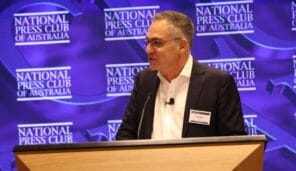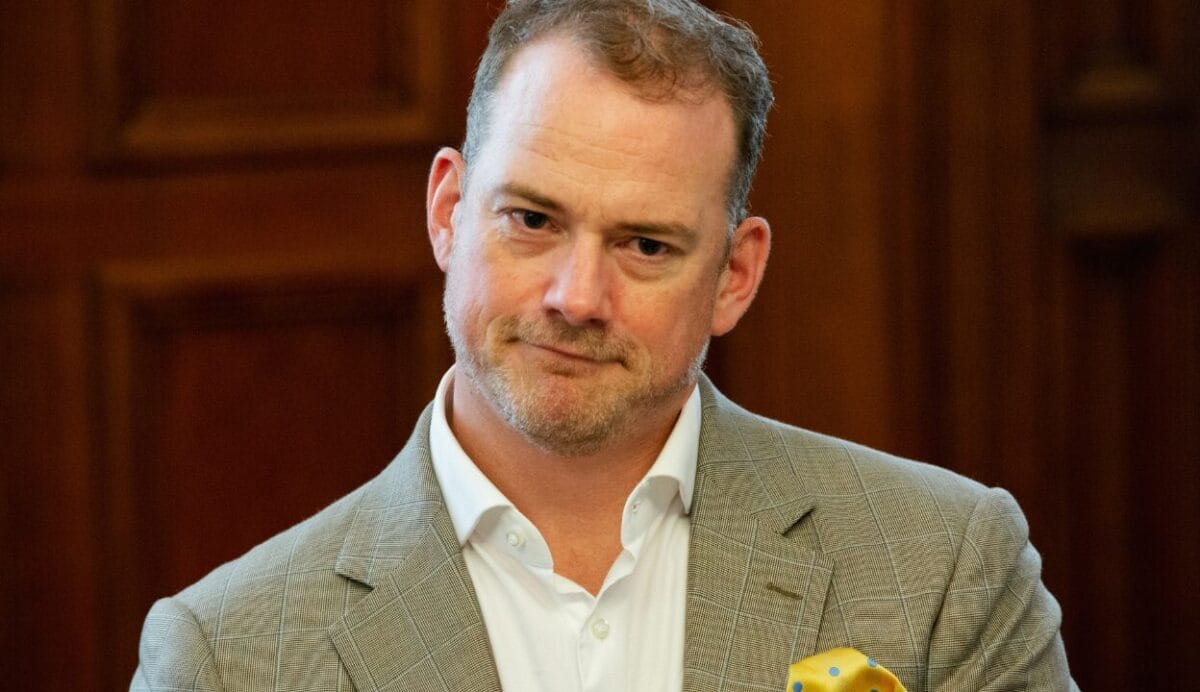

Advice consultancy Finura Group predicts HUB24 and Netwealth will successfully leverage their large balance sheets to own the advice process from end to end as the pair emerge as leaders in a platform oligopoly.
In the 2026 iteration of Finura’s advice tech predictions, the group notes that as platform usage continues to consolidate, an advice firm’s primary platform provider will be in a stronger position to “own the adviser desktop” from a data and workflow perspective.
The report notes that HUB24 and Netwealth command 80 per cent of net flows and both have nine times the market cap of Iress, which owns industry CRM market leader Xplan. Although Netwealth and HUB24 would technically make a duopoly, Finura joint managing director Peter Worn believed there is space for at least a third competitor.
The prediction comes as Netwealth posted its quarterly results showing it had fended off any impact over its role in the collapse of First Guardian. It recorded a second consecutive quarter of record custodial funds under administration (FUA) inflows ($8.4 billion in December), reaching a total of $125 billion as of 31 December 2025.
Late last year Netwealth agreed to pay $101 million in remediation to First Guardian clients, which it said it is on track to do by 30 January.
Netwealth chief executive Matt Heine and HUB24 CEO Andrew Alcock will both be speaking at the Professional Planner Advice Policy Summit next month.
In a webinar on Thursday presenting the predictions, Worn acknowledged Netwealth’s positive results despite a 14 per cent share price drop over the past year.
“First Guardian has had an impact on the share price in the short term,” Worn said.
The Finura report said both platforms can outspend competitors on research and development, and small advice practices don’t need full CRMs if their platform does 80 per cent of the job.
“This isn’t a platform war anymore… it’s ecosystem construction,” the report said.
“Advisers love their platforms more than their advice tech providers. Platforms remain a key source of truth at many points in the advice process and, for now, the lowest-cost way to implement most advice.”
Finura predicted last year the “era of platform promiscuity” would come to an end with a move to “platform monogamy” – or, in simpler terms, that advice firms would use fewer platforms.
“I got a lot of heat for it but lo and behold, that started to manifest,” Worn said, noting Investment Trends research released later in the year that found advisers were using fewer platforms.
“When we started the company around five years ago it was around 3.2 platforms [used per firm], it’s now dropped to two. Curious to see where it lands this year.”
Last year, Finura split its business into two entities – consulting and software applications – with HUB24 taking an equity stake in the latter. The consulting arm remains owned by Finura’s employees.
Price wars
Despite the likely platform oligopoly, Worn said it’s unlikely there will be a price war over fees. Instead, the platforms will rely on creating an end-to-end ecosystem to maintain adviser loyalty.
“I know a lot of people have predicted platform fees will drop a lot, I’m less confident of that,” Worn said.
“In the short term it’s within everyone’s interest to keep platform fees kind of where they are, unless a real disrupter comes in.”
The report also predicts licensee services will face new competition from platforms that provide managed accounts and which “take further steps to develop intimacy with their key practice relationships”.
“Expect to see some strategic partnerships emerge between managed account providers and tech services companies,” the report said.
And as licensees have become reliant on managed accounts and services for revenue, competition from platforms will only further challenge the part of the advice chain that has struggled to capitalise on the tailwinds in the profession, Finura argued.
Worn noted the market cap of licensees is worth about $390 million while the market cap for managed account providers is estimated to be around $3.2 billion, which he thinks will double in the next few years.
Finura pointed to ASX-listed Generation Development Group-owned Evidentia’s acquisition of Encore Advisory as one such example of an asset consultant looking to expand its practice management support capabilities.
“They have the scale, the margins, and the incentive to support firms in going the self-licensed path,” the report said, acknowledging this wasn’t a tech prediction.
“This is a new form of vertical integration, with a technology backbone. The product power couple (platform and managed account provider) can offer turnkey solutions.”
AI’s continued impact in 2026
Finura’s report predicts AI will drive a tech pricing reset as spending will increase 40 per cent to 60 per cent over the next three years as vendors will need to increase revenue per adviser as the industry settles on roughly 15,000 registered advisers.
Finura expects the losers from this will be “anyone expecting tech to be cheap”, and licensees “clipping tickets” on software resale.
Worn said the price rises are below inflation and aren’t as bad those happening globally, but he did offer some advice for providers when timing their price increases.
“I hear a lot of complaints about how expensive software is,” Worn said.
“I do think for software companies if you want to put your prices up, do it before the end of the financial year so that businesses can forecast and budget for it. Businesses get really pissed off when it happens midway through the year and no one’s expecting it.”
Finura predicts that well-capitalised US AI advice-tech players will make their first serious moves into the Australian market in 2026, bypassing traditional distribution channels to partner directly with private-equity backed aggregators and national advice firms.
But the firm also predicts there will be a clash of personal and business AI applications as employees will begin to rely on the AI provided by established tech players such as Apple and Google that they already use on their personal devices.
The report said: “the intersection of personal AI and business AI in a compliance-heavy industry? Governance nightmare. Risk nightmare. Inevitable anyway.”
The group also anticipates there will be an AI governance reckoning, particularly as vendors “sell capability and disclaim responsibility” and it comes as ASIC reviews licensee usage of AI.
Finura surveys have found around three-quarters of firms lack AI testing and validation protocols and lack formal documentation on how their AI systems work.
Furthermore, the survey results found only 13 per cent of firms have completed comprehensive AI training with staff.
Lastly, the group predicts that digital advice platforms will discover their natural audience is a 25-to-50-year-old tech-savvy “prepared member”, engaged in their finances and who knows they want advice, rather than the broad 70 per cent of the population that is unadvised.
Passing grade for 2025
When it came to reviewing last year’s predictions, Finura graded itself correct on the acceleration of platform monogamy, industry super insourcing tech/advice, and that the business opportunity of the year was AI services.
It also said predictions that using podcasts and Youtube was the best marketing technology for the year were correct, and that adviser satisfaction with technology would remain low (citing its own benchmark report that found 32 per cent of firms were satisfied with support from its tech provider).
The firm conceded its prediction that that private equity would reshape advice tech and that advice tech being in “neutral gear” – with average practice spend remaining flat and the addressable market not growing – is on hold.
Netwealth chief executive Matt Heine and HUB24 CEO Andrew Alcock will both be speaking at the Professional Planner Advice Policy Summit next month. Advisers, practice principals and licensee executives are eligible to attend and can register here.